MAM
Planning & buying in India’s digital video landscape: A primer


MUMBAI: Even as ‘digital marketing’, ‘digital ad spends’, ‘mobile advertising’ and ‘online videos’ become part of the colloquial Indian advertising lingo, planning and buying digital media is a world removed from the television-driven number-crunching that account managers at the leading media agencies were so far used to.
While multiple data points have made the business more technical, at the same time, it’s ironically way more dependent on specialists, who often go by the fabled ‘instincts’ formula to filter out the information overload.
Lack of standard metrics of measurement often requires one to look at the media mix as a whole integrated entity and try different permutations and combinations to get the desired reach, efficiency or brand outcome. Working in silos is no longer an option. There is a reason why the profile of the digital media planner (in some cases she is called the video planner) is emerging as one of the most coveted jobs in M&E industry across the globe.

As the industry undergoes a digital cataclysm in the various forms of video content online, there is a need to simplify it for the layman so that he or she at least gets a basic insight into the ways of planning and buying digital media. So here’s the primer:
From efficiency to effectiveness:

More often than not brands, which are slowly adapting to digital marketing, go with the quick, and ‘cost-effective’ plans’, to minimize their risks, using digital media as an add-on to their larger television strategy. The challenge current digital planners are unanimously facing is to convince these clients to move from efficiency-centric planning to ‘effective’ plans that will bring them a brand outcome.
To start with, digital planning can be approached from two angles — one is based on efficiency, and the other is based on effectiveness that depends on the end goal.
Digital planning keeping ‘efficiency’ in mind comes when a brand wants to reach a certain desired target audience quickly and cost effectively. It allows incremental reach or incremental GRPs.
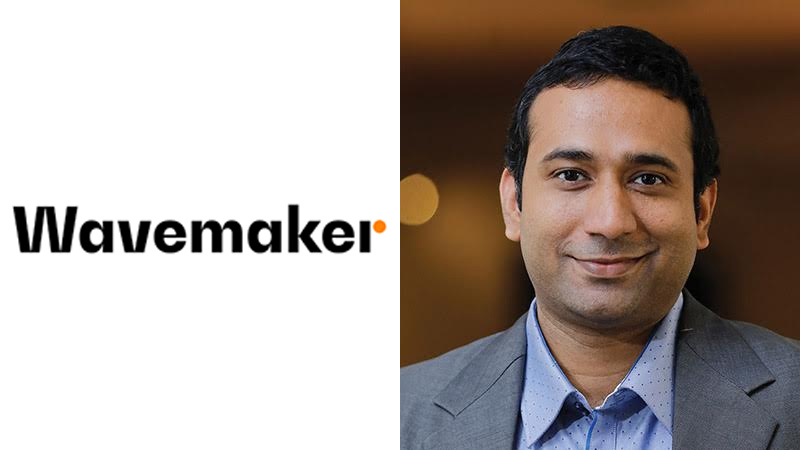
“Let’s say your TV planning gives you 70 percent reach. You can plan so that your digital strategy can add five more points to that; that planning has been done keeping efficiency in mind,” Maxus India Digital- west general manager Sairam Ranganathan gives an example.
On the flip-side, effectiveness-based digital plan directly impacts a brand’s awareness, consumer’s purchase intent, etc. “While the first gives you a media output the latter gives you a band outcome,” Ranganathan adds.
But the transition isn’t far off.
“Though it finally comes down to what the objective of the campaign is, we planners can no longer afford to see it(digital plan) as a sidekick to traditional media, but review it as they may very well overlook an existing audience if it is a right fit,” shares Havas Media Group, India and South Asia CEO Anita Nayyar.
Further, it is seen on multiple occasions, that when TV and digital are intertwined – that’s when a planner hits the sweet spot of the campaign.
Measurement through different agency lenses:

Fundamentally planning and buying media on digital platforms follows the same core principles of establishing the media objective, setting the strategy, implementation, evaluation and follow-up.
It starts with understanding the consumer and how he or she uses the various digital tools at their disposal. Based on which the creative format is singled out and possible targeting options are explored to bring the communication and the consumer together.
It requires slicing and dicing of data gathered through several propriety tools that are at the planner’s disposal. Thus measurement, like every other media, plays a key role in a digital media plan as well. This is where digital planning deviates from its traditional counterpart; especially when ‘videos’ is the buzz word.
“When it comes to digital videos, there is no single source data available to us planners,” says Ranganathan. “Comscore does share some data of measuring digital reach but it only calculates desktop viewership, and doesn’t include mobile, when most OTT players see higher play time on smartphones and other devices.”
“Since there are no uniform measurement metrics across the industry, and multi-fold data points to consider while planning, each major agency has its own set of propriety tools that helps it slice and the dice data,” shares Ranganathan.
From a number perspective, planners have the figures that the various publishers such as Facebook, Twitter, Youtube, and the OTT players share, which is then coupled with the planners’ own insight based on data gathered overtime.
“Planners at Havas typically benchmark video properties using a mix of tools and empirical data that they have accumulated over the years. These are then superimposed on current market trends to derive estimates of performance vis-à-vis cost thus arriving at optimal plans.
Today, increasingly we are planning and implementing an audiovisual plan rather than a TV plan, especially in case of TVC asset marketing. Here, traditional metrics of TV buying also play a major role – as Havas Media uses proprietary tools like ‘Smart Planner’, combining metrics of a TV plan and the metrics of online video (OLV),” explains Anita Nayyar.
Similarly Maxus India has communication planning tool called Resolve that is available to its clients, while Dentsu Aegis Network, which is the parent company of Isobar India uses in-house propreity tool Consumer Connection System (CCS) for its clients.
Apart from this, Facebook Insights, comScore, Google Analytics, Google Trends, TGI survey data from Kantar Media are some of the other universally available tools that the planners look into.
To each is its own: OTT ad rates

Just like measurement is up to each planner’s own interpretation, when it comes to solely digital videos, the buying metrics set by each player differs as well.
“Different OTT players have different models or may even have a mix of different rates as per buy type – for example – YouTube offers videos at either CPCV (Cost Per Completed View) which are executed on a bidding model or pre-rolls which are sold on CPM. Video rates also depend upon the kind of content/ duration/ targeting for the video – these factors have a huge impact on pricing. It’s not a case of one-size fits all – every plan/property has a different rate (as it could be served via a bid model). Price ranges of typical video ads can range from Rs 2 to Rs 5 ± 25% for a CPCV,” shares Nayyar.
While Facebook offers videos on CPV (Cost Per View) or CPE (Cost Per Engagement), players like Vdopia, etc. offer videos at CPCV or CPM (Cost Per Thousand Impressions) or Fixed Buy (roadblock units, etc.).
Since ‘prime time’ doesn’t exist as a concept in the world of digital videos, premium rates are dependent how ‘hot’ the IP is and how sharp targeting the brands can do through it.
“In digital the rate increases with more targeting parameters. Hypothetically speaking, if a brand wants to reach a TG of 15 + with no cap on the upper limit, for per thousand such people, may earn the player Rs 100. But if a brand wants to reach out to an audience between the age of 15 to 20 years of age who reside in Mumbai city only, the sharper targeting reduces the audience inventory, and therefore increases the price. Simple demand supply ratio if you look at it,” explains Ranganathan.
Currently, most OTT players sell their ad inventories in packages to sponsors; they don’t sell individual ad spots. “Once the packages are sold for a fixed amount of sponsorship amount that guarantees a certain inventory of views, shares, etc; the remnant inventory (if any) can be made into packages of 10 to 20 spots and sold to advertisers,” points out Isobar India vice president Gopa Kumar.
Having a head start over the rest of players, Hotstar clearly commands premium rates among all the OTT players at the moment, although the ad rates are subjected to different packages to different brands.
“While everyone else is catching up to it, since Star India has invested so much into its OTT player, it clearly is the industry leader and therefore commands premium rates,” shared a well known digital planner under promise of anonymity.
“During IPL season 9, Hotstar charged Rs 5 crore for associate sponsorship, which went up to Rs 8 to Rs 12 crore for their title sponsorship,” guesstimated the planner, adding that the rates are almost catching up with television sponsorship rates.
Buying spots on Youtube and Facebook is a different ball game altogether that mustn’t be compared to the other OTT players in the market. The social media giants allow a biddable form of spot sale and one can buy the spots in real time as well. “This pure demand supply game somewhat democratizes the process for advertisers and gives them the flexibility to work with a limited budget or go bullish on a lucrative ad spot that would yield it good reach. While CPM based sales are available on YouTube to clients buying bulk in a package, most of Facebook video inventory is sold through auctions,” shares Kumar.
Until all the players meet at a level playing field in terms of reach and content, and a uniform measurement standard is introduced in the OTT world, is it unfair for brands to comply with prices set by individual players based on their internal measurement?
“It isn’t unfair as brands have a choice to not advertise on OTT if they don’t buy the figures provided by the publishers/ players. Digital isn’t limited to OTT; it has 20 to 30 different touch points through which consumers can be reached. In fact OTTs are only a section of it,” Ranganathan adds.
Do advertisers really understand digital videos?
Advertising on TV has a history checkered with benchmarks that the brands have witnessed. The challenge with digital media is that these signposts are yet to be set. Therefore to expect clients to completely get the nuances of digital planning is unfair.
To put matters into perspective, out of Rs 100 spent on advertising in India, only Rs 10 to Rs 14 (keeping several leading industry reports in mind ) is going in digital ad spends, which includes its multiple avenues such as SEO marketing and display ads. Digital video is a small part of the latter. Thus, brands may not be too vested in the medium yet.
Having said that planners admit that in the last couple of years, brands have shown more confidence in digital video ads. They no longer ask ‘why digital’ but ‘what in digital.’ Videos are a better part of this ‘what.’
And that is indeed good news for the digital players wanting brands to buy in to their sales inventories.


Brands
Saugata Mukherjee exits SonyLIV after steering standout content run
Streaming chief signs off after a prolific phase of originals and awards
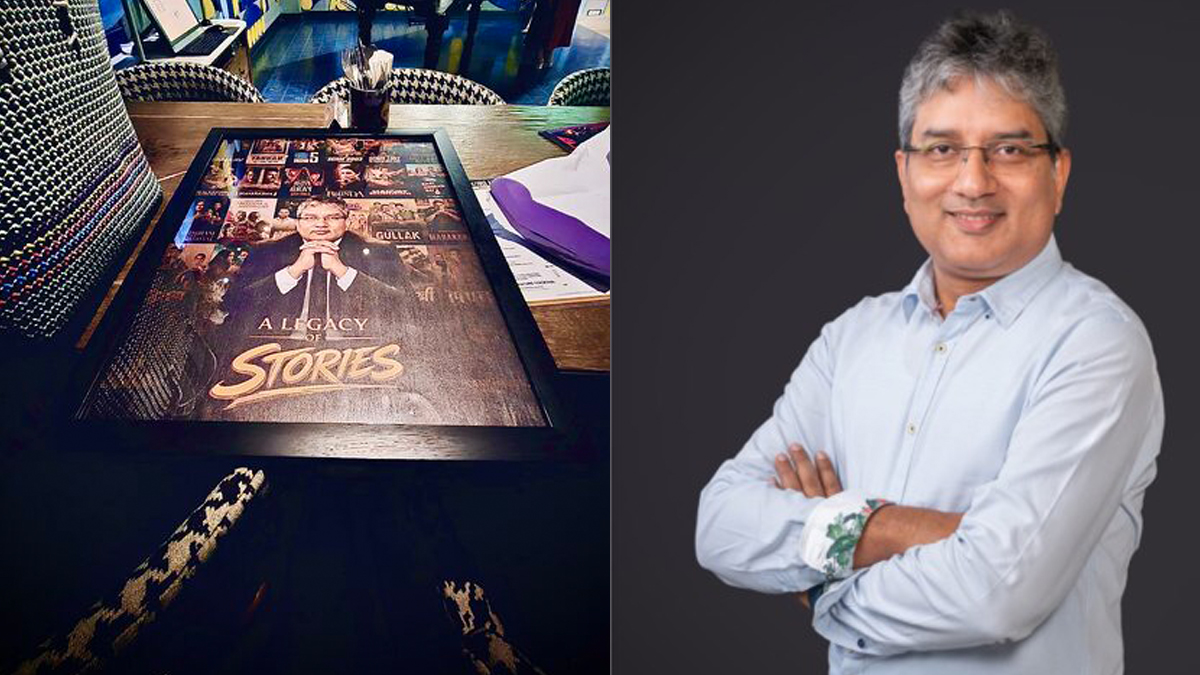
MUMBAI: SonyLIV is set for a leadership transition, with its executive vice president and head of content Saugata Mukherjee announcing his departure after a three-and-a-half-year stint that helped shape the platform’s creative identity.
In a reflective note shared publicly, SonyLIV executive vice president and head of content saugata mukherjee described his tenure as more than just building a slate of shows, calling it “a shared belief in stories, in risks, in pushing ourselves a little further every single day”. He pointed to a wide-ranging line-up including The Hunt, Mayasabha, Kankhajura, Black White and Gray, Four and Half Gang, Kuttram Purindhavan, Real Kashmir Football Club, Maharani S4 and Freedom at Midnight S2 as a fitting close to his journey with the platform.
Mukherjee credited the team’s resilience through “crazy deadlines, uncertain moments and audacious choices”, adding that what stood out most were the quieter wins and collective spirit behind the scenes. “Some goodbyes are harder than others. This is one of them,” he noted, signalling an emotional sign-off.
During his tenure, Mukherjee oversaw content strategy, commissioning and original programming across languages and genres, helping SonyLIV cement its position in India’s increasingly competitive streaming landscape. The platform’s catalogue under his watch included critically acclaimed titles such as Scam 1992, Maharani, Rocket Boys, Tabbar, Gullak and Freedom at Midnight, collectively earning over 100 industry awards and several international nominations.
Before rejoining SonyLIV in 2022 as EVP, Mukherjee had a brief stint at HBO Max under Warner Bros. Discovery, where he led India content strategy and worked on the platform’s global rollout. Earlier, he held senior creative roles at Disney+ Hotstar and Star TV Network, shaping original programming during the early days of India’s OTT boom.
His career began in publishing, with leadership roles at Pan Macmillan and HarperCollins Publishers, where he worked closely with some of India’s most prominent literary voices.
Mukherjee’s exit marks the end of a defining chapter for SonyLIV’s content journey. As the platform looks ahead, it does so on the back of a creative foundation that has consistently punched above its weight in a crowded streaming arena.