MAM
Philips ties up with ISRO, Apollo Hospital & DHAN for affordable rural healthcare

MUMBAI: Philips India, the Indian Space Research Organisation (ISRO), Apollo Telemedicine Networking Foundation (ATNF) and Madurai based NGO – Development of Humane Action (DHAN) have joined hands for Disha (Distance Healthcare Advancement).
Disha is a project, which is aimed at meeting the healthcare needs of the less privileged in India. All four organisations are strategic partners in the project bringing their unique capabilities to deliver the project’s aims.

Disha, a telemedicine initiative is a business plan conceived by Philips India for providing distance healthcare to the underserved people at the base of the economic pyramid.
Healthcare is a core focus area for Philips and the company has a clear vision to make technological innovations in healthcare accessible, available, and affordable to wider sections of people around the world. Disha is a step in that direction. The project will meet the needs of India’s more vulnerable groups who need adequate but affordable healthcare.
In 2004 Philips commissioned ACNielsen (with support from ICG Consultants) to conduct a qualitative and quantitative research in India, which revealed that people in rural areas with lower incomes spend a higher proportion on healthcare than their urban counterparts. A large percentage of costs go to paying high interest rates on loans for healthcare, while travel and lost work time accounts for much of the remainder. Early intervention in a health crisis is therefore critical in dealing with poverty.
The Disha initiative is being piloted in Theni district in Tamil Nadu and was formally inaugurated today in Madurai.
Philips, has custom-built a tele-clinical van complete with diagnostic equipment, including an ultrasound machine, X-ray machine, a defibrillator and an ECG machine. This van with dedicated doctors and other para-medical staff will operate in the areas around Theni district in Tamil Nadu.
Isro has in the past couple of years, taken the initiative for a satellite-based telemedicine network in the country to reach super specialty healthcare and consultancy to rural and remote area population. For the Disha project, Isro is providing the connectivity through VSat and allocating the required bandwidth on its InSat satellite free of cost.
Apollo Hospitals Group is a pioneer in the field of Telemedicine in India and is credited with being the first to set up a rural telemedicine centre in the village of Aragonda in Andhra Pradesh. Apollo Telemedicine Network Foundation (ATNF) with 76 telemedicine centres including five overseas has today emerged as the single largest Telemedicine solution provider in India.
The Apollo Specialty Hospitals, Madurai, the leading super-specialty tertiary care hospital in Madurai is the referral hospital for the Disha mobile tele-clinical van. Apollo will make available to Philips the required doctors and paramedical staff in the van, as also train the medical and paramedical manpower. Apollo’s specialist doctors and operational staff at its hospital in Madurai will provide specialised diagnosis and care for patients visiting the mobile tele-clinical van.
Dhan Foundation provides the vital link to the local community and will play a key role in community participation for the project. Dhan will provide counseling (through domiciliary follow-ups) to the patients on nutrition and hygiene. They will train volunteers from the villages to motivate and play an active role in counseling. This will enable the villagers to directly participate in the implementation of the project.
Commenting on this new foray, Philips India CEO K Ramachandran said, “Philips is a healthcare, lifestyle and technology company. Our vision is to be able to improve people’s quality of life through the products we offer and the markets we serve. Our challenge lies in expanding our scope to new markets and new business opportunities with sustainability as the key driver.”
“Today the population growth is highest in emerging markets especially in the mid and low ends of the economic pyramid. Technology can help drive sustainable solutions that bridge the divide between the privileged and lesser privileged sections of society and improve the quality of life at all levels. However, new value delivery models need to be created to make this happen and this strategic partnership is a step in that direction,” he added.
Isro chairman G Madhavan Nair stated, “With the objective of taking the benefits of space technology to the rural and remote area population, Isro had taken the initiative to establish space-based telemedicine network in 2001. Isro’s Telemedicine network has now expanded to connect 26 specialty hospitals in major cities to 87 hospitals in rural and remote areas including the Andaman and Nicobar, Lakshadweep and J&K.”
“Isro has been working with other departments of Government, NGOs and private entrepreneurs in its various space applications programmes to ensure that the benefits of high technology reach the underprivileged.”
Apollo Group of Hospitals managing director Preetha Reddy said, “Today Apollo hospitals group is the largest healthcare provider in Asia and the third largest healthcare provider in the world. Apollo – the pioneer of telemedicine in India is also the largest telemedicine network solution provider in Asia. As part of our corporate social responsibility we are committed to provide specialized healthcare to the rural poor.”
In India, 80 per cent of the population lives in the rural areas, whereas 80 per cent of the medical community lives in the cities. On the other hand, 11 per cent of the world’s population, which resides in the rural areas of India, remains devoid of quality healthcare. This scenario could change with the use of Telemedicine, that would bridge geographical distances and provide healthcare to those sections of the society that currently don’t have access to quality healthcare. Through telemedicine we transfer the knowledge and not the patients, who are then treated at their respective villages, Reddy stated.
DHAN Foundation executive director M P Vasimalai said, “Secondary and tertiary healthcare is still a distant dream for those living in remote pockets of rural India. Availability of affordable, quality healthcare is a huge issue in these communities.”
High spends on healthcare is one of the leading causes for debt in rural India. A large percentage of income goes towards high interest rates on loans for healthcare, while travel and lost work time accounts for much of the remainder.
“Early detection of the problem and arresting the damage caused due to improper medical treatment can considerably reduce the high expenditure on healthcare incurred by these villagers,” Vasimalai added.
The DISHA tele-clinical van will travel to identified locations once a week and it is expected to cover a population of 500,000. This pilot project will be evaluated and the results will be used to build a business model for a healthcare delivery system including the pricing for such a facility. Support of additional NGO’s will also be sought to strengthen the interaction between the patients, doctors and the facilities.

MAM
How beverage brands are rethinking marketing strategies for weather-led demand
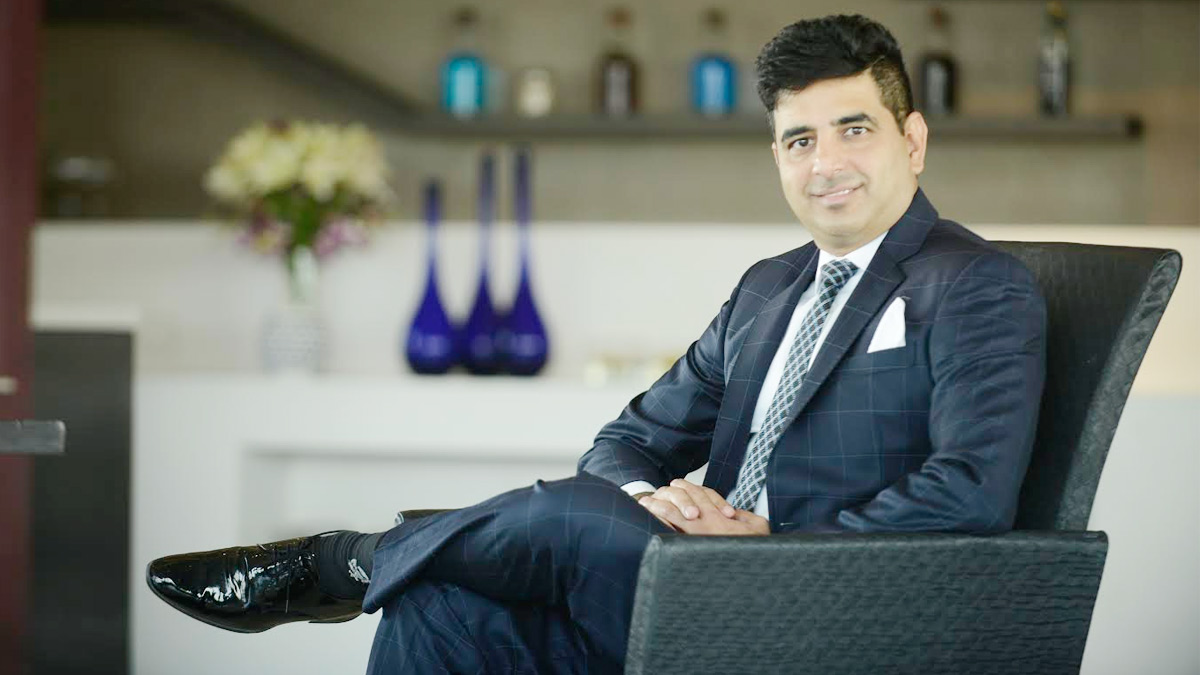
SLMG Beverages Private Limited joint managing director Paritosh Ladhani.
MUMBAI: As Sun climbs up the hemisphere, summer has clearly arrived in India. On 7th March 2026 Delhi registered a maximum temperature of 35.7 degrees Celsius which is the highest reading logged for the first week of March in the last 50 years. Climate Change has been prolonging summers by causing earlier spring warming, delayed autumn cooling, and more frequent, intense heatwaves that persist for much longer periods.
In an endeavor to stay ahead of the curve, Beverage Brands are shifting from fixed seasonal marketing tactics to weather responsive strategies backed by data-driven insights, flexible campaigns, and diversified portfolios to capitalize on unruly temperature spike. In 2025, India’s beverage market experienced a massive, heat-triggered surge with carbonated drinks and ice cream volumes spiking 20–25 per cent in the March quarter itself on the back of hottest February in 125 years.
Clearly campaign timelines are being advanced to reap the seasonal shift in line with the jumping mercury. In the Indian context where Cricket is nothing short of religion, big ticket tournaments like T20 World Cup, Indian Premier League, ICC Champions Trophy provide plethora of opportunities to calibrate marketing campaign designs and associated business strategies to associate refreshment with community viewing both outdoor and indoors. A new trend that has taken the world by storm is that of booking the theatres for bonhomie viewing. It has also opened avenues for joint marketing initiatives by the Multiplex and Beverage Brands.
Price disrupting small potions and value packs tend to drive significantly higher volumes owing to volumetric flexibility and affordability to the consumers. Ramping up of cold supply chains for transit and at point of sales (POS) are strategic business imperatives that again define success of beverage brands.
In the era of AI and Big Data it is easy to track and calibrate messaging based on daily or weekly weather changes. Geo-targeted digital advertisement campaigns are also being run during heatwaves to make the business and marketing imperative very contextual. These pre-emptive strategies fueled by real time data and technology immensely help beverage brands to adjust supplies to the areas that are likely to generate more demand.
Novelty brings premium to the FMCG Sector and Beverage Brands are no exception. Newer SKUs build up excitement in consumers besides imparting the scope of frequent revitalization of brand marketing campaigns. Ensuring continuum of supply chain across material suppliers, logistics providers, distributors/wholesalers, and retailers become a strategic business strategy imperative for beverage brands during peak season.
Carbonated drinks among other beverages including packaged mineral water sell like hotcakes in summers, a period where holiday season gives big impetus to sales volumes. Tying up with air carriers railways, amusement parks, malls, convention centers for inclusion in the onboard beverage deck also holds a big window of opportunity for brands.
Limited period diversification into special summer categories entailing juices and functional beverages to capture the broader hydration market is also a business cum marketing imperative that beverage brands eye on. This also brings to fore the responsible side of the brand placing the compass on wellness of consumers.
Seasons are cyclic, hence summers are inevitable. Further, due to anthropogenic climate change, summers surely have been staging prolonged appearance that keep bringing beverage brands on to their drawing boards frequently for strategizing business and marketing campaigns that are agile, refreshment-focused, visually dominant in retail, affordable, and optimally promoted through seasonal campaigns in above and below the line media.








