MAM
P&G India announces ₹300 crore ‘P&G Supply Chain Catalyst Fund’

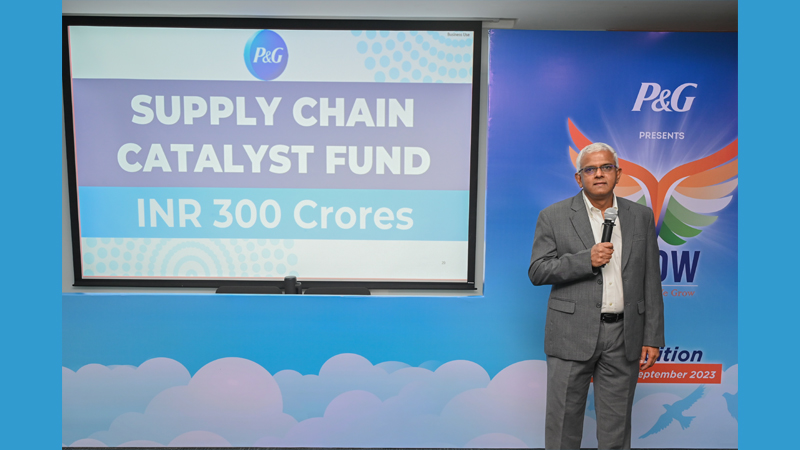
Mumbai: Procter & Gamble India (P&G India), maker of brands like Gillette, Whisper, Vicks, etc, has announced a ₹300 crore ‘P&G Supply Chain Catalyst Fund’ to collaborate with external partners and innovators, in co-creating solutions that accelerate its journey towards supply 3.0 – the modern supply chain ecosystem. This fund will provide an opportunity to start-ups and innovators to collaborate with P&G on business solutions customized to create the next level of supply: a supply chain that provides greater agility, flexibility, scalability, transparency and resilience.
The announcement is in line with the prime minister’s Gati Shakti initiative, which is an endeavour towards multi-modal connectivity in the country that will enhance seamless movement of goods and services through targeted interventions.
P&G India’s strategic investment, as part of ‘P&G Supply Chain Catalyst Fund’ will encompass a diverse array of initiatives, including supply chain optimisation, digitization, capacity enhancement and sustainability, all designed to catalyse the company’s supply chain prowess. This new fund is part of P&G India’s ‘vGROW’ program that focuses on identifying and collaborating with start-ups, small businesses, individuals, and large organisations offering innovative industry-leading business solutions. These solutions will help the company in delivering a superior experience to its consumers and continuing to drive constructive disruption.

With this announcement, the company also launched the sixth edition of ‘P&G vGROW External Business Partner Summit,’ to be held from 28 to 29 September 2023. The Summit offers a platform to existing and new suppliers, in partnership with Incubate Hub, to pitch their solutions to P&G India’s leadership team. Senior leaders from P&G’s global leadership team, including P&G chief purchasing officer Ana Elena Marziano and P&G Sr VP Chandra Vaddadi, purchases also attended the summit.
P&G India subcontinent CEO LV Vaidyanathan said, “We are as committed to the nation’s progress as we are to serving consumers with superior products every day. With the ‘P&G Supply Chain Catalyst’ fund, we are focused on co-creating innovative solutions that enhance the very backbone of our operations – the supply chain. We are confident that focused interventions in the supply chain will have a positive impact on our overall priorities including constructive disruption and productivity.”
He further added, “Six years ago, we launched ‘vGROW’ – with the vision to create a platform to foster collaboration and partnerships with external partners and suppliers, to solve business challenges and provide a breeding ground to emerging startups across the country. With this fund, we have committed spends of more than ₹1800 Crore to date in business solutions through vGROW. We strongly believe that a healthy dissatisfaction with the status quo will help us raise the bar on constructive disruption and better serve consumers, customers, and communities.”
vGROW is P&G’s first-of-its-kind platform to identify and collaborate with businesses and individuals offering industry-leading solutions. Through this platform, P&G engages with over 2300 suppliers including start-ups, small businesses, and large organizations from a wide range of industries and services – from creative agencies to technology partners to material suppliers.
In partnership with WEConnect International, P&G India also conducted the next edition of the Women Entrepreneur Development Program (WEDP). About 30 women entrepreneurs, who were selected via an application process, graduated from the two-day program aimed at their capacity development. As part of the program, senior leaders from P&G conducted training and workshops with real-time case studies covering various aspects of building a sustainable business including professional skills like business strategy, finance capital, new customer outreach and more, including strategic inputs for driving business growth.







Brands
Boeing appoints Barun as head of FP&A for global engineering function
Seasoned finance leader to steer budgets and strategy across global centres
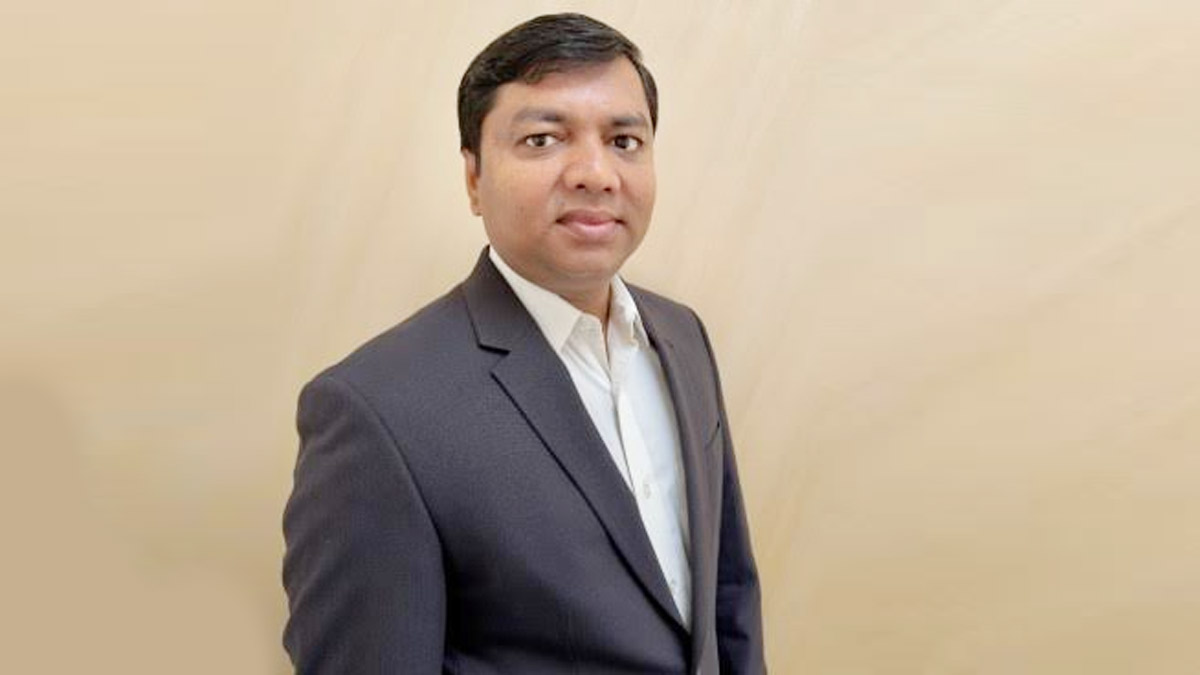
BENGALURU: Boeing’s finance cockpit has a new pilot, and he is no stranger to turbulence or transformation. Boeing has appointed Barun as head of FP&A for global engineering, placing him at the centre of financial strategy for its worldwide engineering and technology operations.
Based in Bengaluru, Barun steps into a role that is as expansive as it is critical. He will serve as the primary finance lead for Boeing’s Engineering and Technology Centers globally, working closely with executive leadership to shape financial decisions, manage complex budgets, and design scalable finance processes that support the company’s growing engineering footprint.
In a note announcing his move Barun said, “I’m excited to share that I’ve joined Boeing Global Engineering. This opportunity is incredibly meaningful to me not just from a professional standpoint, but also for what Boeing represents globally.” He added that he looks forward to contributing to an organisation that continues to shape the future of aerospace and innovation.
Barun’s mandate spans strategic financial leadership, operational oversight, and stakeholder engagement. From directing large-scale budgets and schedules to influencing long-term organisational goals, the role blends financial discipline with business foresight. He will also lead cross-functional teams and partner with finance colleagues worldwide to support engineering programmes across geographies, including India.
The appointment caps a long stint at Juniper Networks, where Barun spent over a decade, most recently as finance senior manager. There, he led FP&A for global product business units and G&A functions, driving budgeting, forecasting, and long-range planning. He also played a key role in enterprise-wide transformation, including spearheading an Oracle to SAP ERP migration and building advanced analytics capabilities using tools such as Tableau and SAP Analytics Cloud.
His earlier career includes finance leadership roles at Sony India Software Centre, Cognizant Technology Solutions, and Mphasis, where he focused on financial planning, governance frameworks, and operational efficiency across global delivery centres.
A chartered accountant from the Institute of Chartered Accountants of India, Barun brings nearly two decades of experience across financial planning, digital transformation, and analytics-led decision making.
His appointment comes at a time when global engineering operations are becoming increasingly complex and distributed, requiring sharper financial oversight and agile planning. With Barun at the helm of FP&A for engineering, Boeing appears to be tightening its financial playbook as it looks to scale innovation with discipline.






