Brands
PartyNite Metaverse Creates RasasiWorld for perfume giant

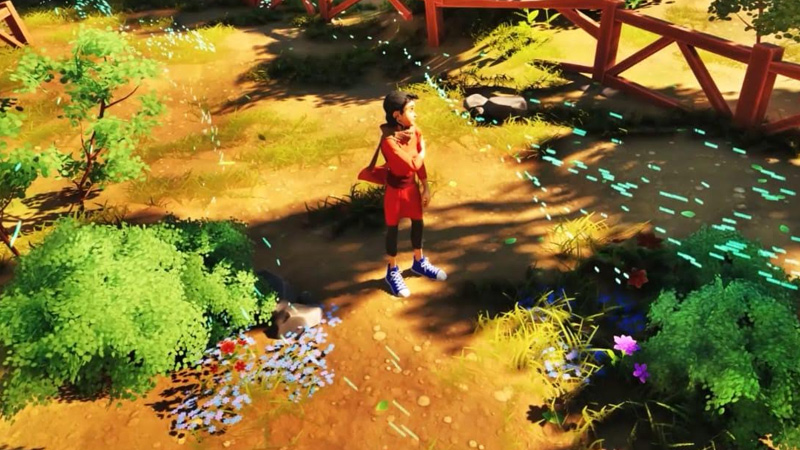
MUMBAI: It’s got the whiff of a good partnership. Gamitronics-backed PartyNite, India’s homegrown metaverse has signed a multi-pronged association with west Asian perfume brand Rasasi. In a bid to expand its digital footprint exponentially, the perfume giant has acquired a prime piece of virtual real estate within the PartyNite metaverse, aptly naming it as RasasiWorld where fragrance and storytelling unite to offer an unparalleled immersive experience. RasasiWorld is aimed to redefine the way one interacts with fragrances and connects with brands.
RasasiWorld stands as an acre of land bought as a digital collectable within the PartyNite ecosystem which has a Rasasi store front and a few forests from where the best quality agarwood is sourced which is a parallel to the forests across four countries India, Srilanka, Cambodia and Indonesia IRL. Adding a layer of interactivity, within RasasiWorld, a Gen-AI fuelled perfumer Talha will be teaching a step -by- step method to make perfumes which will be a great way to run campaigns for the user to learn the process and create their own scents that might selectively be launched in the real world as well.
The feature not only creates opportunities for users to get immersed in RasasiWorld but opens up a sense of ownership in the users and converts them into brand loyalists. The activation also integrates generative-AI features as well, using which users can access a plethora of information about perfumes, Rasasi store locations, in-depth understanding for connoisseurs and customised instant solutions for all users.

“Oud has always symbolized spirituality, indulgence, and healing. Through the Agarwood metaverse, we are creating a virtual realm where the legacy of oud transcends physical barriers, engaging audiences with a fusion of heritage and future technology,” said Rasasi Perfumes business head Omeir Kalsekar.
“Bringing Agarwood into the metaverse is an exciting step forward, where tradition meets innovation,” said Rasasi Perfumes head of marketing & retail operations Apoorva Srivastava: “With this initiative, we are not only redefining how people experience luxury but also celebrating a cultural icon in a way that resonates with a digital-native audience.”

Launched at the prestigious location of Theatre of Digital Arts (Toda) in Dubai, in the presence of the royalties of UAE, over a 360-degree virtual reality screen and virtual reality headsets RasasiWorld opened its gates to users amidst much fanfare and a quick immersive experience of what is in store for them through a seven-minute content extraction from PartyNite. The virtual land parcel will be held by the perfume giant in perpetuity giving it a long-term window to engage with users and nurture a captive audience into loyalists.
PartyNite founder Rajat Ojha expressed his delight at being chosen as the platform of choice by Rasasi, saying: “This collaboration is not just an innovative marketing move but a landmark one that opens up a plethora of use cases for metaverse-brand collaborations. A legacy brand invests in storytelling and embarks on creating loyalists which is always a long-term play instead of quick to forget thirty seconders which are snacky in nature. It is extremely forward thinking of Rasasi to not just immerse its audiences in story telling but also nurture them with multipronged immersive experiences to turn them into a captive audience who eventually become loyalists. Users get to learn about the legacy of the brand and their craftsmanship, understand the category better, immerse themselves in experiences like visiting the forests, sourcing agarwood and finally visiting the workshop to make a perfume which may even be launched in the real world. By the time you are done, you are not just well acquainted with the brand you become an expert yourself under Rasasi’s aegis so by default you become a Rasasi loyalist”
He added: “Imagine a brand which is purely dependent on olfactory senses has taken its marketing -mind a few notches higher to cultivate its audiences. It’s clearly a brand play directed at GenZ and Gen Alpha to hog their share of screen time, catch them where they live and give them what they enjoy which is interactive and immersive- not just a mere video where then they will zone out. Stories build a brand and stories that convert a user to a loyalist and that’s what we are trying to achieve with Rasasi World. Adding a layer of generative AI which paces up everything to the gamification of the experience which puts people right into the heart of the brand story, creating a community and bringing like minded people together, this association also showcases PartyNite’s technical prowess and how we can push the limits”.
He further elaborated: “The next generation will live in 3D if not living there already, and we need to prepare for it now. The metaverse is the present, and Rasasi’s foray in the metaverse with Rasasi World is an exemplary move in embracing the evolution of consumer engagement. By creating a digital territory that combines storytelling, interactivity, and fragrance exploration, Rasasi is not merely keeping pace with this evolution; it is setting an example for how brands can build lasting connections with their audiences.”
Rasasi World will not only provide virtual assets for purchase but also extend the opportunity to acquire physical items, bridging the gap between the digital and physical worlds. This collaboration underscores the broader trend of brands venturing into the metaverse.


Brands
IndiGo names William Walsh CEO
Former IATA chief to take charge in August after Elbers exit, Bhatia steers interim

India’s biggest airline has moved fast and gone global. InterGlobe Aviation, which operates IndiGo, has tapped aviation heavyweight William Walsh as chief executive officer, subject to regulatory approvals, marking a sharp pivot as the carrier eyes its next burst of expansion.
Walsh, currently director general at the International Air Transport Association, will step down on July 31, 2026, and is expected to take charge by August 3. The appointment comes barely three weeks after Pieter Elbers exited the corner office, with Rahul Bhatia holding the fort in the interim.
The choice signals intent. Walsh brings decades of cockpit-to-boardroom experience, having led British Airways and later International Airlines Group, the parent of Aer Lingus, Iberia and Vueling. His tenure across carriers has been defined by hard resets, restructurings and cross-border consolidation—skills IndiGo may need as competition intensifies and scale becomes decisive.
Vikram Singh Mehta, chairman and non-executive independent director of IndiGo, said Walsh’s experience in managing large-scale airline operations and navigating complex market dynamics makes him well-suited to lead IndiGo in an increasingly competitive global aviation environment, adding that the appointment marks a new chapter as the airline scales in one of the world’s fastest-growing markets.
Rahul Bhatia said Walsh’s global perspective, operational expertise and customer-focused approach would be critical as IndiGo enters its next phase of expansion.
Walsh, widely regarded as one of the industry’s most influential figures, will oversee overall management and strategic direction, with a mandate spanning operational performance, network expansion, commercial strategy and customer experience. He is expected to work closely with the board and leadership team to sharpen IndiGo’s growth trajectory.
Walsh said IndiGo has a strong foundation and is well-positioned to capitalise on the evolving aviation landscape, adding that he looks forward to fostering a culture of excellence, innovation and sustainable value creation across the organisation.
A new captain, a bigger runway—and a market that rewards scale. IndiGo is lining up for its next take-off.