MAM
Park Avenue Fragrance unveils TVC Campaign ‘Spray Kar, Aage Badh’


Mumbai: Park Avenue has launched a TVC campaign featuring its newly appointed brand ambassador actor Siddhant Chaturvedi. Park Avenue’s proposition revolves around the idea that we all experience nervousness when attempting something for the first time. To showcase this relatable experience, Park Avenue has partnered with Chaturvedi, known for his charismatic performances.
In a unique collaboration, Chaturvedi not only stars in the TVC but also lends his soulful voice to the captivating song that sets the mood for the ad.
Conceptualised by Wunderman Thompson, the TVC shows Chaturvedi playing the role of a rockstar in a band. However, the nerves get the best of him momentarily, reflecting the inherent apprehension we all encounter when facing new challenges. This is where Park Avenue Fragrance Deo for Men steps in as the ultimate confidence booster.

In this film, the centerpiece is the stage-dive that Chaturvedi makes into an enthusiastic crowd. He is performing in the rock concert quite comfortably but is nervous about his first stage-dive. That’s when Park Avenue gives him the confidence to boldy go ahead and make the stage-dive.
Commenting on the campaign, Park Avenue CMO Pooja Sahgal said, “Our campaign ‘Spray kar, aage badh’ draws inspiration from the insight that everyone, regardless of their background or profession, experiences nervousness when trying something for the first time. Park Avenue Fragrance Deo for Men recognizes the importance of overcoming these inhibitions, enabling men to embrace their ambitions and reach for the stars. The film features a youthful personality like actor Siddhant Chaturvedi, who is not only performing but is also singing, adding a more personalized touch to the campaign.”
Being appointed as brand ambassador for Park Avenue Fragrances, Chaturvedi said, “Park Avenue fragrances are the preferred deodorants of choice for today’s generation. Nowadays, the youth are seeking new things and participating in new experiences. But sometimes they lack confidence or have doubts about taking the first step. Park Avenue Fragrances gives you the confidence to boldly go ahead. I resonate strongly with these values as well – I understand that sometimes you feel nervous before trying something new and you may need that boost or edge to boldly go forth. The brand offers a wide range of fragrances under both the Classic and Signature ranges – I personally prefer the Good Morning aerosol to give me a perfect start to the day.”
The deodorant’s unique formulation has captivating fragrances, ensuring freshness and confidence throughout the day. With its refreshing scent, Park Avenue Fragrance Deo for Men helps men conquer their fears and boldly go forth in every situation.

Brands
Vodafone Idea elevates Vineeth Jayendranath as VP, marketing head Mumbai
Telecom marketer takes charge of Mumbai circle with growth and brand focus
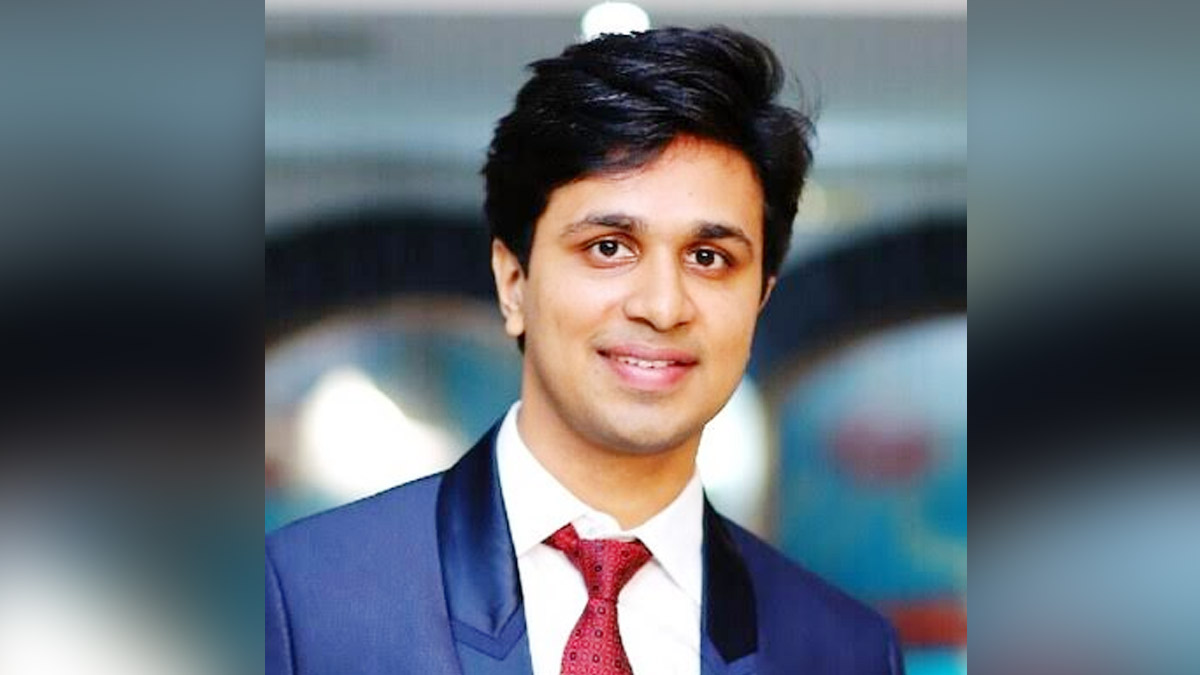
MUMBAI: Vodafone Idea Limited has promoted Vineeth Jayendranath to vice president, marketing head for the Mumbai circle, marking a key milestone in his career as the telecom operator sharpens its regional strategy.
In his new role, Jayendranath will lead marketing efforts across prepaid and postpaid segments in one of the country’s most competitive telecom markets. His mandate includes driving revenue growth, strengthening brand positioning, and deepening customer engagement, while also managing profit and loss responsibilities for the circle.
Sharing the update, Vineeth Jayendranath said, “Excited to share, I am starting my new stint as Vice President, Marketing Head for Mumbai circle at Vodafone Idea Ltd. Would like to thank everyone who has supported me in this journey.”
Jayendranath brings over 12 years of experience spanning telecom and IT, with a strong focus on customer value management and data-led marketing. Since joining Vodafone Idea, he has held multiple leadership roles, most recently serving as general manager leading customer value management and prepaid business across Gujarat, Maharashtra and Goa.
During this period, he handled large subscriber bases and multi-billion rupee revenue portfolios, while rolling out hyper-personalised campaigns and a “segment of one” strategy to improve customer retention and upgrades. He also championed a digital-first approach, pushing adoption of data services and unlimited plans through targeted, insight-driven initiatives.
Earlier, he worked with Idea Cellular Ltd in strategy and business intelligence roles, and began his career at Infosys as a systems engineer. A brief stint at Hyundai Motor India Ltd during his internship added early exposure to marketing strategy.
An alumnus of SVKM’s Narsee Monjee Institute of Management Studies, Jayendranath has steadily built a reputation for combining analytics with marketing execution.
His elevation comes as telecom players double down on circle-level strategies to stay competitive, and Vodafone Idea appears to be betting on data-backed marketing to keep Mumbai firmly in its corner.







