Brands
Palmolive bets on mood-boosting suds to capture India’s stressed millennials

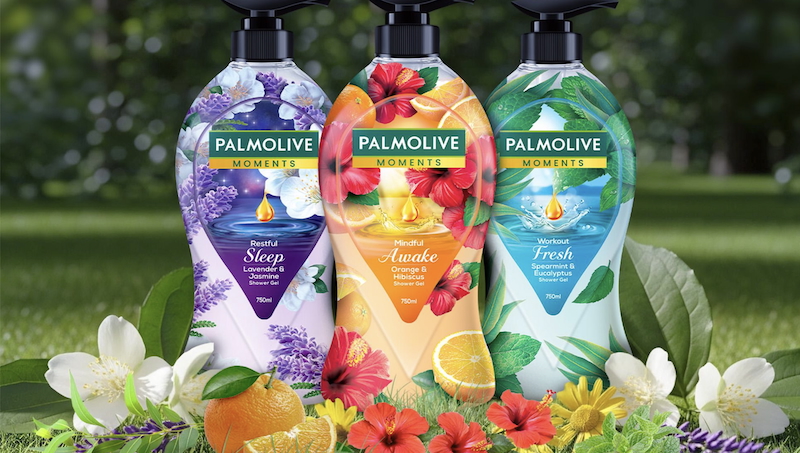
MUMBAI: Colgate-Palmolive India has unleashed its latest weapon in the battle for bathroom shelf space: a trio of body washes designed to tackle the daily grind of India’s perpetually knackered urban professionals.
The Palmolive Moments range arrives with scientific-sounding credentials and mood-altering promises that would make a aromatherapist blush. Three variants target specific moments of millennial misery: “Mindful Awake” for groggy mornings, “Workout Fresh” for post-gym recovery, and “Restful Sleep” for winding down after another caffeine-fuelled day.
“Today’s young, urban consumer leads an active and intense life,” declared Colgate-Palmolive India director of marketing Swati Rao Jeyakumar. She painted a portrait of the target customer as someone perpetually “wired-but-tired”—struggling to sleep, waking up groggy, and feeling battered after workouts.

The company’s answer involves patented fragrance technologies with names like VivaScentz and Meta SleepTech, promising scents that linger for six to eight hours. Mindful Awake pairs orange and hibiscus to jolt morning zombies back to life, whilst Workout Fresh combines spearmint and eucalyptus for post-exercise revival. Restful Sleep deploys the usual suspects—lavender, jasmine and chamomile—to allegedly ease the transition to slumberland.
Priced at Rs 660 for 750ml pump packs, the range targets consumers willing to pay premium prices for promises of sensorial transformation. The products are rolling out across major e-commerce platforms including Amazon, Flipkart and Nykaa, reflecting the brand’s focus on digitally savvy shoppers.
Colgate-Palmolive’s foray into mood-targeting personal care reflects the broader premiumisation of India’s Rs 45,000-crore personal care market. As consumers increasingly seek products that promise more than basic cleansing, brands are scrambling to create emotional connections through increasingly elaborate formulations and marketing narratives.
Whether Indian consumers will pay premium prices to transform their shower routine from “ordinary to sensorial” remains to be seen. But with urban stress levels showing no signs of abating, Palmolive’s bet on therapeutic bathing might just strike a chord with India’s frazzled masses.






Brands
Dunkin’ Donuts to exit India as Jubilant FoodWorks ends 15-year franchise deal
The quick service restaurant giant is ending a 15-year franchise partnership with the American doughnut chain, even as it renews its Domino’s agreement for another 15 years
NOIDA: Dunkin’ is done in India. Jubilant FoodWorks Ltd, the country’s leading quick service restaurant operator, has decided not to renew its franchise agreement with the American coffee and doughnut chain, and will wind down its Indian stores in a phased manner before December 31, 2026, bringing a 15-year partnership to a quiet, loss-laden close.
The decision, approved by JFL’s board on March 30, 2026, ends a relationship that began with a Multiple Unit Development Franchise Agreement signed on February 24, 2011. JFL will now evaluate and undertake what it described in a regulatory filing as the “rationalisation and/or cessation of certain operations and/or sale, transfer or disposal of assets and/or assignment or transfer of franchise rights,” all in consultation with Dunkin’s brand owners and strictly within the terms of the original agreement.
The numbers tell the story bluntly. In the financial year 2024-25, Dunkin’ India posted a revenue of Rs 37 crore against a loss of Rs 19 crore — a haemorrhage that was always going to test the patience of a parent company recording revenues of Rs 6,104 crore and a profit of Rs 194 crore in the same period. Doughnuts, it turns out, were never going to move the needle.
The contrast with JFL’s handling of its other marquee franchise could hardly be sharper. Even as it walks away from Dunkin’, the company has just doubled down on Domino’s, signing a fresh Master Franchise Agreement on March 31, 2026, granting it exclusive rights to develop and operate Domino’s Pizza stores in India for 15 years, with an option to renew for a further 10.
JFL, incorporated in 1995 and promoted by the Bharatia family, operates a network of more than 3,500 stores across six markets — India, Turkey, Bangladesh, Sri Lanka, Azerbaijan and Georgia. Its portfolio includes Domino’s and Popeyes on the global side, and two home-grown brands: Hong’s Kitchen and COFFY, a café brand in Turkey.
For Dunkin’, India was always a stretch. The brand never quite cracked the cultural code in a market where filter coffee and chai command fierce loyalty and where the doughnut remains, at best, an occasional indulgence rather than a daily habit. Fifteen years, mounting losses and a parent with better things to spend its capital on was always going to be a difficult equation to solve.
The doughnut has had its last day. The pizza, however, is staying.






