Brands
Pallavi Singh exits Vida World after shaping EV growth story

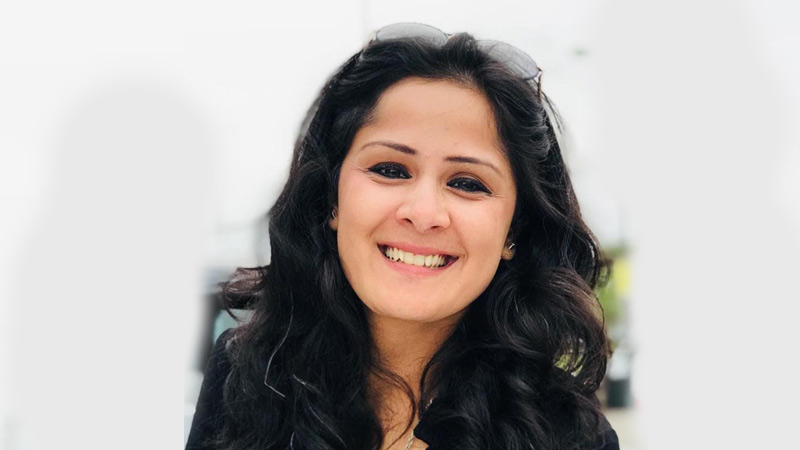
MUMBAI: Pallavi Singh is moving on from Vida World, closing a chapter that saw her play a central role in shaping the company’s customer experience and revenue engine at a time when India’s electric vehicle space was finding its feet and its confidence.
Singh joined Vida World in April 2022 as head of customer experience and revenue, with a mandate that went far beyond dashboards and processes. Over nearly four years, she worked on building a consumer-first EV ecosystem, blending technology, digital services and go-to-market strategy to make the brand relevant, usable and commercially viable in a crowded and noisy category.
Her brief was clear but complex. Make electric mobility feel intuitive, desirable and scalable. Under her leadership, Vida focused on experience-led frameworks that connected product, platform and customer touchpoints, while ensuring revenue was not an afterthought but a natural outcome of good design and smart execution.

Before Vida, Singh had already built a reputation as a marketer who enjoys doing the hard things first. As marketing director at BMW India, she created the brand’s first-ever D2C and online sales platform globally, the BMW contactless experience, a move that rewired how luxury cars could be sold in India. She also led the launch of eight product lines and rolled out integrated digital journeys from first click to final delivery.
Earlier, as founding CMO of MG Motor India, Singh was part of the core team that introduced the brand to the country. From shaping MG’s positioning to onboarding dealers through a digital-first approach and even signing Benedict Cumberbatch as brand ambassador, she helped turn a new entrant into a familiar name.
Her longest innings came at Harley-Davidson India, where she rose to become director of marketing and one of the youngest global marketing heads in the company. She helped localise the American legend for Indian riders, built communities through platforms like India Bike Week, and championed inclusivity with initiatives such as Ladies of Harley.
With a career that spans motorcycles, luxury cars and electric mobility, Singh’s exit from Vida World marks the end of a high-impact phase. Where she heads next is not yet known, but if past patterns hold, it is unlikely to be dull or conventional.





Brands
Dunkin’ Donuts to exit India as Jubilant FoodWorks ends 15-year franchise deal
The quick service restaurant giant is ending a 15-year franchise partnership with the American doughnut chain, even as it renews its Domino’s agreement for another 15 years
NOIDA: Dunkin’ is done in India. Jubilant FoodWorks Ltd, the country’s leading quick service restaurant operator, has decided not to renew its franchise agreement with the American coffee and doughnut chain, and will wind down its Indian stores in a phased manner before December 31, 2026, bringing a 15-year partnership to a quiet, loss-laden close.
The decision, approved by JFL’s board on March 30, 2026, ends a relationship that began with a Multiple Unit Development Franchise Agreement signed on February 24, 2011. JFL will now evaluate and undertake what it described in a regulatory filing as the “rationalisation and/or cessation of certain operations and/or sale, transfer or disposal of assets and/or assignment or transfer of franchise rights,” all in consultation with Dunkin’s brand owners and strictly within the terms of the original agreement.
The numbers tell the story bluntly. In the financial year 2024-25, Dunkin’ India posted a revenue of Rs 37 crore against a loss of Rs 19 crore — a haemorrhage that was always going to test the patience of a parent company recording revenues of Rs 6,104 crore and a profit of Rs 194 crore in the same period. Doughnuts, it turns out, were never going to move the needle.
The contrast with JFL’s handling of its other marquee franchise could hardly be sharper. Even as it walks away from Dunkin’, the company has just doubled down on Domino’s, signing a fresh Master Franchise Agreement on March 31, 2026, granting it exclusive rights to develop and operate Domino’s Pizza stores in India for 15 years, with an option to renew for a further 10.
JFL, incorporated in 1995 and promoted by the Bharatia family, operates a network of more than 3,500 stores across six markets — India, Turkey, Bangladesh, Sri Lanka, Azerbaijan and Georgia. Its portfolio includes Domino’s and Popeyes on the global side, and two home-grown brands: Hong’s Kitchen and COFFY, a café brand in Turkey.
For Dunkin’, India was always a stretch. The brand never quite cracked the cultural code in a market where filter coffee and chai command fierce loyalty and where the doughnut remains, at best, an occasional indulgence rather than a daily habit. Fifteen years, mounting losses and a parent with better things to spend its capital on was always going to be a difficult equation to solve.
The doughnut has had its last day. The pizza, however, is staying.






