Brands
Outspark sparks ahead with 200,000 paid users and Rs 30 Crore ARR

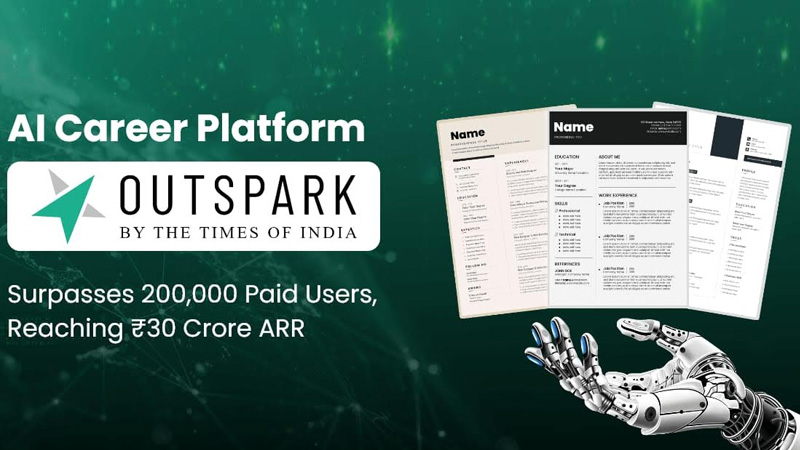
MUMBAI: When it comes to careers, Outspark is lighting a fire under the job market. The AI-powered career-tech platform has raced past 200,000 paid users and clocked an annual recurring revenue of Rs 30 crore, all within months of its debut. Even more dazzling, revenue has grown fourfold in just seven months, making it one of India’s fastest-growing names in career technology.
In an age where resumes battle algorithms before reaching recruiters, Outspark is arming professionals with an AI toolkit that feels more Silicon Valley than CV valley. From auto-polished resumes and studio-grade Linkedin headshots to an AI co-pilot that suggests daily posts and networking prompts, the platform is designed to turn passive profiles into magnets for opportunity.
The numbers are equally bold: more than two million resumes and profiles reviewed, over 300,000 resumes generated, and 20,000 Linkedin makeovers delivered. Half of the company’s revenue now comes from users levelling up to premium services, proving its appeal runs deep.

“Hiring is evolving faster than ever with AI. While companies have powerful tools, job seekers have been left behind,” said Outspark, founder and ceo, Kumar Apoorv. “Outspark bridges that gap by giving professionals the same edge as recruiters.”
With ambitions now stretching beyond India, Outspark is eyeing expansions into the US, Europe, and Southeast Asia. Future plans include hyper-personalised job alerts, a job search co-pilot to automate applications, and partnerships with global recruiters. The goal? To build the world’s largest AI-first talent pool and make job hunting less of a grind and more of a glide.







Brands
SatLeo Labs raises $5.5m seed funding led by Unicorn India Ventures
Fresh capital to power thermal satellite mission and AI data platform
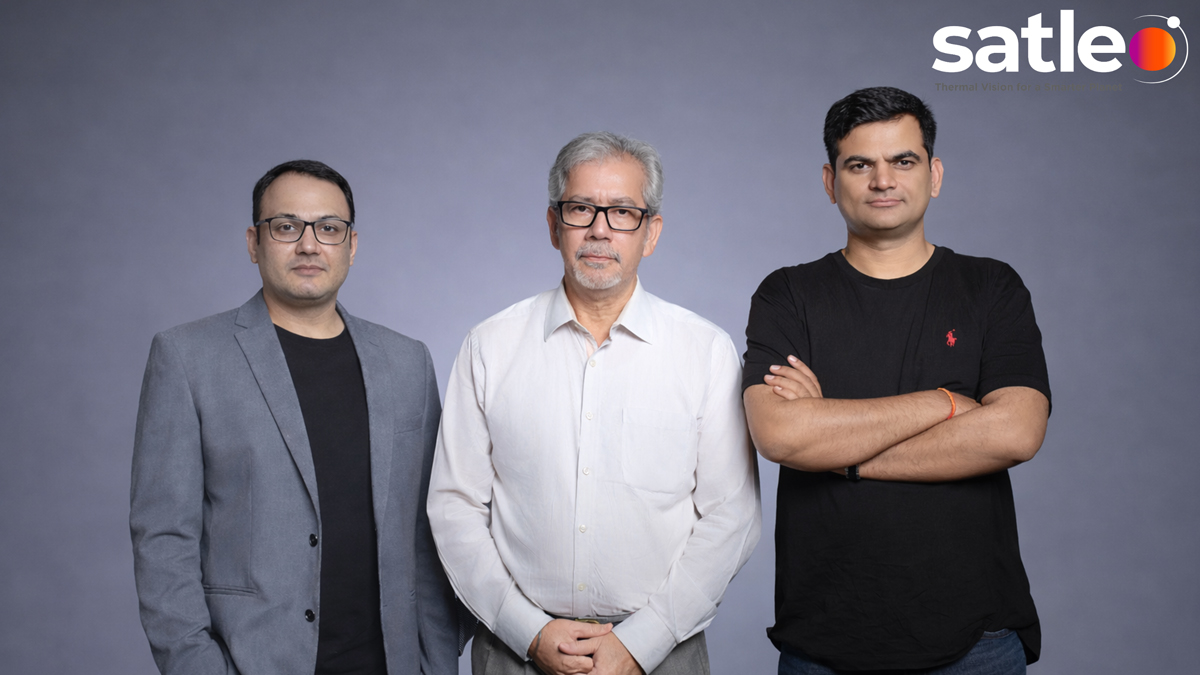
MUMBAI: SatLeo Labs has raised $2.2 million in a fresh seed round led by Unicorn India Ventures, taking its total funding to $5.5 million as it steps up efforts to scale its space-based thermal intelligence platform.
The funding round also saw participation from existing backers including Merak Ventures, Java Capital, IIMA-CIIE and deep-tech investor Manish Gandhi.
The capital will be used to accelerate SatLeo’s flagship thermal satellite mission and further develop its AI-powered platform designed to deliver high-resolution thermal and visible data from low Earth orbit. The company aims to turn this data into actionable insights for sectors ranging from climate monitoring to urban planning.
Over the past year, SatLeo has scaled rapidly, growing its team from 8 to 30 specialists across satellite engineering, thermal sensing and AI-led geospatial analytics. It has also achieved a key milestone with the development of its first experimental payload, TAPAS-1, which reached near flight-ready status within six months and is now positioned for launch.
On the ground, the startup has begun translating its technology into real-world use cases. Pilot projects in cities such as Ahmedabad and Tumakuru have focused on monitoring urban heat islands and air pollution, impacting over 400,000 citizens. At the same time, its commercial pipeline has expanded sharply, with letters of intent rising from around $15 million to over $42 million within a year.
SatLeo Labs co-founder and CEO Shravan Bhati said, “Sustainability has become imperative amid accelerating climate change and rapid urbanisation. This fundraise represents a critical milestone as we move into the execution phase of our next mission.”
He added that the company is focused on scaling its satellite constellation and enhancing payload performance to deliver thermal intelligence at a global level.
Backing the startup, Unicorn India Ventures managing partner Bhaskar Majumdar said, “Space is an arena where the next wave of technological innovation will emerge. SatLeo’s ability to combine thermal and visible satellite data into real-time insights positions it strongly for long-term growth.”
Looking ahead, SatLeo plans to focus on launch readiness, expanding commercial deployments and scaling its technology stack over the next 12 months.
As demand for climate and environmental intelligence grows, SatLeo’s latest fundraise signals rising investor confidence in space-tech solutions that bring data from orbit down to everyday decision-making.






