Brands
“Our media investment is lower than last year”: Hyundai Motor’s Tarun Garg

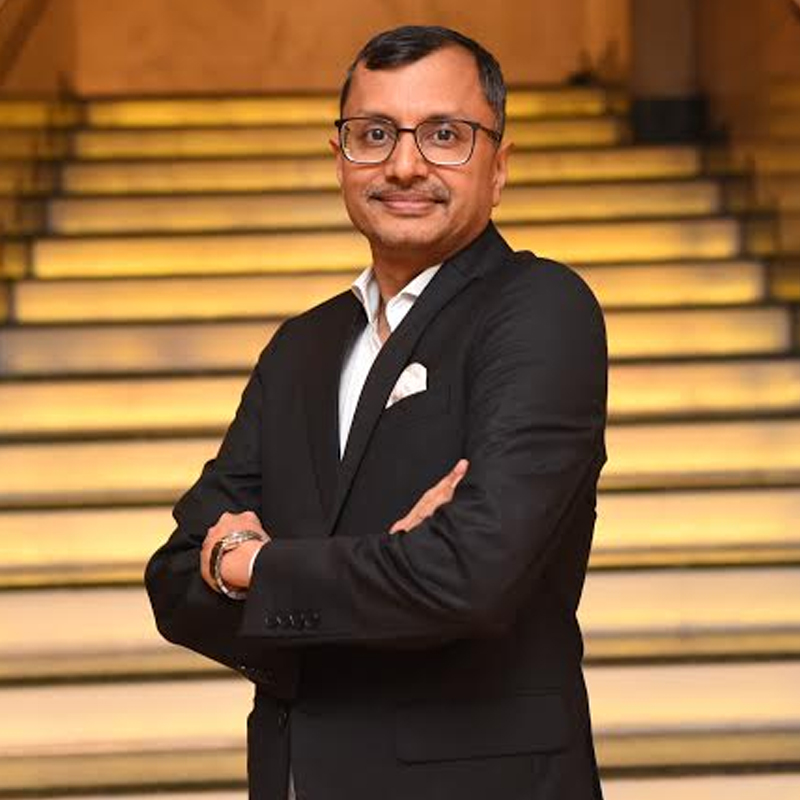
NEW DELHI: Even as the automobile industry was only beginning to cope with the changes from BSVI norms, the pandemic battered it. Deteriorating demand has affected production, factories’ closure and the extended lockdown led to labour disruption. As India eased into Unlock mode, auto brands are engaging in refreshed marketing activities to boost sales.
In an interview with Indiantelevision.com, Hyundai Motor India Ltd director- sales, marketing & service Tarun Garg says that due to the fear of the virus among people, the customer sentiment is shifting towards personal mobility over shared mobility. “We believe there will be an increase in traction for the compact and used car segments.”
The industry witnessed one of its sharpest declines in domestic sales in March 2020. As per SIAM reports, sales of commercial vehicles – light, medium and heavy carriers of passengers and goods – declined by 88.05 per cent to 13,027 units in March 2020 compared to 109,022 units in March 2019.

The brand recently launched a virtual reality experience, ‘The Next Dimension’, an immersive expression of different cultures with human-centric design. According to Garg, "Digital platform has the power to transform the world and we have received an overwhelming response on the event with 39 million views and counting and engagement of over 1.1 million.”
“Perfectly harmonising the dynamics of physical and digital worlds, the entire 33-minute capsule, except the cars and presenters, was shot by using the advance level CGI & VFX technologies, presenting a larger-than-life storytelling experience,” he adds.
He shares that the auto industry will see some revival in the festive season and is likely to normalise early next year. Garg admires that the Indian market has been highly resilient in challenging conditions. “We will be quicker to overcome the adversities than other countries. We will evaluate the environment and determine the future course of production plans.”
Auto industry body, Society of Indian Automobile Manufacturers (SIAM), recently, in a statement, said that the sector was already "facing an unprecedented challenge with 18 per cent de-growth last year and as per an assessment, the impact of COVID2019 on demand for vehicles in the current financial year, the sector could have a decline between 22 per cent to 35 per cent in various industry segments, if the overall Indian GDP growth is at zero to one per cent for FY 21.”
Since consumer sentiment is not substantial and the sector is not performing well, Hyundai’s first aim is to resolve customer anxiety. “Under the ambit of Hyundai Cares, we have introduced multiple financial schemes to enhance customer confidence through programs such as EMI assurance and associations with banks to offer unique customer-centric car finance schemes,” adds Garg.
In the lockdown period, auto companies slashed their advertising spends, especially on TV, and focused on the digital space with campaigns mostly about the pandemic. However, now the momentum is picking up in the Unlock phase and digital and TV viewership is on a record high. Brands are working on new strategies to connect with the target audience.
According to Garg, this unprecedented situation has taught learnings such as to have a sustained communication, focus on digital mediums and customer relationship. However, he shares that though Hyundai has optimised its media mix and investments, it is lower than last year’s level and based on market priority.
He asserts, “The consumption of digital mediums has gone through the roof. We optimised these mediums very strategically. Today, more than 30 per cent of our customer sales queries are coming through digital sources, i.e., 2X over what we recorded last year.”
In an extremely challenging market, Hyundai seems to have made a positive beginning towards normalcy. In the month of June, Garg says it registered a cumulative sale of 26,820 units. The ‘All-New CRETA’ has recorded over 45,000 bookings including 5000 units exported in May, maintaining its SUV dominance for the month of May and June.







Brands
Maharashtra panel orders Lodha to refund Rs 5 crore to homebuyers
Consumer court flags unfair practices in long-running property dispute case
MUMBAI: In a sharp rebuke to one of India’s biggest real estate players, the Maharashtra State Consumer Disputes Redressal Commission has directed Macrotech Developers to refund nearly Rs 5 crore to a senior citizen couple, Uttam and Anindita Chatterjee. The ruling, delivered on March 13, 2026, calls out the developer for “deficiency in service” and “unfair trade practices”, bringing closure to a dispute that has stretched over a decade.
The case traces back to 2015, when the couple booked a 3-BHK flat at World Towers in Lower Parel for Rs 12.22 crore, with possession promised within a year. What followed was a series of changes that complicated matters. After deciding to exit the project, they were persuaded to shift to a 4-BHK in another development priced at Rs 8 crore, with delivery scheduled for 2018. However, within months, the price was allegedly increased to Rs 10 crore. After demonetisation reshaped the market, similar flats were reportedly being offered at lower prices, but the couple were not given the benefit.
Despite paying over Rs 2.83 crore, the couple neither received possession nor clarity. Instead, in 2018, the developer unilaterally cancelled the booking, retained part of the amount as earnest money, and argued that the buyers were investors rather than consumers. The commission rejected this claim, observing that casual references to “investment” do not take away consumer rights when the purchase intent is residential.
The bench also held that the developer could not penalise buyers for payment delays while failing to meet its own delivery commitments. It noted the lack of formal documentation for revised terms and termed the prolonged retention of funds without delivering a home as exploitative.
As part of its order, the commission directed the developer to refund Rs 2.83 crore paid by the couple, along with interest at 10 per cent per annum, amounting to around Rs 2.12 crore. In addition, Rs 1 lakh has been awarded for mental agony and Rs 50,000 towards litigation costs, taking the total payout to over Rs 5 crore. The developer has been asked to comply within two months.
For now, the ruling serves as a reminder that in real estate, shifting terms and delayed promises can carry a significant cost.