MAM
Oreo fans get a ‘chocolaty surprise’

MUMBAI: Interface Communications has conceptualised and carried out the launch campaign of Oreo’s new product variant Oreo Choco Creme. The fans on Oreo’s Facebook page got an exclusive sneak peek of the new television commercial.
The agency used this opportunity to connect with the fans. To unveil the surprise, members had to play a short game where they were asked to drink enough Oreos in a glass of milk to ‘unveil’ the TVC.
The TVC shows a bossy sister trying to entertain herself at the expense of her little brother. She promises him an Oreo if he agrees to wear her pink, polka-dotted hairband. The boy, being used to this, complies. The girl’s real intentions are revealed when she blindfolds him with the hair band instead and surprises him with the new Oreo Choco Cr?me.

The digital medium has been playing an increasingly significant role in all marketing and communication campaigns of brand Oreo.
Interface Communications national creative director Robby Mathew said, “Oreo is a cookie that single mindedly celebrates the child in you, no matter how old you are. This simple FB game allows fans to be kids all over again, by dunking cookies to get a surprise prize – the preview of the new Oreo ad film.”
Internationally too, Oreo has been using the digital medium to promote the brand and its variants. It launched the Daily Twist Campaign some time back which has a new ad every day on social media platforms and a dedicated website. The ads are based on daily events, current affairs or in memory of an event that happened on that particular day in history. The visuals are developed by manipulating the classic Oreo cookie.

MAM
One Hand Clap acquires Agenseed to enter distribution space
Creative agency expands into full-stack services with strategic buyout.
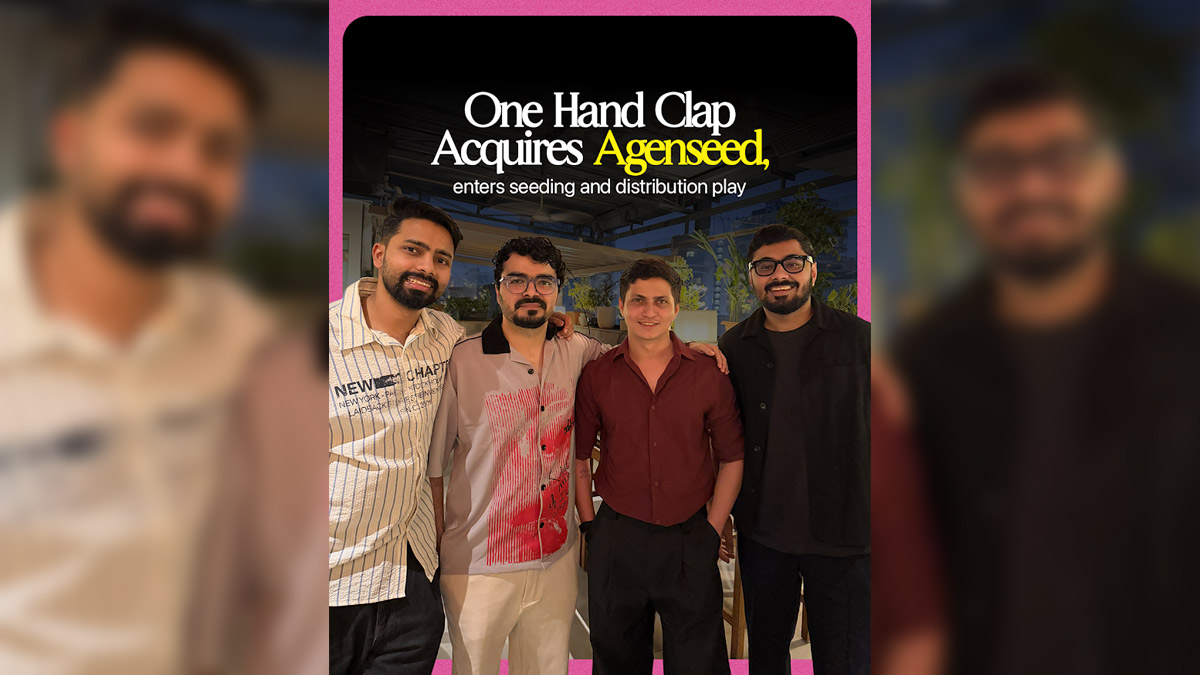
MUMBAI: One Hand Clap has decided to stop just clapping for great ideas now it wants to make sure they actually travel. The leading new-age creative agency and production house has acquired Agenseed, a seeding and distribution firm, marking its formal entry into the distribution segment. The move is aimed at expanding its role across the entire marketing value chain and unlocking new growth opportunities.
One Hand Clap expects the new distribution vertical to contribute up to 15 per cent of its overall revenues over the next 12–18 months, signalling a clear strategic shift beyond pure creative services.
Agenseed, founded by Monish Hardasani and Akram Malik, will function as the agency’s dedicated distribution arm. This acquisition strengthens One Hand Clap’s position as it aims to become a full-stack creative and distribution company in India’s rapidly growing digital advertising market.
With over 90 million posts shared daily on Instagram and brands allocating 25–35 per cent of their digital budgets to distribution and creator-led reach, amplification has become critical to campaign success. By integrating distribution early into the creative process, the agency hopes to help campaigns gain stronger cultural traction and momentum.
One Hand Clap founder Aakash Shah said, “The future of advertising is not just about executing great ideas, but about placing them intelligently. By owning both storytelling and distribution, we can drive greater impact for brands while opening up new revenue streams.”
Agenseed co-founder Monish Hardasani added, “The future belongs to ideas designed to travel. This partnership allows us to integrate distribution thinking at the source.”
Founded in 2019 by former AIB leaders Aakash Shah and Naveed Manakkodan, One Hand Clap has worked with major brands including Swiggy, Google, Netflix India, Crocs, Duolingo, CRED, Bumble, BGMI and Chetak. The agency also secured investment from Zerodha co-founder Nikhil Kamath last year.
In an increasingly fragmented attention economy, this acquisition reflects a broader industry shift where agencies are building end-to-end capabilities to stay competitive. One Hand Clap is clearly clapping louder and ensuring its ideas now reach much further.






