MAM
On Children’s Day, dentsu Impact’s chilling ode to ‘Chotu’


NEW DELHI: Nelson Mandela, the former President of South Africa, had once said, “There can be no keener revelation of a society’s soul than the way in which it treats its children.”
Children’s Day is celebrated to raise awareness about the welfare of our children. Yet, look around and you will witness that the reality is quite far from the truth. Children are suffering everywhere and they are abused daily. Their basic rights, education, dignity, hope, and most of all, childhood is snatched away from them, every single day. Currently, millions of child labourers in India are employed across the country in various segments like homes, factories, construction sites, and elsewhere. Popularly referred to as 'Chotu', these children often deal with menial, backbreaking, and dangerous jobs.
In an ode to showcase this tragedy, dentsu Impact, the creative agency from the house of dentsu international, has launched an eye-opening film in association with My Choices Foundation and Saregama Caravan.

The film #ChotuKaChildhood showcases various versions of Chotu and the hellish world in which they exist. It communicates their silent suffering, a voice that the world can hear. It also sends out a message that the next time anyone sees such heinous abuses around, s/he must report it and not walk away. Only then, we will be able to save the world, one child at a time.
dentsu Impact managing partner and national creative director Anupama Ramaswamy said, “Seeing little children working to make ends meet is the worst form of pain. But we walk away, without reporting it. Why did we choose to launch the film on Children’s Day? We believe the contrast of using an occasion, which celebrates children to highlight their suffering, will make the bitter truth come to light more strongly. It is my hope that with more people understanding the message of the film, they will raise their voices against child labour, and help usher in change.”
Ramaswamy shared that the My Choices Foundation wanted the world to note that there are too many children who still do not enjoy full rights and free choices. “The problem is, we all feel sad when we see a child working for a living, but nobody reports such instances. They wanted to bring to notice the violence, abuse, and exploitation these children go through,” she said.
She further elaborated that every single situation depicted in the film is inspired by real life. The child labour problem in our country is because of child protection laws, organisations cannot ask people to click pictures or geotag the location, etc. “The only way is to urge people not to walk away. Not just empathise and feel pity, but to report. Every one of us needs to report such instances. In the last few days, a lot of eminent people have shared this film. The message is definitely being noticed. We cannot change the entire society, but even if a few people start reporting, I would like to believe our efforts paid off,” she shared.
My Choices Foundation’s aim is to see the transformation of India into a safe place for children, and hope this film will help them do that.







Brands
Boeing appoints Barun as head of FP&A for global engineering function
Seasoned finance leader to steer budgets and strategy across global centres
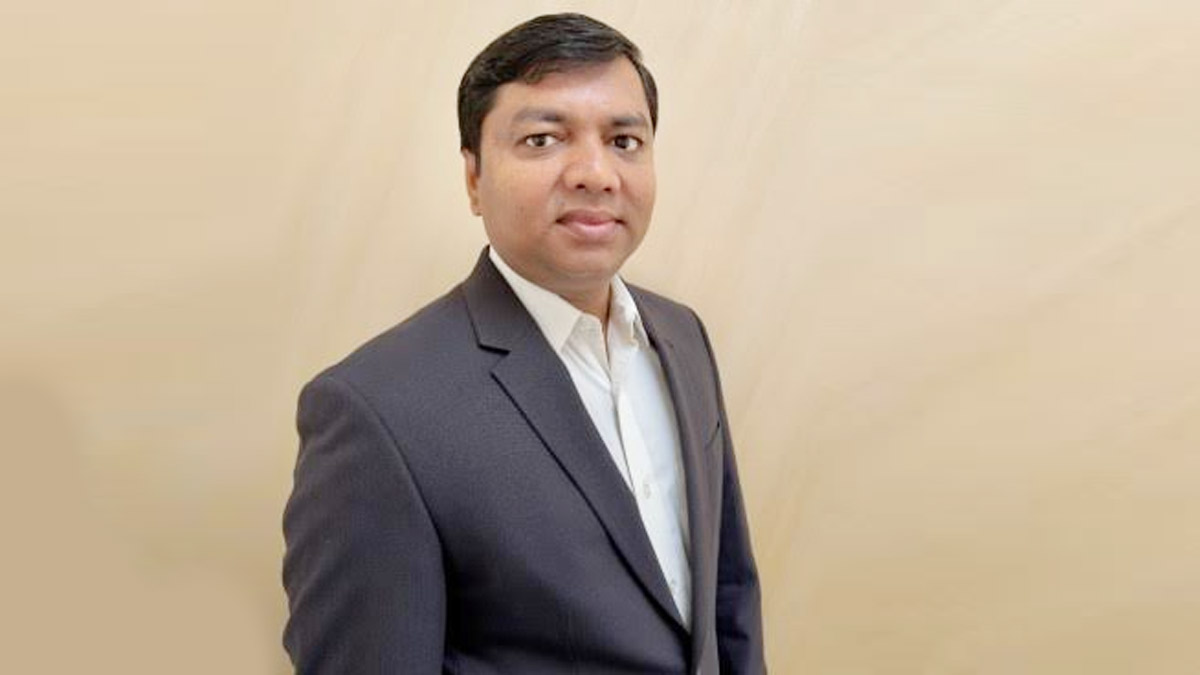
BENGALURU: Boeing’s finance cockpit has a new pilot, and he is no stranger to turbulence or transformation. Boeing has appointed Barun as head of FP&A for global engineering, placing him at the centre of financial strategy for its worldwide engineering and technology operations.
Based in Bengaluru, Barun steps into a role that is as expansive as it is critical. He will serve as the primary finance lead for Boeing’s Engineering and Technology Centers globally, working closely with executive leadership to shape financial decisions, manage complex budgets, and design scalable finance processes that support the company’s growing engineering footprint.
In a note announcing his move Barun said, “I’m excited to share that I’ve joined Boeing Global Engineering. This opportunity is incredibly meaningful to me not just from a professional standpoint, but also for what Boeing represents globally.” He added that he looks forward to contributing to an organisation that continues to shape the future of aerospace and innovation.
Barun’s mandate spans strategic financial leadership, operational oversight, and stakeholder engagement. From directing large-scale budgets and schedules to influencing long-term organisational goals, the role blends financial discipline with business foresight. He will also lead cross-functional teams and partner with finance colleagues worldwide to support engineering programmes across geographies, including India.
The appointment caps a long stint at Juniper Networks, where Barun spent over a decade, most recently as finance senior manager. There, he led FP&A for global product business units and G&A functions, driving budgeting, forecasting, and long-range planning. He also played a key role in enterprise-wide transformation, including spearheading an Oracle to SAP ERP migration and building advanced analytics capabilities using tools such as Tableau and SAP Analytics Cloud.
His earlier career includes finance leadership roles at Sony India Software Centre, Cognizant Technology Solutions, and Mphasis, where he focused on financial planning, governance frameworks, and operational efficiency across global delivery centres.
A chartered accountant from the Institute of Chartered Accountants of India, Barun brings nearly two decades of experience across financial planning, digital transformation, and analytics-led decision making.
His appointment comes at a time when global engineering operations are becoming increasingly complex and distributed, requiring sharper financial oversight and agile planning. With Barun at the helm of FP&A for engineering, Boeing appears to be tightening its financial playbook as it looks to scale innovation with discipline.






