AD Agencies
O&M Hong Kong uses DNA testing to put a face to litterbugs

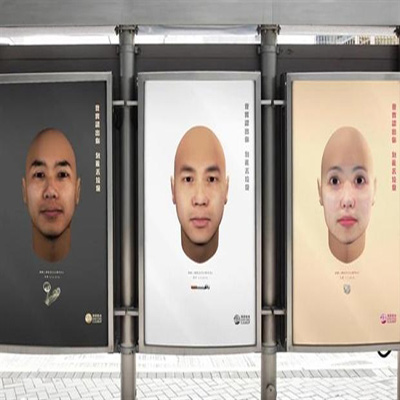
MUMBAI: Ogilvy & Mather Hong Kong (Ogilvy) has launched a city-wide campaign for the Hong Kong CleanUp Initiative organised by Ecozine and The Nature Conservancy. The campaign, entitled ‘The Face of Litter’, has launched in conjunction with Global Earth Day.
With a staggering sixteen thousand tons of waste dumped in Hong Kong every day, the campaign aims to raise awareness of the extent of littering across the city, pinpoint those responsible and encourage people to change their behaviour.

Turning to science for answers, Ogilvy has targeted key locations in Hong Kong to collect, analyse and create DNA-based composites of the perpetrators. By combining the expertise of US-based research centres and advanced Snapshot DNA phenotyping provided by ParabonNanoLabs, data has been used to create a visual representation of the person who has littered. Because age is impossible to determine through DNA alone, but still integral in creating an accurate portrait, DNA data has been combined with other factors, such as demographics based on the type of litter and where it was collected to determine the approximate age of the litterer.
Ogilvy & Mather Group Hong Kong chief creative officer Reed Collins said, “This campaign is one of a kind. It’s interactive. It’s innovative. It’s our own science experiment that we’re using to create social change. Litter is such a major problem in Hong Kong and thanks to newly available DNA technology we can now put a face to this anonymous crime and get people to think twice about littering.”
The Hong Kong Cleanup founder and CEO Lisa Christensen added, “We are thrilled to be part of this innovative campaign, which is sure to have a positive impact on people and the community. Last year, during the six-week Hong Kong Cleanup Challenge, 418 teams comprising 51,064 participants, collected a total of 3,894,000 kgs of litter from city streets, coastal area’s and country trails. Sadly, we suffer from a serious ‘pick up after me’ mentality, and this simply must change.”
OgilvyOne Hong Kong executive creative director Rafael Guida said, “While this method may not identify specific individuals, it will be enough to make people think twice about littering. The campaign combines a public service message with science and technology, enabling us to communicate with Hongkongers in a very different way.”
Poster portraits of perpetrators will be placed across the city as well as online. To create further awareness, Ogilvy will also be promoting a video that demonstrates the experiment and warns people not to litter at the risk of becoming the next face of the campaign.


AD Agencies
Publicis Groupe to acquire 160over90 from WME Group
Deal aims to build data-led platform linking brands, fans and culture at scale
MUMBAI: Publicis Groupe has agreed to acquire 160over90 from WME Group, in a move that signals a major push into the fast-growing world of sports and culture-led marketing.
The deal, subject to regulatory approvals, will see Publicis combine its existing Publicis Sports capabilities with 160over90’s global footprint to create what it calls a unified, end-to-end platform connecting brands with audiences through sport, entertainment and culture.
Founded as a division of WME Group, 160over90 has built a reputation for delivering high-impact campaigns across some of the world’s biggest sporting moments, including the Super Bowl, Olympic Games and FIFA World Cup. With over 670 employees across the US, UK, EMEA and Apac, the agency works with global brands to create experiences that resonate both on and off the field.
The acquisition reflects a broader shift in marketing, where sport has become a central pillar of premium media. With the global sports media market estimated at $150 billion and sponsorships crossing $90 billion, brands are increasingly looking for more integrated ways to engage audiences.
Publicis is betting that a data-led approach will be the differentiator. By integrating 160over90 with its own capabilities, including the Epsilon identity ecosystem and Influential network, the company aims to offer marketers a seamless way to plan, activate and measure campaigns across media, sponsorships, live events and creator partnerships.
Publicis Groupe CEO Arthur Sadoun said, “After building our industry-leading position in identity resolution, commerce, and creators, our next big bet is sport. In the age of AI, it has become one of the most high-value channels for clients.”
He added that combining 160over90’s expertise with Publicis’ data and technology stack would help “connect brands to fans in ways that are both meaningful and measurable”.
Echoing the sentiment, Publicis Connected Media CEO Dave Penski said, “Sport has become the most powerful intersection of culture, commerce and community,” highlighting the growing need to treat sports marketing as a measurable channel rather than just brand-building.
As part of the deal, Publicis will also enter into a strategic partnership with WME Group, enabling closer collaboration on talent, content and brand partnerships. WME Group president Mark Shapiro said the tie-up would open up new opportunities for talent and brands to scale their ambitions globally.
Post acquisition, the combined Publicis Sports entity will report to Suzy Deering, while Robbie Henchman will remain with WME Group to oversee the ongoing partnership.
The move builds on Publicis’ recent investments in the space, including acquisitions of Adopt and Bespoke in 2025 and a partnership with Magic Johnson Enterprises, underscoring its intent to dominate the intersection of sport, culture and commerce.
As brands chase both attention and accountability, Publicis’ latest play suggests the future of sports marketing may be less about moments alone and more about measurable impact at scale.






