Brands
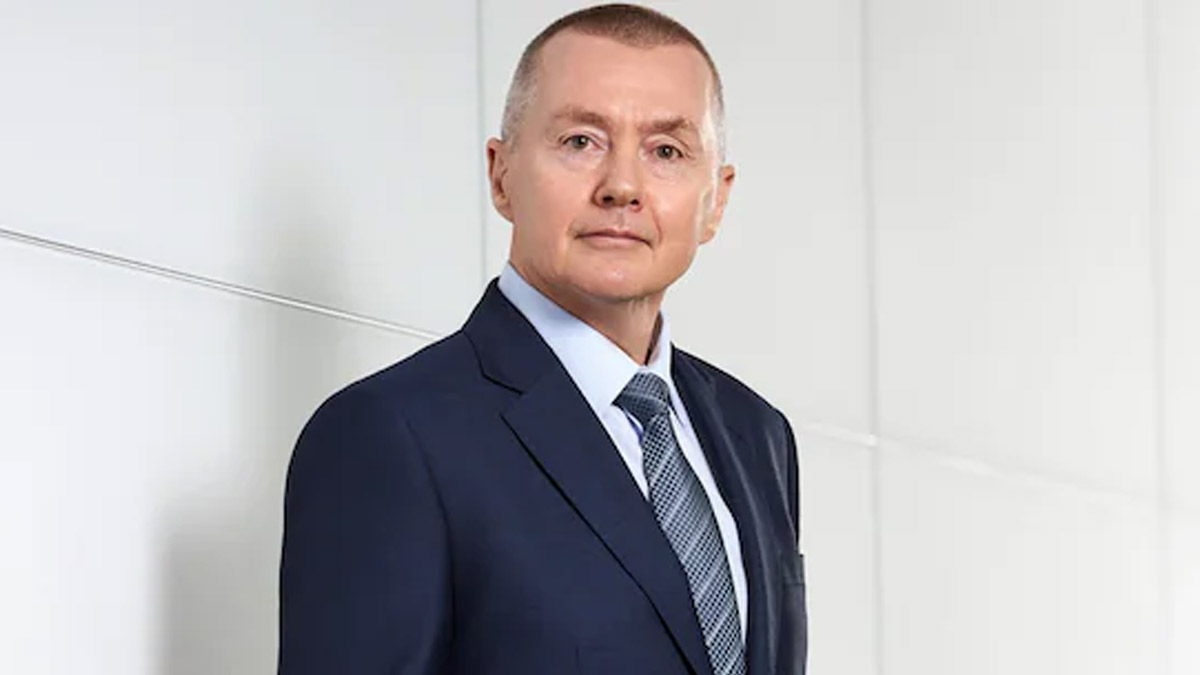
Nxtcell India names Atul Vivek as chief executive officer
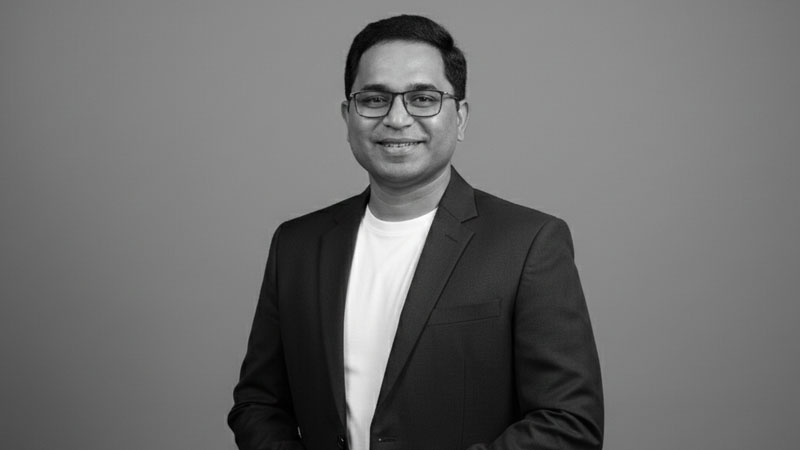
NEW DELHI: Nxtcell India Pvt. Ltd., the company behind the Alcatel brand in India and select international markets, has elevated Atul Vivek to chief executive officer, effective 1 January 2026.
Vivek steps into the top role after serving as chief business officer, where he played a key part in sharpening Alcatel India’s market playbook, strengthening go to market execution and building teams focused on long term scale. His promotion signals both continuity and ambition as the company gears up for its next phase of expansion.
With nearly two decades of experience across sales, marketing, retail operations and P&L leadership, Vivek brings a well travelled résumé. His career spans consumer and technology heavyweights including Realme, Samsung Group, boAt, Lava, Aditya Birla Group and Future Group, giving him a ringside view of how brands are built, grown and sustained in competitive markets.
As CEO, Vivek will have end to end responsibility for business growth, operations and strategic direction across Alcatel smartphones, its connected ecosystem and other brands within the Nxtcell India portfolio. He will also lead expansion across both Indian and international markets, as the company prepares to launch a new smartphone, an AIoT connected ecosystem and a consumer durables brand.
Nxtcell India managing director Sanjeev Rathi, said the appointment reflects confidence earned over time. “Atul has consistently shown clarity of thought, execution strength and an ability to scale businesses. His elevation reinforces our belief in his leadership as we strengthen our multi brand portfolio and expand globally.”
Vivek called the role a natural next chapter. “It has been a privilege to build Alcatel with the Nxtcell team. Leading the organisation at this moment of growth, while launching new brands and entering new markets, is both exciting and humbling. I look forward to accelerating brand led growth and creating future ready solutions with lasting impact.”
With fresh launches on the horizon and a seasoned hand at the helm, Nxtcell India appears set to keep its foot firmly on the accelerator.

Brands
From AI to IPOs: Hurun rich list shows billionaire boom year
AI, China and Musk power record surge as global billionaire club crosses 4,020
MUMBAI: Money, it seems, has learned to multiply faster than rabbits. The world’s billionaire club has burst through the 4,000 mark for the first time, with fortunes swelling so rapidly that the planet minted two new billionaires every single day last year.
That is the headline finding from the Hurun Global Rich List 2026, which counted 4,020 US dollar billionaires, up 578 from last year, setting a new world record. Their combined fortunes jumped 28 per cent, reflecting roaring stock markets, the unstoppable momentum of artificial intelligence, and a renewed wave of global industrial expansion.
If wealth were an Olympic sport, Elon Musk would be running laps around the competition. The Tesla and SpaceX founder has reclaimed the title of the world’s richest person for the fifth time in six years, with his wealth soaring 89 per cent to an astonishing US$792 billion. The surge was fuelled by booming valuations for Tesla and SpaceX, the latter now valued at US$1.2 trillion as it prepares for what could be a record-breaking IPO.
Musk’s meteoric rise also places him on the brink of a historic milestone. According to Hurun Research, he could become the world’s first trillionaire as early as this year, far earlier than previous predictions of 2030.
Behind Musk, Jeff Bezos retained second place with US$300 billion, buoyed by Amazon’s dominance in AI-driven cloud computing and renewed excitement around Blue Origin’s space ambitions. Meanwhile, Larry Page stormed into the top three for the first time after his wealth surged 65 per cent to US$271 billion, powered by Alphabet’s explosive growth and the global adoption of its Gemini AI systems.
Other big tech names continue to dominate the upper ranks. Sergey Brin sits fifth with US$247 billion, while Mark Zuckerberg, despite a modest rise to US$234 billion, slipped to sixth place. Europe’s lone representative in the top ten, Bernard Arnault of LVMH, held seventh position with US$178 billion following a rebound in luxury markets.
Perhaps the most striking new arrival in the top tier is Nvidia chief Jensen Huang, who entered the global top ten for the first time. His wealth climbed 34 per cent to US$172 billion after Nvidia briefly crossed a US$5 trillion market capitalisation, cementing its role as the backbone of the AI revolution.
Yet while tech titans surged, one legendary name slipped from the elite club. Bill Gates, after donating US$20 billion to philanthropy last year, dropped out of the top ten for the first time since the Hurun list began fifteen years ago, though he still retains a formidable US$115 billion fortune.
The geography of wealth has also shifted dramatically. After several years of decline, China has reclaimed its title as the world’s billionaire capital, with 1,110 billionaires, an increase of 287 in a single year.
The United States follows with 1,000 billionaires, up 130, while India remains firmly in third place with 308 billionaires, gaining 24 over the year.
Hurun researchers say China’s resurgence has been driven by industrial manufacturing, semiconductors and healthcare, sectors benefiting from Beijing’s push for technological self-sufficiency.
In India, the billionaire story is evolving rapidly. More than 80 per cent of Indian billionaires today were not on the list ten years ago, signalling a dramatic shift in the country’s wealth engines. Automobiles, financial services and food businesses led the charge.
At the top of India’s wealth ladder stands Mukesh Ambani, Asia’s richest person, with US$109 billion, followed by Gautam Adani with US$83 billion.
At the city level, the title of world’s billionaire capital once again belongs to New York, which hosts 146 billionaires, up 17 from last year.
China’s Shenzhen surged into second place with 132, overtaking Shanghai, while Beijing ranked third. Mumbai, home to 95 billionaires, slipped to sixth place globally.
If one force defined wealth creation in 2025, it was artificial intelligence. The list identified 114 billionaires whose fortunes are tied to AI companies, including 46 newcomers, making AI the single biggest engine of new billionaire creation.
Companies like Anthropic, the creator of Claude AI, produced seven new billionaires after its valuation soared to US$380 billion. Meanwhile, OpenAI’s alumni network has become a billionaire factory, with 14 billionaires emerging from the ecosystem.
The youngest among the new wealth creators are the founders of AI recruitment startup Mercor. Brendan Foody, Adarsh Hiremath and Surya Midha, all just 22, debuted with fortunes of US$2.4 billion each, becoming the youngest self-made billionaires on the list.
The billionaire economy is also becoming more diverse. By sector, financial services remained the biggest source of wealth, accounting for 11 per cent of billionaires, followed by media and entertainment (10 per cent), retail (9 per cent), and consumer goods (8 per cent).
Industrial products saw the biggest influx of newcomers, adding 109 billionaires, while healthcare also produced a significant wave of fresh fortunes.
Even cryptocurrencies maintained a foothold, with 23 crypto billionaires led by Binance founder Changpeng Zhao, worth US$29 billion, a 32 per cent increase.
Wealth is also spilling into unexpected arenas. A record 463 billionaires now own stakes in sports teams, including Dallas Cowboys owner Jerry Jones and Golden State Warriors investors Peter Guber and Joe Lacob.
Celebrity fortunes also climbed. The world now counts 25 billionaire celebrities and athletes, reflecting a shift toward ownership of brands and intellectual property rather than performance income alone.
Despite the rise of young tech founders, billionaires remain an older club. The average age on the list is 65, though 196 members are aged 40 or under, including 36 under 30.
Women continue to gain ground, with 285 self-made female billionaires, though China still dominates the category with three quarters of them.
Meanwhile, migration continues to shape global wealth. Around 14 per cent of billionaires live outside the country where they were born, with the United States hosting the largest group of immigrant billionaires at 175.
In total, 3,201 billionaires saw their fortunes rise, including 726 newcomers, while 809 saw their wealth fall and 96 dropped off the list entirely.
Yet the overall trend is clear. The billionaire population has more than doubled in a decade, and the elite US$100 billion “11-zero club” now counts 18 members, compared with none less than ten years ago.
As Rupert Hoogewerf, chairman of Hurun Report, puts it, the list tells the story of a rapidly changing global economy. “More than 70 per cent of today’s billionaires were not on the list ten years ago,” he noted.
Which means the real lesson behind the numbers is simple: in today’s economy, fortunes are no longer just built slowly. Increasingly, they are being engineered at the speed of innovation.