MAM
Now 500 cities in India can order from Zomato


MUMBAI: India’s most loved food delivery platform, Zomato is now serving users in 500 cities across India.
Expanding to four new cities every day over the last month, Zomato is rapidly penetrating its food delivery services to utilize the untapped potential in Tier 3-4 cities in India. Today, Zomato makes over 1000 deliveries every minute – this figure has more than doubled in the past nine months.
The newest additions span across the width of our country, to name a few – Alappuzha and Malappuram (Kerala), Pushkar (Rajasthan), Ankleshwar and Mehsana (Gujarat), Kanyakumari, Kodaikanal and Cuddalore (Tamil Nadu), Itarsi and Ashoknagar (Madhya Pradesh), Fazilka and Nawanshahr (Punjab), Vrindavan and Azamgarh (Uttar Pradesh), Silvassa (Daman), Chittoor (Andhra Pradesh), Daltonganj (Jharkhand), Pataudi (Gurgaon), Osmanabad and Sawantwadi (Maharashtra) and Shillong (Meghalaya) – amongst others on the map. With this, Zomato’s food delivery services are now available in three north-eastern states – Meghalaya, Assam and Tripura.

Speaking on the development, Mohit Gupta, CEO- Food Delivery, Zomato, said, “We follow a data-driven strategy to decide potential cities encompassing a measure of the overall population, student population and restaurants. It is a delight to witness first-day-tales from lesser-known cities like Giridih in Jharkhand (population of around 1.5 lakh) clocking over 1000 orders/day and all restaurants in Gudivada in Andhra Pradesh (population of 1 lakh+) running out of food by lunchtime, on the very first day. While the growth in the top 15 cities has tripled in the last 12 months, our emerging cities now contribute 40% to our business. We are excited to change the paradigm of food as we continue to let every bit of India get a taste of Zomato.”
The expansion journey from 25 cities (July 2018) to 500 cities (July 2019) is filled with hard work, challenges, and, most importantly, learnings. Here are the key four learnings:
Far and wide is possible: Every city in India, big or small, thanks to the advent of mobile penetration, is an opportunity worth exploring. We relish the rush of being super-quick operationally but are also humbled by the collective efforts of making things happen in the not-so-inhabited regions.
Two wheels, one ecosystem: Staying true to the belief system behind its Delivery Universe, Zomato is mobilizing people towards better employment. With every single launch, we have observed a spike in the number of delivery partners joining the collective vision.
The beauty of brand recall: One of the most interesting and repetitive events has been the way people (both users and restaurants partners) have shown the desire to have Zomato’s food delivery services made available in their respective cities and towns. Zomato didn’t have to sell hard the brand, as people are already aware of how synonymous the brand is with food.
Challenges don’t last long: With a dedicated team and a singular focus, Zomato has set out realistic goals across varied geographies. The operational challenges faced haven’t been able to make Zomato regret its decision to expand and will not in the future.
On average, Zomato is onboarding 30-50 restaurants in each city; a figure that’s bound to move northward over the coming weeks. In this endeavour, the most endearing and humbling aspect has been the inclusion of delivery partners from the smaller cities/towns who wish to make food deliveries on their bicycles. As Zomato continues to work on introducing e-cycles in the upcoming fleet, the company is encouraging bicycle delivery.







Brands
Boeing appoints Barun as head of FP&A for global engineering function
Seasoned finance leader to steer budgets and strategy across global centres
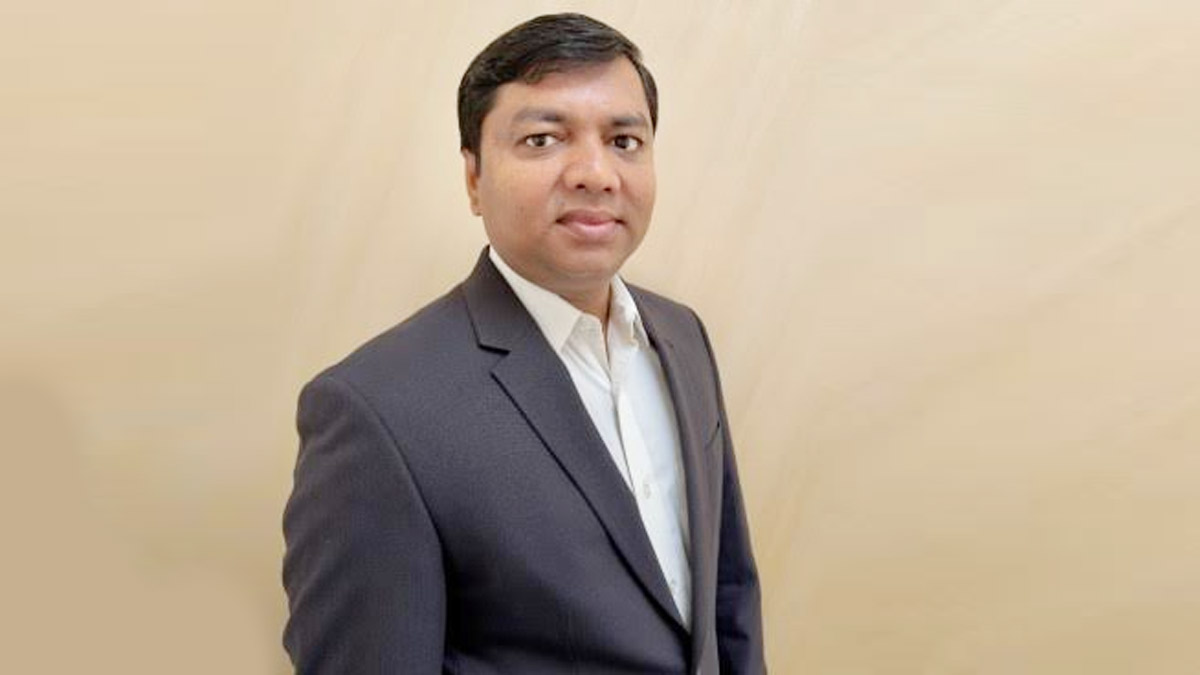
BENGALURU: Boeing’s finance cockpit has a new pilot, and he is no stranger to turbulence or transformation. Boeing has appointed Barun as head of FP&A for global engineering, placing him at the centre of financial strategy for its worldwide engineering and technology operations.
Based in Bengaluru, Barun steps into a role that is as expansive as it is critical. He will serve as the primary finance lead for Boeing’s Engineering and Technology Centers globally, working closely with executive leadership to shape financial decisions, manage complex budgets, and design scalable finance processes that support the company’s growing engineering footprint.
In a note announcing his move Barun said, “I’m excited to share that I’ve joined Boeing Global Engineering. This opportunity is incredibly meaningful to me not just from a professional standpoint, but also for what Boeing represents globally.” He added that he looks forward to contributing to an organisation that continues to shape the future of aerospace and innovation.
Barun’s mandate spans strategic financial leadership, operational oversight, and stakeholder engagement. From directing large-scale budgets and schedules to influencing long-term organisational goals, the role blends financial discipline with business foresight. He will also lead cross-functional teams and partner with finance colleagues worldwide to support engineering programmes across geographies, including India.
The appointment caps a long stint at Juniper Networks, where Barun spent over a decade, most recently as finance senior manager. There, he led FP&A for global product business units and G&A functions, driving budgeting, forecasting, and long-range planning. He also played a key role in enterprise-wide transformation, including spearheading an Oracle to SAP ERP migration and building advanced analytics capabilities using tools such as Tableau and SAP Analytics Cloud.
His earlier career includes finance leadership roles at Sony India Software Centre, Cognizant Technology Solutions, and Mphasis, where he focused on financial planning, governance frameworks, and operational efficiency across global delivery centres.
A chartered accountant from the Institute of Chartered Accountants of India, Barun brings nearly two decades of experience across financial planning, digital transformation, and analytics-led decision making.
His appointment comes at a time when global engineering operations are becoming increasingly complex and distributed, requiring sharper financial oversight and agile planning. With Barun at the helm of FP&A for engineering, Boeing appears to be tightening its financial playbook as it looks to scale innovation with discipline.






