MAM
Not just Bill Gates, several top CEOs expect normalcy only by 2022

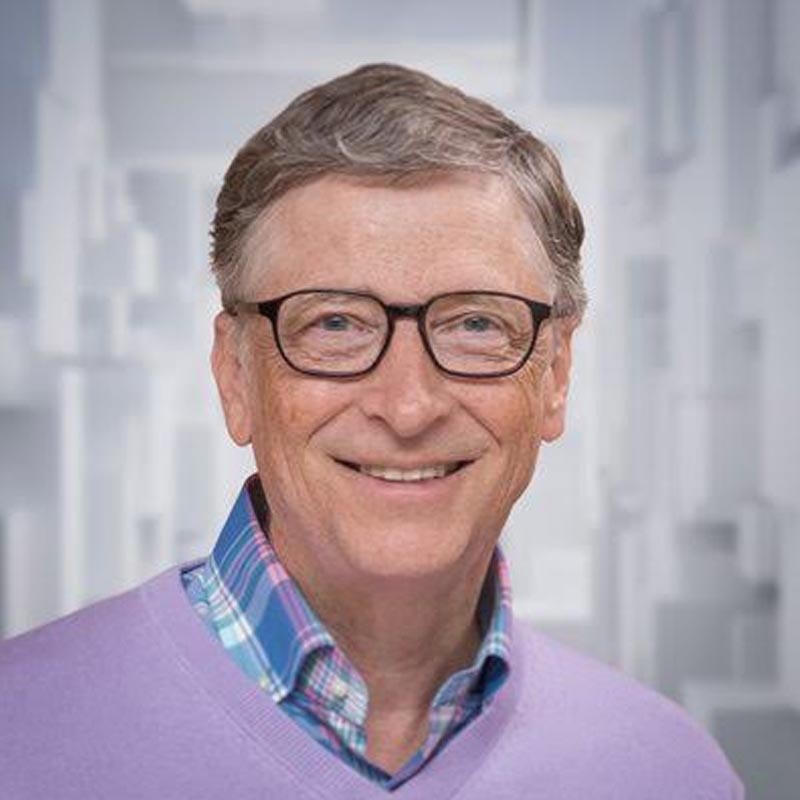
MUMBAI: A few days back, during an interview given to Polish newspaper Gazeta Wyborcza and television broadcaster TVN24, Microsoft co-founder Bill Gates talked about the possible timeline in which the world will return to normalcy. During the interview, Gates predicted that the world will be completely back to normal from the Covid2019 pandemic by the end of 2022. And now, a new survey conducted by KPMG has suggested that most of the CEOs of the world's most influential companies do not expect a return to normalcy this year.
Return to normalcy in 2022
The survey involved 500 CEOs from 11 key markets (Australia, Canada, China, France, Germany, India, Italy, Japan, Spain, the UK, and the US) and it tried to shed light on the CEOs’ views on business growth resumption post the Covid pandemic, their views on vaccine distribution, their top-of-mind organisational risks, and business transformation priorities going forward.

According to the survey, 45 per cent CEOs believe that 'return to normal' will not happen this year, and they expect normality to resume in 2022. The lack of Covid vaccine distribution among their workforces is one of the major reasons that made these business leaders predict a realistic timeline that is needed to achieve a possible return to normal.
One-third of the CEOs (31 percent) who took part in the survey anticipated a return to normal this year. Interestingly, 24 per cent of those surveyed revealed that their business has changed forever due to the coronavirus outbreak.
55 per cent CEOs claimed that the perceived pace of vaccination distribution is prominent. These CEOs stated that they are very much concerned that not all of their employees will get inoculated, and it could negatively impact their business operations.
61 per cent of the company owners revealed that they will wait for a successful vaccine rollout before asking their employees to return to the office. 90 per cent of the CEOs intend to ask employees to report to the company if they get vaccinated.
CEOs adopting new strategies
In the changing world of business due to the Covid outbreak, most of the CEOs made it clear that their primary goal is to ensure the safety of the workforce. 26 per cent of the CEOs say they will cut down on international travel until the end of the pandemic.
Just 17 per cent of the CEOs who took part in the survey revealed that they are planning to downsize the company's physical footprint. 57 per cent of those interviewed plan to conduct customer engagement and queries predominantly via virtual platforms such as chatbots, telephone, web, and social media.
Digitisation is a new trend that is happening in the world of business due to the Coronavirus outbreak.
"A sizeable majority of leaders have reported acceleration of new digital business models and revenue streams (69 per cent) and to develop a seamless digital customer experience (56 per cent). This year, CEOs plan to spend more on digital technologies than last year, with 52 per cent prioritising data security measures, 50 per cent focusing on customer-centric technologies, and 49 per cent committed to digital communications, such as video conferencing and messaging capabilities," states the study report.






Digital
Content India 2026 opens with a copro pitch, a spice evangelist and a £10,000 prize for Indian storytelling
Dish TV and C21Media’s three-day summit puts seven ambitious projects before an international jury, and two walk away with serious development money
MUMBAI: India’s content industry gathered in Mumbai this March for Content India 2026, a three-day summit organised by Dish TV in partnership with C21Media, and it wasted no time making a statement. The event opened with a Copro Pitch that put seven scripted and unscripted television concepts before an international panel of judges, and by the end of it, two projects had walked away with £10,000 each in marketing prize money from C21Media to support development and international promotion.
The jury, comprising Frank Spotnitz, Fiona Campbell, Rashmi Bajpai, Bal Samra and Rachel Glaister, evaluated a shortlist that ranged from a dark Mumbai comedy-drama about mental health (Dirty Minds, created by Sundar Aaron) to a Delhi coming-of-age mystery (Djinn Patrol, by Neha Sharma and Kilian Irwin), a techno-thriller about a teenage gaming prodigy (Kanpur X Satori, by Suchita Bhatia), an investigative crime drama blending mythology and modern thriller (The Age of Kali, by Shivani Bhatija), a documentary on India’s spice heritage (The Masala Quest, hosted by Sarina Kamini), a documentary on competitive gaming (Respawn: India’s Esports Revolution, by George Mangala Thomas and Sangram Mawari), and a reality-horror competition merging gaming and immersive fear (Scary Goose, by Samar Iqbal).
The session was hosted by Mayank Shekhar.
The two winners were Djinn Patrol, backed by Miura Kite, formerly of Participant Media and known for Chinatown and Keep Sweet: Pray & Obey, with Jaya Entertainment, producers of Real Kashmir Football Club, also attached; and The Masala Quest, created and hosted by Sarina Kamini, an Indian-Australian cook, author and self-described “spice evangelist.”
The summit also unveiled the Content India Trends Report, whose findings made for bracing reading. Daoud Jackson, senior analyst at OMDIA, set the tone: “By 2030, online video in India will nearly double the revenue of traditional TV, becoming the main driver of growth.” He noted that in 2025, India produced a quarter of all YouTube videos globally, overtaking the United States, while Indians collectively spend 117 years daily on YouTube and 72 years on Instagram. Traditional subscription TV is declining as free TV and connected TV gain ground, forcing broadcasters to innovate. “AI-generated content is just 2 per cent of engagement,” Jackson added, “highlighting the dominance of high-quality human content. The key for Indian media companies is scaling while monetising effectively from day one.”
Hannah Walsh, principal analyst at Ampere Analysis, added hard numbers to the picture. India produced over 24,000 titles in January 2026 alone, with 19,000 available internationally. The country now accounts for 12 per cent of Asia-Pacific content spend, up from 8 per cent in 2021, outpacing both Japan and China. Key exporters include JioStar, Zee Entertainment, Sony India, Amazon and Netflix, delivering over 7,500 Indian-produced titles abroad each year. The top importing markets are Saudi Arabia, the UAE, Egypt, the United States and the Philippines. Scripted content dominates globally at 88 per cent, with crime dramas and children’s and family titles performing particularly strongly.
Manoj Dobhal, chief executive and executive director of Dish TV India, framed the summit’s ambition squarely. “Stories don’t need translation. They need a platform, discovery, and reach, local or global,” he said. “India produces more movies than any country, our streaming platforms compete globally, and our tech and creators win international awards. Yet fragmentation slows growth. Producers, platforms, and tech move in different lanes. We need shared spaces, collaboration, and an ecosystem where ideas, technology, and people meet. That is why we built Content India.”
The data, the pitches and the prize money all pointed to the same conclusion: India is not waiting for the world to discover its stories. It is building the infrastructure to sell them.