MAM
Nick’s ‘SpongeBob..’ in worldwide licencing programmes

NEW YORK: MTV Networks International has announced the launch of licencing and merchandising programmes for Nickelodeon’s SpongeBob SquarePants in 11 key international markets.
These are Australia, Brazil, Canada, Chile, France, Germany, Mexico, Scandinavia, South Korea, Malaysia and the UK. An official release informs that SpongeBob SquarePants is currently seen in 112 countries, and has remained the number one rated kids’ television show in the US for more than a year.
Regionally executed licensing and merchandising activities will commence in this month and include a global deal with Burger King Corporation; and local retail partnerships with Virgin Megastores in the UK; Walmart in Mexico; Target in Australia; Ripley in Chile; and Zellers in Canada.

MTV Networks International executive VP, International Programme Enterprises, Kathleen Hricik was quoted as saying: “SpongeBobs‘ ratings successes in the US and abroad make it an ideal time to take advantage of the property’s brand awareness and launch international licencing and merchandising programmes. Confidence in SpongeBob SquarePants’ potential as a long-term franchise property has generated millions of dollars in promotional deals and is the next Nickelodeon property to take our international business to a new level.”
A global in-store premium promotion has been signed with fast food giant, Burger King Corporation, spanning over 40 countries in Europe, the Middle East and Latin America.
Since its debut on Nickelodeon’s US channel in 1999, SpongeBob SquarePants has steadily grown from an underground hit with teens and young adults to one of the hottest licenses in the marketplace today, generating more than $750 million in retail sales in the US in 2002 alone.
SpongeBob SquarePants is widely distributed around the world, airing on all Nickelodeon’s international channels and major terrestrial broadcasters such as YTV in Canada, TF1 in France, Super RTL in Germany, ITV in the UK, TV New Zealand, Globo TV in Brasil, Televisa in Mexico and Network Ten in Australia.



MAM
Crocs and Lego launch new collaborative collection in India
Iconic brands bring playful creativity to footwear with first drop on 13 April 2026.
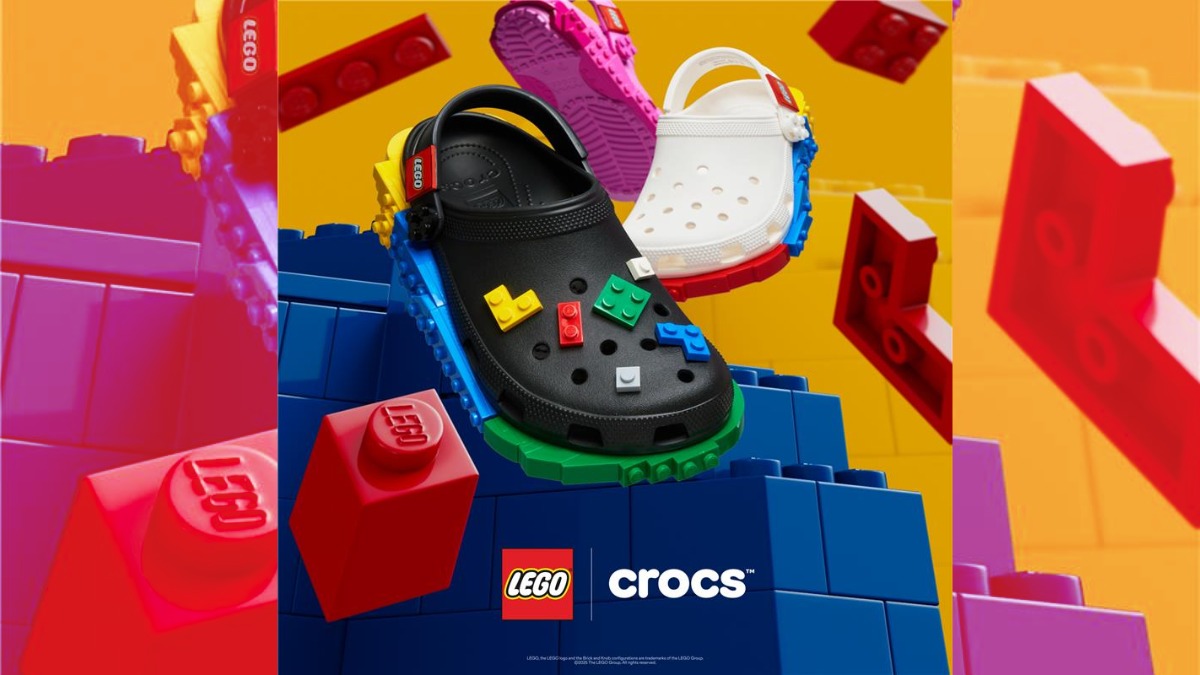
MUMBAI: Crocs and Lego have clicked together once again and this time, the bricks are heading straight for Indian feet. The global footwear brand Crocs has announced the India launch of its latest Crocs x Lego Group collection, following the excitement of their multi-year global partnership unveiled earlier this year. The collaboration celebrates creativity, play, and individuality, merging Crocs’ signature comfort with Lego’s iconic building-block spirit.
The collection will roll out in two phases. A digital-exclusive pre-launch begins on 13 April 2026 on crocs.in, featuring four styles: the Lego Masterbrand Creativity Clog, Lego Midnight Garden Creativity Clog, Lego Creativity Clog, and Kids’ Lego Creativity Clog. Each pair purchased during this phase will include an exclusive Lego minifigure as a collectible bonus.
From May 2026, the full collection will be available across select Crocs stores, VegNonVeg, and Foot Locker outlets nationwide.
The designs playfully blend Crocs’ classic clog silhouette with Lego brick-inspired details, complete with custom Jibbitz charms on the upper and sole. The collection encourages wearers to treat their footwear as a canvas for personal expression, without any set instructions just an open invitation to build, explore, and have fun.
Crocs chief marketing officer Carly Gomez said, “The Lego Group’s boundless imagination makes them the perfect match to Crocs’ wonderfully unordinary spirit. We are both brands that pride ourselves on being built different, celebrating self-expression and fuelling creativity.”
LEGO Group, head of licensing & extended line design & partnerships Satwik Saraswati added, “Our common mission to enable self-expression and wear it with pride only marks the beginning of a journey with endless possibilities.”
The campaign will extend beyond the product launch through creator-led seeding, elevated visual merchandising, and exclusive on-ground previews, supported by a deeper partnership with the Lego India team.
In a market that loves both comfort and fun, Crocs and Lego have built something special, a collection that lets every step feel like playtime. Get ready to click your heels (or rather, your clogs) because this collaboration is set to be a blockbuster hit with Indian fans.







