MAM
Nesterra’s #BringOnThePillows Campaign: Celebrating sibling bonds with a splash of nostalgia this Rakshabandhan

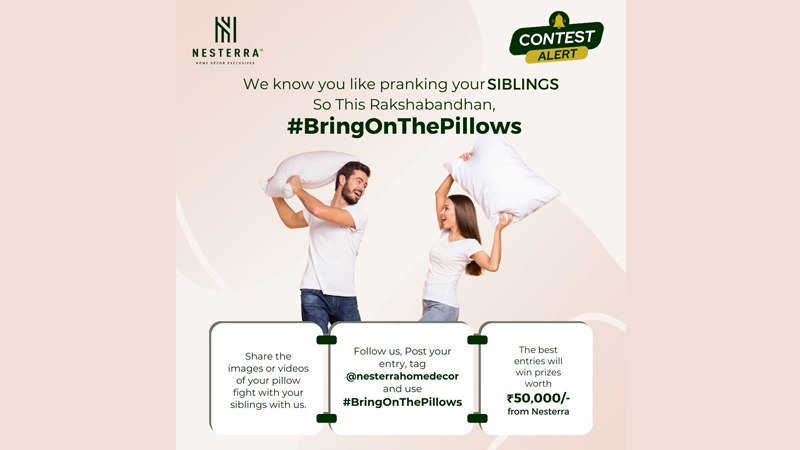
Mumbai – Nesterra, the pioneering premium home furnishings brand in the upholstery and drapery segment from the house of Sutlej Textiles & Industries Ltd. from the prestigious K.K.Birla group, is all set to spark joy and camaraderie with its much-anticipated Rakshabandhan campaign, #BringOnThePillows. As a tribute to the cherished love between siblings, Nesterra presents a captivating two-day weekend activation, bringing the enchanting world of pillow fights to life. The event will take place at Infinity Mall, Malad in Mumbai on the 26 and 27 of August 2023, starting from 11 a.m. onwards.
Nesterra’s #BringOnThePillows is a one-of-a-kind initiative designed to help individuals relive their treasured childhood memories of pillow fights with their dear siblings and loved ones. This innovative and fun-filled event promises to transport participants back to the times of innocent laughter and friendly battles featuring pillows reflecting Nesterra’s trendsetting designs and impeccable craftsmanship. Attendees will have the unique chance to challenge their siblings or loved ones to a thrilling Pillow Fight within the #PillowFightRing. Winners will be rewarded with captivating goodies from Nesterra.
In addition to the exciting on-ground activation, Nesterra is hosting an engaging digital contest on Instagram, offering participants a shot at winning products worth a grand total of Rs 50,000. Participation in this unique contest is both easy and delightful. The Instagram contest is live and accepting entries until Thursday, 31 August 2023. With such alluring prizes at stake, now is the perfect time to get involved and create lasting memories.

To know more about the digital contest, check
Nesterra VP of home textiles and design expert Smita Joshi said, “At Nesterra, we believe in the power of shared memories and connections. The #BringOnThePillows campaign is our way of bringing families closer, reliving cherished moments, and making new memories that will be cherished for years to come. Through this campaign, we celebrate the spirit of Rakshabandhan by embracing the playfulness of childhood and the enduring bond between siblings.”
Nesterra is delighted to foster the spirit of sibling bonds and create an atmosphere of joy and nostalgia with its #BringOnThePillows campaign this Rakshabandhan. Whether through on-ground pillow fights or the captivating digital contest, the brand aims to spread smiles and celebrate the unbreakable love shared among siblings.a

MAM
WPP appoints Estée Lauder’s Anne-Isabelle Choueiri as chief transformation officer
Former Estée Lauder executive to lead operations, technology and culture overhaul under WPP’s three-year growth plan

LONDON: WPP has appointed Anne-Isabelle Choueiri as chief transformation officer in a newly created role tasked with delivering the group’s Elevate28 strategy.
Choueiri joins from The Estée Lauder Companies, where she led enterprise-wide strategic initiatives, including the “One ELC” operating model and major upgrades to enterprise marketing, data and analytics capabilities. She also led the redesign of enterprise technology teams and served on the company’s AI taskforce, driving AI strategy, adoption and value realisation across the business.
At WPP, she will be responsible for designing, implementing and embedding the operating model behind Elevate28, the company’s three-year growth plan unveiled in February 2026. She will lead efforts to improve innovation, efficiency and integration across WPP’s client offerings, with a focus on delivering agile, outcome-driven solutions and measurable growth.
Choueiri will oversee organisational transformation across the group, working closely with product and enterprise technology teams to deploy AI, data and technology to build new capabilities and improve operational performance. She will also work with the people function to embed cultural change, strengthen an agile performance mindset and support talent development across the organisation.
Before joining Estée Lauder, she held senior roles across consulting and digital agencies, including at Accenture, Masaï (a Bain & Company spin-off), and Kearney, with experience spanning strategy, data and digital marketing transformation.
Cindy Rose, chief executive officer of WPP, said Choueiri brings a strong track record of leading large-scale transformation across operations, technology and culture, adding that her appointment will help accelerate the group’s next phase of growth under Elevate28.
Choueiri said WPP’s strategy represents an ambitious opportunity to reshape how the company operates and delivers for clients, adding that she looks forward to building integrated solutions and fostering a culture of innovation and change.
She will be based in New York and will join WPP’s executive committee.







