MAM
Navigating the digital landscape: Marketing insights for fintech startups


Mumbai: India’s fintech industry is seeing a significant change, driven by advanced technological breakthroughs, forward-thinking government legislation, and changing customer tastes. The dynamic nature of this environment is transforming the accessibility, delivery, and overall experience of financial services across the entire nation. India’s adoption rate of 87 per cent above the global average of 64 per cent, establishing it as a prominent fintech powerhouse.
The Industry’s Total Addressable Market is estimated to be $1.3 Tn by 2025 and Assets Under Management and Revenue is estimated to be $1 Tn and $200 Bn by 2030, respectively. The government has also played a crucial role through initiatives like Pradhan Mantri Jan DhanYojana, Aadhar, and Unified Payments Interface, which have improved financial inclusion and digital payments. Fintech funding has also grown significantly, with Indian fintech startups raising $5.65 Bn in 2022.
This fast-moving scenario in India’s Fintech is inviting many new market entrants, while the older players are integrating digital technologies for a wider audience outreach. Today’s Fintech landscape is characterised by a tech-savvy consumer base that demands seamless, personalised, and secure financial solutions.

In such a scenario, it is significant for Fintech companies to implement strong digital marketing strategies, which will enable them to reach millions of people cost-effectively. By utilising in-depth consumer insights, Fintech brands can create highly targeted and personalised campaigns that resonate with their audience. From mobile-first initiatives to engaging social media content, multiple digital strategies in Fintech companies are meeting their consumers where they are building trust and driving conversions.
Channeling the Power of Content and SEO
Content marketing is emerging as a cornerstone of Fintech digital marketing strategies. By creating valuable, informative, and educational content, Fintech companies are positioning themselves as thought leaders. Complementing this content-driven approach, Fintech firms are prioritising search engine optimisation (SEO) to enhance their online visibility and reach. Through keyword research, content optimisation, and technical website improvements, many Fintech companies are attracting organic traffic and staying ahead of the competition in the digital landscape.
Using Emerging Technologies
As the Fintech industry is at the forefront of technological innovation, it is also now getting reflected in the digital marketing strategies implemented by leading players. From artificial intelligence and machine learning to augmented reality and video content, fintech companies are embracing the latest digital tools to deliver personalised, engaging, and impactful experiences.
Using emerging technologies, Fintech brands can streamline their marketing efforts, optimise campaign performance, and provide their customers with cutting-edge financial solutions. Emerging technologies can be and should be implemented in digital marketing too, where hyper-personalization, consumer behaviour, their likes and dislikes, spending habits can be used to create specific target segmentation. Reaching out to the right kind of audience can lead to lead to better conversions and lead generation in a shorter period of time.
Implementing data analytics in an optimum way
Data analytics is vital for shaping successful social media campaigns in Fintech, by providing insights into engagement rates, click-through rates, and conversion rates. These metrics help marketers understand what content performs best, optimise posting schedules, and identify the most responsive audience segments. Data also aids in tracking brand reputation, allowing marketers to quickly address negative feedback. By utilising these insights, marketers can create highly targeted, effective campaigns that drive results, turning social media strategy from guesswork into a precise, evidence-based approach. Thus, companies should use maximum data, in the most effective way and without impacting consumer data breaches to create the most effective Fintech-led brand campaigns.
With the rapid evolution of India’s fintech industry, digital marketing has become essential for effectively reaching and interacting with specific target audiences. The fintech revolution in India showcases the profound impact of technology, creativity, and forward-thinking policymaking. Fintech companies are poised to revolutionise the way Indians access, manage, and engage with financial services by smoothly incorporating digital solutions into the financial ecosystem. The progress of the digital environment will have a significant impact on the future of India’s financial system, with the collaboration between fintech and digital marketing playing a crucial role. Through consistent backing from the government and the creative thinking of fintech pioneers, there is limitless opportunity for more change, leading to a financial future that is more inclusive, efficient, and empowering for everyone.
This article has been authored by DigiXpressions Media co-founder and CEO Mohd Saqib Khan


Brands
Jubilant FoodWorks faces Rs 47.5 crore GST demand, plans appeal
Tax authorities flag alleged misclassification of restaurant services
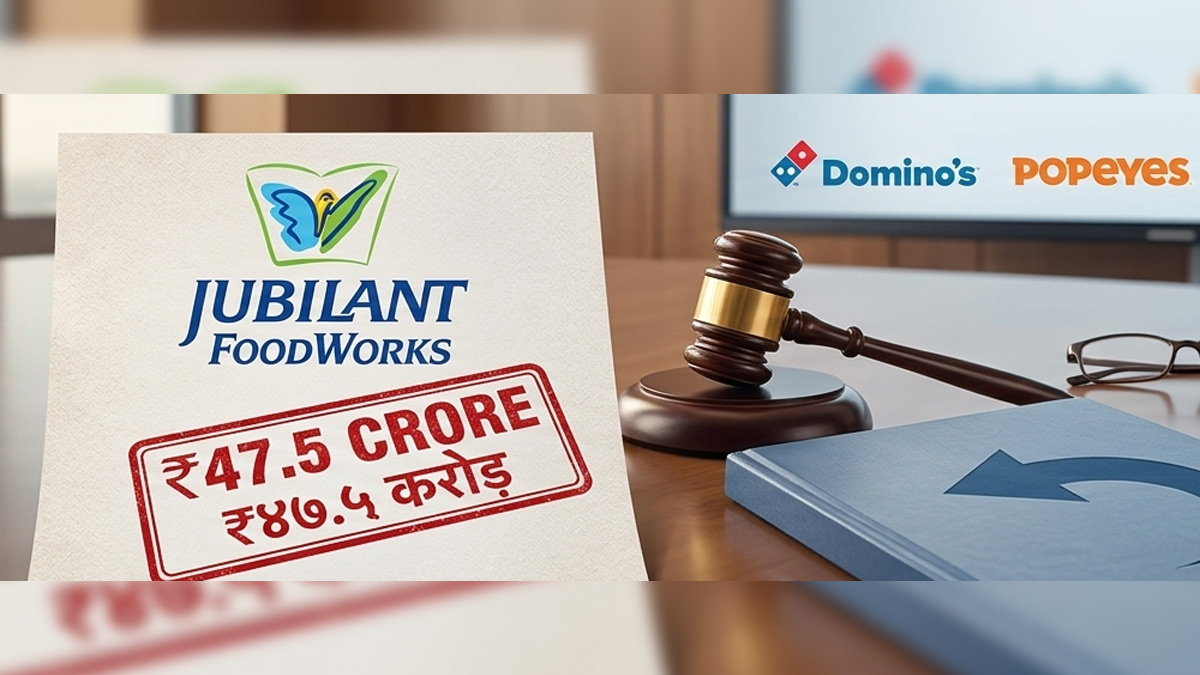
MUMBAI: Jubilant FoodWorks Limited has landed in a tax tussle after receiving a GST demand of Rs 47.5 crore from the office of the additional commissioner of CGST and central excise in Thane, Maharashtra.
The order, issued under the provisions of the Central Goods and Services Tax Act, 2017, relates to an alleged incorrect classification of certain services under the category of restaurant services. According to the tax authorities, this classification resulted in a short payment of goods and services tax for the period between the financial years 2019-20 and 2021-22.
The demand includes Rs 47.5 crore in GST along with an equal amount as penalty, in addition to applicable interest. The order was received by the company on March 13, 2026.
In a regulatory filing to the BSE Limited and the National Stock Exchange of India Limited, the company said it disagrees with the order and believes its arguments were not adequately considered.
The company is preparing to challenge the decision and plans to file an appeal. It added that once the redressal process is complete, the demand is likely to be dropped.
Despite the sizeable figure attached to the notice, the company said it does not expect any material impact on its financials, operations or other activities.
The disclosure was signed by Suman Hegde, EVP and chief financial officer, who confirmed that the company received the order at 19:06 IST on March 13 and has already initiated steps to contest it.
The development places the quick service restaurant major in the middle of a tax debate that could hinge on how certain restaurant-linked services are classified under GST rules. For now, the company appears ready to take the matter from the tax office to the appeals desk.