MAM
Mygate partners with ACKO

Mumbai: Mygate, a living experience tech company, has recently received its aggregator license from the Insurance Regulatory Development Authority of India (IRDAI) to make insurance policies available to its users. This follows the strategic partnership that Mygate entered with ACKO, the tech-first insurer.
Through this partnership, both companies endeavour to deliver intelligent digital protection solutions tailored to the evolving needs of the 4 million households on the Mygate app. By integrating ACKO’s insurance services seamlessly into its platform, Mygate aims to bring insurance closer to home, making it hassle-free and easily accessible to its users. To begin with, the partnership will enable Mygate users looking to opt for car insurance to have easy access to policies at exclusive prices, timely reminders for renewal, and instant paperless claims.
Mygate has also introduced the unique ‘auto insurance reminder’ feature, powered by cutting-edge technology. The feature will enhance the overall customer experience on the app and enable users to benefit from the vast variety of protection offerings.

To further strengthen the partnership, the companies will look at expanding the product offerings beyond motor insurance, adding health and life insurance to the portfolio with solutions such as Outpatient Department (OPD) covers and RWA liability insurance. This will provide holistic insurance solutions powered by ACKO to the Mygate ecosystem.
Mygate co-founder & CEO Abhishek Kumar said, “Our commitment to improving living experience via technology is strengthened by the ability to offer tailor-made insurance for the gated community residents. We are already seeing a very positive reception to the launch and availability of car insurance via the Mygate app, and are excited to uncover what the future holds, as we continue to bolster this partnership and innovate with ACKO.”
“At ACKO, we constantly endeavour to create for the customer. Together with Mygate, we are working at redefining protection beyond auto insurance and trying to solve every aspect of the customer’s lives with our holistic approach. This partnership will help us leverage the potential of our tailor-made solutions and establish us as an integral part of the everyday lives of many million households,” said ACKO General Insurance CEO Animesh Das.
Ather and Hero. In March 2023, ACKO entered the retail health insurance segment to bring the customer into focus with its fair pricing, convenience, and superior customer experience. Further, ACKO’s acquisition of Parentlane is a testament to its growing health insurance business. ACKO has also collaborated with PhonePe and Mygate to directly offer comprehensive car, bike, and health insurance products to consumers on their platform.
ACKO has one of the largest market shares in embedded insurance products like mobility and gadget insurance in partnership with 50+ leading players in the internet ecosystem such as Oyo, redBus, Zomato, HDB Financial Services and Urban Company. Within two years of its launch, ACKO’s Group Health Insurance product has on-boarded 200+ new age, people-first companies including Swiggy, Razorpay, and CRED and insured nearly 8+ lac lives. In a span of 9 years of operations, the company has distributed insurance policies to over 78+ Mn unique customers and issued 1 Bn+ insurance policies.



Brands
Axis Bank named Official Banking Partner of DP World PGTI
Partnership supports all tournaments this season to grow professional golf in India.
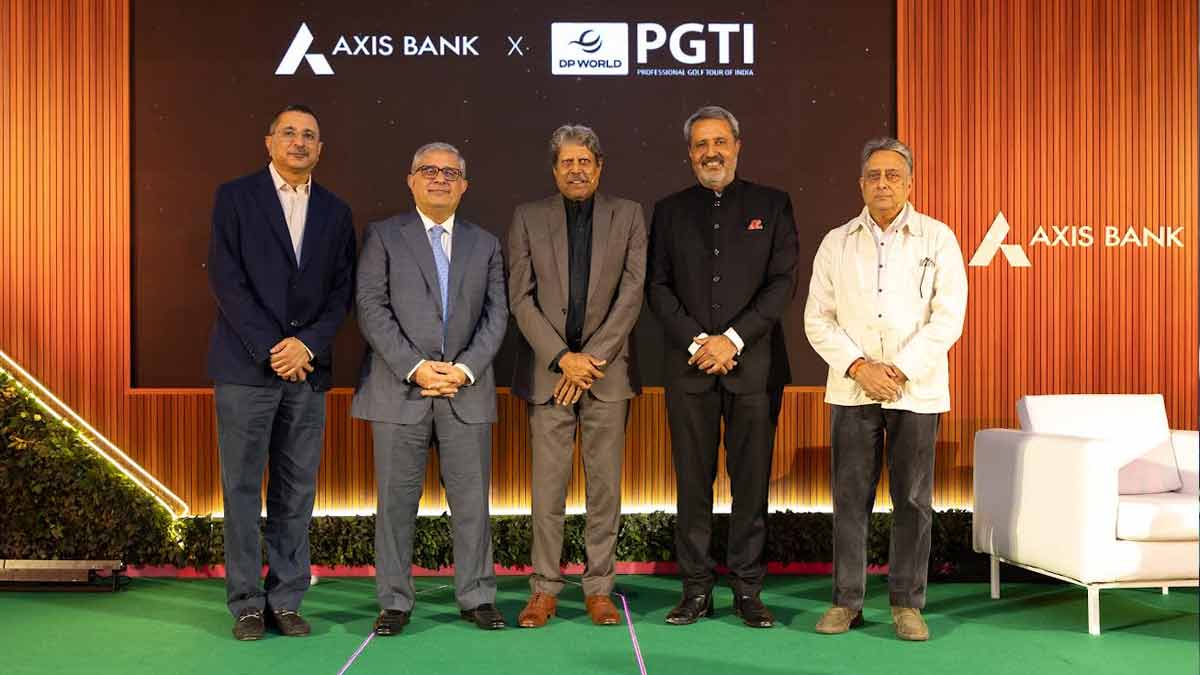
MUMBAI: Axis Bank just teed up a hole-in-one partnership because when a bank sponsors golf’s biggest swing in India, even the fairways feel more financially secure. Axis Bank has been appointed Official Banking Partner of the DP World Professional Golf Tour of India (DP World PGTI), strengthening its commitment to sporting excellence and community engagement while backing the growth of professional golf across the country.
Under the partnership, Axis Bank will support all DP World PGTI tournaments this season, contributing to talent development, enhanced tournament experiences and wider fan engagement. The collaboration aligns the bank’s values of precision, discipline and trust with the Tour’s focus on performance and opportunity.
Axis Bank executive director Munish Sharda said, “We are pleased to partner with DP World PGTI as its Official Banking Partner. Golf embodies precision, discipline, and a pursuit of excellence qualities that strongly reflect who we are at Axis Bank. This association also strengthens our engagement with India’s growing premium customer segments, where the sport has a deep and enduring connect.”
Professional Golf Tour of India president Kapil Dev said, “We are extremely pleased to welcome Axis Bank as a Tour Partner of the DP World Professional Golf Tour of India. Partnerships of this stature play a vital role in strengthening the foundation of the Tour, enhancing opportunities for our players, and expanding the sport’s reach across the country.”
Professional Golf Tour of India CEO Amandeep Johl added, “Axis Bank’s strong legacy of excellence, innovation, and nationwide reach aligns perfectly with DP World PGTI’s goal to elevate professional golf in India and provide greater opportunities for our players.”
In a sport where every stroke counts and every partnership drives distance, Axis Bank isn’t just backing golfers, it’s investing in the fairway to future, turning India’s greens into a stage where precision meets passion and every drive has the power to inspire.









