MAM
Mudra Foundation launches research institute Micore

MUMBAI: Mudra plans to pump in an initial investment of Rs 200 – 250 million towards setting up a Communications Research institute called the Mudra Institute of Communications Research (Micore).
This marks the second venture of the Mudra Foundation for Communications Research and Education after launching C-School Mica in 1991.
With an extension of 6 acres of land to the Mica campus, the new institute will be located in Ahmedabad. Announcing the initiative, Micore acting dean and member of Governing Council in Mica Alan D’ Souza said that the gestation period for everything to fall into place would be about 2-3 years.

From left: Alan D’ Souza, Madhukar Kamath & Dr. Ang Peng Hwa are all smiles at the launch of Micore
Apart from aiming to attract global talent, the institute is conducting a global search for a dean. Also present at the event that briefed the media on the initiative was Mudra Foundation chairman and Mudra MD and CEO Madhukar Kamath and School of Communication and Information, Nanyang Technological University, Singapore dean and associate professor Dr. Ang Peng Hwa.
The main research domains will include integrated marketing communications, cultural communications, semiotics, entertainment, film studies, computer games and cyber culture studies and social and developmental communications. For this purpose, Micore will draw on the disciplines of psychology consumer behavior, economics, anthropology, sociology, arts, design, languages and management. The idea is to create a symbiotic relationship between Mica and Micore.
Once up and running, the institute will be ready to fund research papers in the areas mentioned and over the course of time also attract external funding. The papers released will not only be featured in an official Micore journal but will also be published in International journals, D’Souza told this website.
He added, “The 21st Century is going to be profoundly influenced by the Communications Sciences and Arts. While there will be an overload of information, what will matter is who communicates what, with whom, when and how. Any attempt to improve the quality of life depends on the development of Communication models.”
“There is need to rework the relation between knowledge, information, meaning, understanding, monologue and dialogue. Technology is increasingly going to change the way we learn, work and entertain ourselves. Hence there is need to study the changing role of Communication in this new context and the tools required to sharpen and make effective the way we relate to people. Original research is needed to bridge the gap between what information is available and what information is needed. Micore will help fill that gap.”
Micore will aim at examining research in areas related to local issues. Micore’s stakeholders will be all kinds of businesses marketing all kinds of goods and services, Government bodies at all levels (National, State, District, Panchayat), Media, National and International agencies involved in Marketing and Developmental communications, NGO’s, Society at large and Communications researchers, practitioners and academicians, informs an official release.
Micore will aim to achieve the following:
1. Constitute Communications as a major Research space and study it in all its aspects.
2. Use Communications Research to demonstrate how Communication Models can empower Communities and to address the need of Industry, and Social Institutions for Communication models that can increase their effectiveness.
3. Forecast changing Institution and Individual landscapes and be able to understand the changing role of Communication in the new environment (e.g. from the Broadcasting mode to the Dialogue mode.)
4. Develop new methodologies and tools, databases, archives and training skills required to develop and sustain activity in the area of Communications Research and to support decision making and public policy making through multidisciplinary research.
5. Develop research based linkages between academia, industry and society in India and abroad
The realm of research India is still low as there is a greater stress on teaching and placement says Dr. Ang. “The Institute will be a repository of communications related knowledge and aspires to be the World’s finest and largest Center for Communications Research and Education.”
Kamath said, “The purpose of the Mudra Foundation was to promote the cause of Education and Research in the area of Communications. The first Institute that was set up by the Foundation was Mica, which over the past 15 years has established itself as a unique institution, dedicated to fulfilling the vision of developing innovative professionals in the practice, development and management of Communications to serve the needs of Industry and Society through education, training research and advocacy. Similarly, Micore will be committed to providing Communications centered solutions to developmental and organizational challenges facing the Country, its driving impetus being to build a strong and just Consumer and Civil society.”




Brands
Emami names Dhruv Aggarwal as chief growth officer
Former Bain partner steps in as FMCG firm sharpens growth playbook
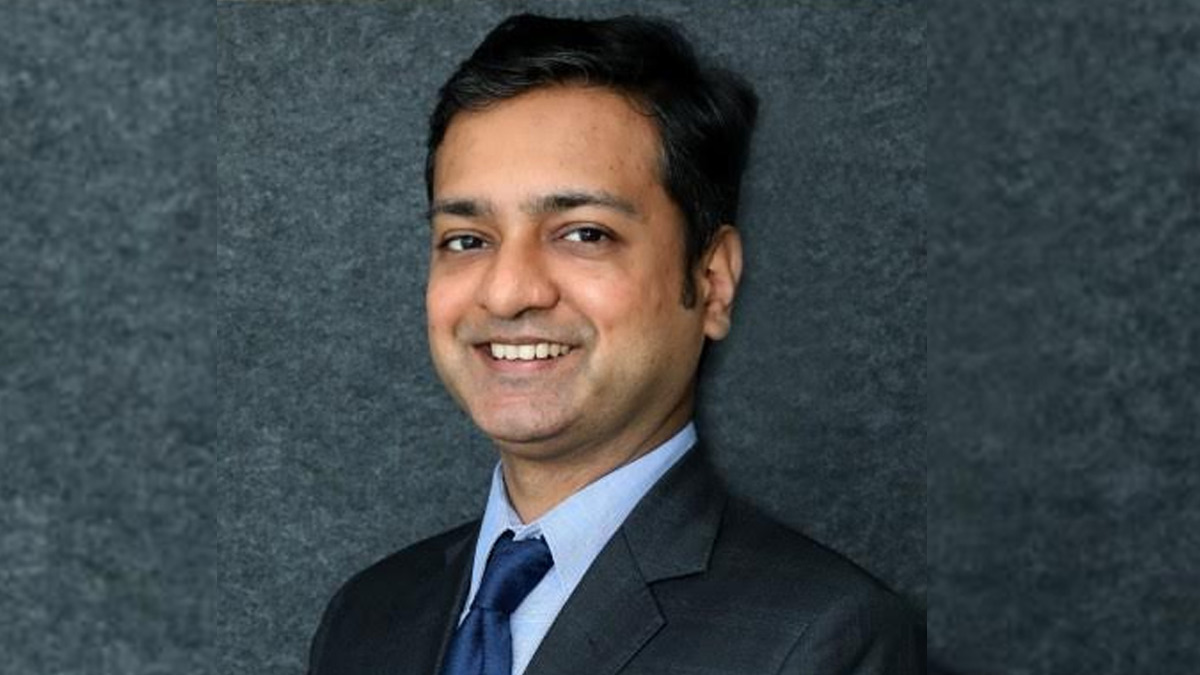
MUMBAI: Emami Limited has appointed Dhruv Aggarwal as its chief growth officer, effective 25 March 2026, following the resignation of Giriraj Bagri.
Aggarwal joins the FMCG major from Bain & Company, where he most recently served as partner. With over two decades of experience across consulting and strategy, he brings a global perspective shaped by work across India, the US, the UK and Germany.
During his tenure at Bain, Aggarwal advised consumer, retail and media companies on large-scale transformations, business turnarounds and growth strategies. He was also closely involved with India’s startup ecosystem, guiding early-stage ventures on scaling and digital expansion, while supporting private equity and venture capital firms on investment decisions.
His earlier stints include a brief role at Barclays Capital and operational experience at Jindal Power, giving him a mix of financial and industry exposure.
Academically, Aggarwal holds an MBA from Indian Institute of Management Bangalore and has also been associated with University of Illinois Urbana-Champaign as a PhD candidate and teaching assistant.
The appointment comes at a time when Emami Limited is looking to sharpen its growth strategy in a competitive consumer market. With a seasoned strategist now at the helm of growth, the company appears set to double down on transformation and expansion in the months ahead.








