MAM
MSOs divided on Trai’s ad regulation policy

MUMBAI: Trai’s ad regulation proposal has divided two of the country’s leading multi-system operators (MSOs) into opposite camps with Digicable coming out in support while Hinduja Ventures-owned operator IndusInd Media and Communications Ltd opting for a no-regulation line.
The regulator had initiated the policy to regulate ads on a clock hour basis on the premise that the country is moving towards digitisation and subscription income will become the primary source of revenue stream for broadcasters, an argument which the broadcasters have trashed outright.
However, Digicable in its response to Trai’s consultation paper ‘Issues Related to Advertisements in TV Channels’ has suggested the cap to be only 10 minutes (eight minutes for commercials and two minutes for self-promotion) instead of 12 minutes proposed by Trai for FTA channels.

For pay-channels, Digicable favours a cap of eight minutes (six minutes for commercials and two minutes for self-promotion) while it is against allowing commercials on HD channels except for two minutes in a clock hour.
“If the broadcaster agrees to have a 100 per cent advertisement free channel, then he can have total forbearance on the subscription rate charged for that channel,” Digicable said.
It also demanded that certain channels which are presently FTA in digital domain but pay in analog should be treated as pay till they have a uniform status across the country.
IIMCL, on the other hand, favoured a more open market policy where consumers must be allowed to decide whether they want an ad-free channel or a free to air channel subsidised by advertisements.
“It is up to the subscriber to opt to watch a channel with advertisements at a lower cost or pay premium to watch a channel without ads. Broadcasters on the other hand will automatically regulate the ad time as too many ad breaks will drive away subscribers, thus affecting their resources,” IIMCL said.
Both the MSOs were in agreement that in case of sporting events, advertisements should be carried only during disruptions as most of the sportscasters are pay channels with certain sports like cricket being monetised heavily.
In the case of News and Current Affairs channels, the two operators agreed on Trai’s proposal to run not more than two scrolls at the bottom of the screen and occupying not more than 10 per cent of the screen space for carrying non-commercial scrolls and tickers.
The audio level of the advertisements should also not be higher than the audio level of the programme, both Digicable and IIMCL held.
Stressing that India is not a pay market as consumers do not pay for content, Cable Operators Federation of India is of the view that the so called pay channels were introduced in India in an illegal way in the non-addressable networks by forcing cable operators to pay to receive them, once they became popular as FTA channels. For the last 18 years pay channels have been exploiting the cable operators using all unethical ways like blackmailing with threats of a black out, arbitrary increase in rates, forcing bouquets on consumers and making cartels for distribution.
Cofi wants FTA channels to get 12 minutes ads in a clock hour and pay channels not to be allowed to carry any ads as they would get 100 per cent subscription in the digital regime.
The cable association did not favour allowing ads in sports channels as they already charge the highest amount amongst all pay channels. It also agrees to permitting only full screen ads and not more than two scrolls at the bottom of a page for news and current affairs channels.
Also Read:
Trai‘s ad review policy to hurt biz models of sportscasters
News channels ask Trai to sort out carriage before capping ad time
TV networks flay Trai for ad regulation





Brands
India’s fastest-growing credit-on-UPI platform Kiwi appoints Sumeet Basrani as chief business officer
Fintech shifts from early adoption to mass distribution through bank and ecosystem partnerships
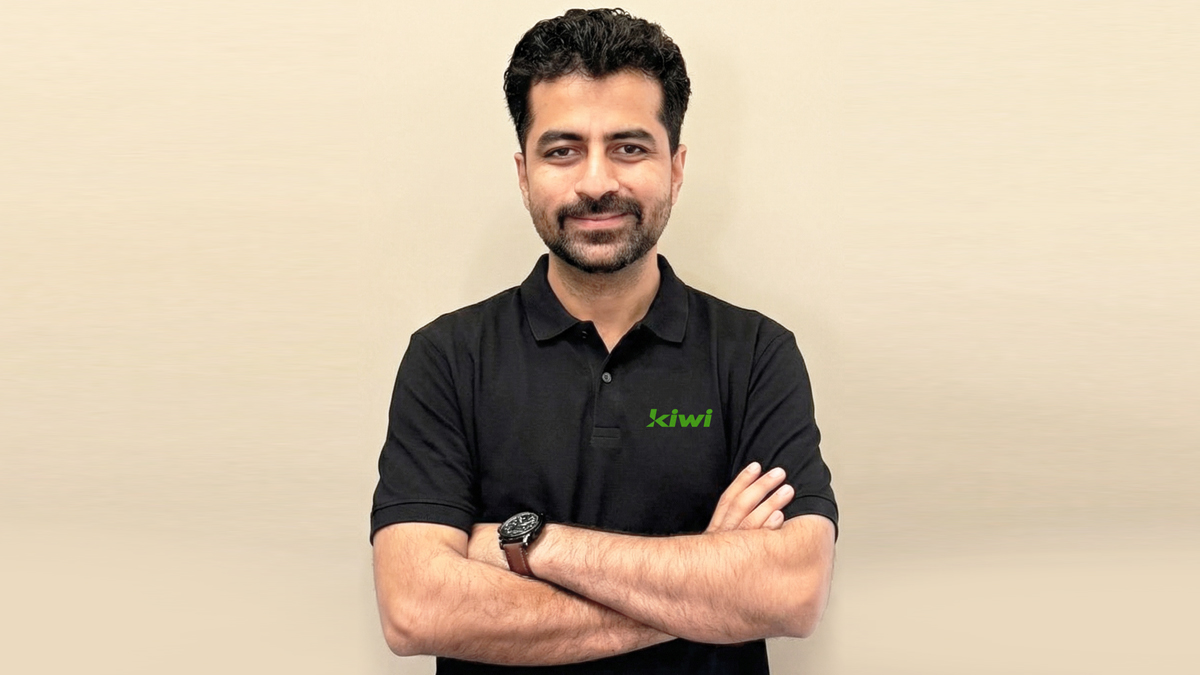
BENGALURU: Kiwi is gearing up for its next growth sprint, bringing in Sumeet Basrani as chief business officer to turn early traction into mass-market scale. The credit-on-UPI platform is now pivoting from product adoption to aggressive distribution, betting on deeper bank and ecosystem tie-ups to widen access.
Basrani arrives with over 15 years in cards and payments, with stints at CRED, OneCard, ICICI Bank and Visa. At CRED, he helped build and scale partnerships across credit cards, payments and lending with banks and financial institutions, experience Kiwi is now counting on as it looks to expand its footprint.
The mandate is clear: take credit on UPI from a promising innovation to a mass product. Kiwi is aiming to unlock access for millions, aligning its push with shifting consumer behaviour while moving from product strength to market scale.
“This is a natural next step for us. As we grow, it becomes important to have leadership that can translate market shifts into clear business and product decisions. Sumeet understands how banks, networks and consumer platforms intersect, which is exactly where Kiwi is building. His experience in scaling businesses will be critical as we take credit on UPI to a much larger audience,” Siddharth Mehta, co-founder, Kiwi, said.
Basrani sees a market on the cusp. “Credit on UPI is at an inflection point; early adoption is visible, but the real opportunity lies in embedding credit seamlessly into everyday payments, while expanding access to credit. Kiwi is well-positioned to lead this shift, and the next phase will be about scaling distribution and unlocking new use cases for credit,” he said.
Founded as Gokiwi Tech, the startup is positioning itself at the centre of India’s evolving payments stack. It was the first to offer credit on UPI via RuPay cards in partnership with banks, and has already issued over 2 lakh such cards in under two years. The ambition is blunt: become the leading issuer of RuPay credit cards by 2026.
With leadership muscle added and distribution in focus, Kiwi is no longer just testing the waters. It is diving headfirst into the race to own credit on UPI at scale.








