Brands
Motilal Oswal elevates marketing maven Mundra to group media head

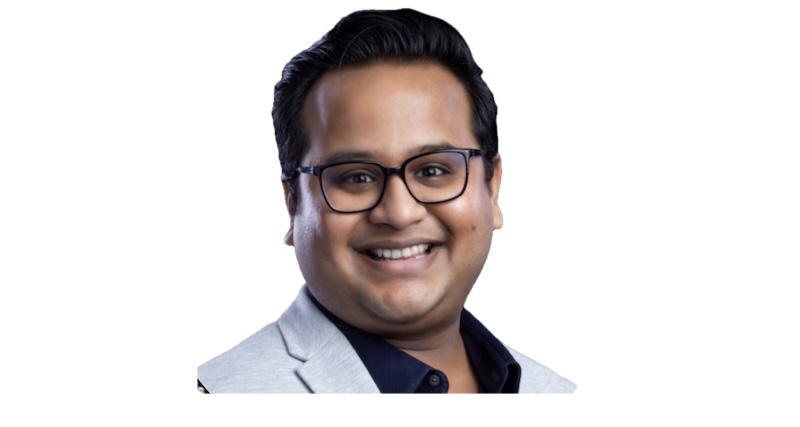
MUMBAI: Financial services giant Motilal Oswal has promoted Varun Mundra to group head of media and innovations, capping the digital-first marketer’s swift rise through the company’s marketing ranks.
Mundra, who joined the firm less than three years ago, steps up from his previous role as senior vice president of marketing for the wealth management division, where he spearheaded brand growth and product excellence initiatives for India’s seventh-largest broking house.
“The journey has been nothing short of amazing—filled with learnings, challenges, and some big wins along the way,” Mundra said of his time at Motilal Oswal. He credited senior leadership, including Sandeep Walunj, for their “trust and support” in his ascent.

The ET Brand Equity Shark 2024 “Rising Star” winner brings a distinctive pedigree to the role, having cut his teeth at several top-flight advertising agencies. Before joining Motilal Oswal in 2022, Mundra served as director of business and client relations at The Glitch, where he managed campaigns for CoinSwitch, Kuber, SleepyCat and Netflix India.
His résumé includes stints at White Rivers Media, Isobar, Jack in the Box Worldwide and Dentsu Webchutney, where he honed his craft working with blue-chip clients like Hindustan Unilever, Visa India, CEAT Tyres and Godrej.
Industry observers note that Mundra’s promotion coincides with Motilal Oswal’s aggressive push to modernise its marketing approach and capture India’s digitally-savvy retail investor community.
The marketing executive’s previous initiatives at the firm included securing branding rights to Mumbai’s Malad Metro Station—establishing “Motilal Oswal Malad West”—and creating branded studio partnerships with financial news channels CNBCTV18, CNBC Awaaz and CNBC Bajar.
Mundra’s entrepreneurial spirit emerged early when, as a 17-year-old college student, he founded a digital agency that landed him features on CNBCTV18’s Young Turks and in The Times of India. He holds degrees from the University of Westminster and Coventry University London.





Brands
Dunkin’ Donuts to exit India as Jubilant FoodWorks ends 15-year franchise deal
The quick service restaurant giant is ending a 15-year franchise partnership with the American doughnut chain, even as it renews its Domino’s agreement for another 15 years
NOIDA: Dunkin’ is done in India. Jubilant FoodWorks Ltd, the country’s leading quick service restaurant operator, has decided not to renew its franchise agreement with the American coffee and doughnut chain, and will wind down its Indian stores in a phased manner before December 31, 2026, bringing a 15-year partnership to a quiet, loss-laden close.
The decision, approved by JFL’s board on March 30, 2026, ends a relationship that began with a Multiple Unit Development Franchise Agreement signed on February 24, 2011. JFL will now evaluate and undertake what it described in a regulatory filing as the “rationalisation and/or cessation of certain operations and/or sale, transfer or disposal of assets and/or assignment or transfer of franchise rights,” all in consultation with Dunkin’s brand owners and strictly within the terms of the original agreement.
The numbers tell the story bluntly. In the financial year 2024-25, Dunkin’ India posted a revenue of Rs 37 crore against a loss of Rs 19 crore — a haemorrhage that was always going to test the patience of a parent company recording revenues of Rs 6,104 crore and a profit of Rs 194 crore in the same period. Doughnuts, it turns out, were never going to move the needle.
The contrast with JFL’s handling of its other marquee franchise could hardly be sharper. Even as it walks away from Dunkin’, the company has just doubled down on Domino’s, signing a fresh Master Franchise Agreement on March 31, 2026, granting it exclusive rights to develop and operate Domino’s Pizza stores in India for 15 years, with an option to renew for a further 10.
JFL, incorporated in 1995 and promoted by the Bharatia family, operates a network of more than 3,500 stores across six markets — India, Turkey, Bangladesh, Sri Lanka, Azerbaijan and Georgia. Its portfolio includes Domino’s and Popeyes on the global side, and two home-grown brands: Hong’s Kitchen and COFFY, a café brand in Turkey.
For Dunkin’, India was always a stretch. The brand never quite cracked the cultural code in a market where filter coffee and chai command fierce loyalty and where the doughnut remains, at best, an occasional indulgence rather than a daily habit. Fifteen years, mounting losses and a parent with better things to spend its capital on was always going to be a difficult equation to solve.
The doughnut has had its last day. The pizza, however, is staying.






