Brands
Mobile internet consumption to hit 28% of media use by 2020: Zenith Report


MUMBAI: The spread of mobile devices and rapid mobile data networks has transformed global media consumption in recent years. A recent report by Zenith Media Consumption Forecasts 2018, reveals that 24 per cent of all media consumption across the world will be mobile this year, up from just five per cent in 2011. The report highlights that by 2020 internet usage will reach 28 per cent, taking share from almost all other media.
The rise of mobile is also forcing brands to transform the way they plan their communications across media, focusing less on channels and more on consumer mind-set as the distinctions between channels are eroded.
The report surveys changing patterns of media consumption since 2011 and forecasts how the amount of time people allocate to different media will change between 2018 and 2020, in 63 countries across the world.

Mobile internet use has eroded the consumption of almost all other media. Newspapers and magazines have lost the most, as between 2011 and 2018 time spent reading them has fallen by 45 per cent for newspapers and 56 per cent for magazines. However, this refers only to time spent reading printed publications. Time spent reading newspapers and magazines online is included in the internet total, and for many publications the time they have gained online more than makes up for the time they have lost from print.
Zenith’s head of forecasting and director of global intelligence Jonathan Barnard says, “Under traditional definitions, all other media are losing out to the mobile internet. But the truth is that the distinctions between media are becoming less important, and mobile technology offers publishers and brands more opportunities to reach consumers than ever.”
Television and radio have also lost out, though not on the same scale. The time spent watching television shrank by three per cent between 2011 and 2018, while time spent listening to radio shrank by eight per cent. Again, television channels and radio stations have gained audiences online at the same time as they have lost them offline, but they have faced stiff competition from native digital platforms such as YouTube and Spotify.
The rise of mobile has blurred the boundaries between different channels: it can be used for entertainment, news, information, research, socialising and communication. For brands it can play the role of building awareness, creating direct responses, allowing one-to-one communication, or generating earned content, depending on how the consumer is using the device, and in particular their mind-set while using it.
A consumer who is actively searching for a specific information is in a very different mind-set from one who is sharing holiday photos with friends, or leaning back and enjoying a video. Brands need to understand the signals a consumer’s activity provides about their mind-set, and therefore what forms of communication are appropriate.
Focusing on mind-set also dissolves the distinction between traditional and digital media: it’s more important that a consumer is reading news, than whether they are doing so using a printed newspaper or newspaper websites. People who are watching video content on television sets, laptops or smartphones have much in common, though people watching long-form entertainment can have quite different mind-sets from people scrolling short-form content on social media. Brands need to decide the role each platform plays in their communications strategies, however the consumer happens to access it.
The rapid expansion of mobile internet use has increased the amount of time the average individual spends consuming media, by giving people access to essentially unlimited content almost everywhere, and at any time of the day. The report estimates that the average person will spend 479 minutes a day consuming media this year, 12 per cent more than in 2011 and will reach 492 minutes a day in 2020.
Time spent at the cinema actually increased three per cent between 2011 and 2018 as cinema owners have invested in more screens and a better experience for visitors, while studios have marketed their films more effectively at international audiences. On average, though, people spend much less time at the cinema than they do with any other medium.
Zenith’s global brand president Vittorio Bonori mentions, “Mobile technology is challenging brands to rethink how they communicate with consumers. Brands need to understand both the consumer’s mind-set and where they sit on the consumer journey, to determine how to communicate with them. By using data, ad tech and now artificial intelligence, brands can co-ordinate their communications across media and mind-sets to move them along the consumer journey most effectively.”





Brands
Uniqlo India signs Jasprit Bumrah as brand endorser
Cricketing star fronts new LifeWear campaign highlighting comfort and simplicity.
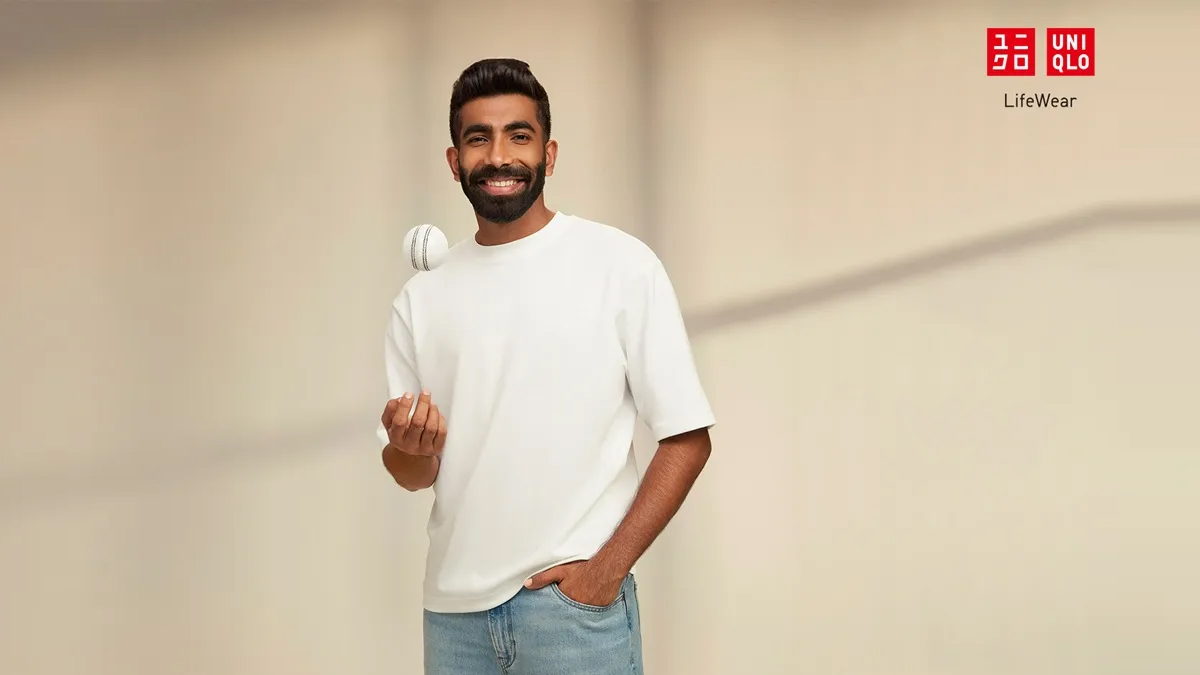
MUMBAI: Jasprit Bumrah just bowled a perfect yorker into fashion because when the fastest bowler in the world picks Uniqlo, even off-field style gets a pace attack. Uniqlo India has roped in Indian cricket icon Jasprit Bumrah as its brand endorser, kicking off the partnership with a fresh campaign that brings the brand’s LifeWear philosophy to life, clothing engineered for simplicity, quality and effortless comfort in daily routines.
The 30-second film shows Bumrah in relaxed, everyday moments away from the crease highlighting how the AIRism Oversized T-shirt slips seamlessly into his off-field life. The narrative quietly mirrors his journey as a fast bowler, built on consistency, instinct and the kind of fit that feels right from the first wear and only gets better with time.
Jasprit Bumrah said, “In my day-to-day life, I prefer clothing that feels comfortable and effortless, especially when I’m spending time off the field. That’s why I’m happy to be partnering with Uniqlo, the brand’s approach to everyday clothing feels like a natural extension to my personal style.”
Uniqlo India marketing director Nidhi Rastogi added, “We are proud to partner with cricket world champion Jasprit Bumrah and welcome him to the Uniqlo family. His focus on excellence, authenticity and quiet confidence reflects the essence of Uniqlo’s LifeWear philosophy.”
The campaign is now live across digital channels, social media, in-store displays and outdoor platforms, with the film and imagery rolling out alongside the announcement.
In a world where pace often means rushing, Bumrah and Uniqlo are reminding everyone that the best things in life and on the body come from calm, consistent comfort that simply shows up every day and gets the job done.







