Brands
Mishra’s Silk Route hits high gear, Janhvi Kapoor revs up the runway

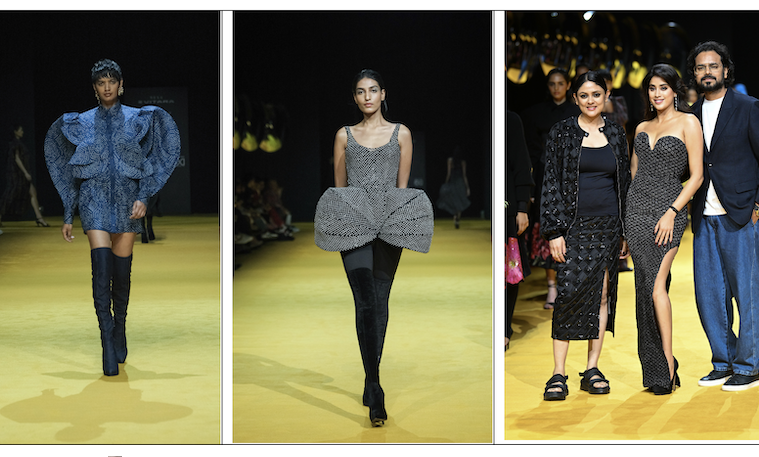
MUMBAI: Lakmé Fashion Week’s grand finale saw AFEW Rahul Mishra unveil his Fall Winter 2025 Silk Route collection, a sartorial odyssey that blended ancient trade routes with modern swagger. And what a ride it was. Janhvi Kapoor, channeling her inner Bond girl, rolled onto the runway in a gleaming Vitara, swathed in a figure-hugging, thigh-high slit willpower gown that could stop traffic – both vehicular and pedestrian.
Mishra’s collection, a sumptuous tapestry of cultural cross-pollination, drew inspiration from the historic Silk Road, a conduit for goods, ideas, and, crucially, style. Think Indian bandhani flirting with Japanese shibori, and Henri Rousseau’s lush jungles mingling with miniature Indian paintings. It was a visual feast, a global mash-up for the discerning fashionista, whether they’re sipping chai in Mumbai or champagne in Paris.
The runway itself, a clever nod to Nexa’s e-Vitara, featured blind-spot mirror installations, a wink to the future of automotive design and, perhaps, fashion itself. Mishra, ever the alchemist, transformed traditional Indian textiles into contemporary silhouettes, a fusion of old-world craft and new-wave innovation that felt both timeless and tantalisingly modern.

Maruti Suzuki senior executive officer of marketing and sales Partho Banerjee chimed in, extolling the “seamless alignment” of the e-Vitara with Mishra’s vision. “We’re not just selling cars, we’re selling experiences,” he declared, hinting at a future where automotive elegance and haute couture are bedfellows.
Mishra’s collection, with its focus on nowness and sustainable chic, delivered versatile separates that were as practical as they were breathtaking. It was a masterclass in modern couture, a reminder that fashion, like the Silk Road itself, is a journey, not a destination.






Brands
Origen Realty names Preeti Rai as president- sales & strategy
Veteran hire signals push into Gurugram market with growth ambitions

GURUGRAM: Origen Realty has appointed Preeti Rai as president for sales and strategy, as the company gears up to enter the competitive Gurugram property market.
The move brings in a seasoned industry hand with over two decades of experience across residential and commercial real estate. In her new role, she will lead the company’s sales operations and go-to-market strategy, with a focus on building a strong foothold in Gurugram and driving early momentum.
Origen Realty management said the appointment marks a key milestone in its expansion plans. Origen Realty management said the hire will help sharpen execution and strengthen the company’s sales-led growth strategy as it steps into a new market.
Preeti Rai said, “I look forward to being part of Origen Realty at a pivotal stage in its journey and contributing to building a strong presence in the Gurugram market.”
Before joining Origen Realty, she served as senior vice president for sales and marketing at Elan Group. Her career also includes stints at major developers such as DLF Universal Ltd, Today Homes and Infrastructure, Paras Buildtech Pvt Ltd and Ambience Infrastructure Ltd, where she built expertise across channel sales, leasing, and end-to-end deal execution.
Known for her focus on strategy and team leadership, Rai is expected to play a central role in shaping Origen Realty’s market positioning and sales ecosystem in the region.
As Gurugram’s real estate market continues to attract fresh investments and new entrants, Origen Realty’s latest leadership hire signals its intent to compete with a clear, sales-driven playbook.






