AD Agencies
Sudhir Sitapati’s compelling address takes center stage in AAAI’s Subhas Ghosal Memorial Lecture


Mumbai: Godrej Consumer Products CEO Sudhir Sitapati’s compelling address took center stage in AAAI’s Subhas Ghosal Memorial Lecture on Thursday. He shared many insights on building brands in today’s India and also some of his personal experiences.
The event was held on Thursday, 18 January 2024 at 7:00 pm at ITC Grand Central Parel, Mumbai.
As a memorial to one of the most influential figures in the history of advertising, Subhash Ghosal, the Subhas Ghosal Foundation was established by a group of senior communication professionals who lived during his era. One of the primary objectives of the foundation is to promote the professional values Ghosal embodied throughout his lifetime.

Sitapati delivered the Subhas Ghosal Memorial Lecture at the Advertising Agencies Association of India (AAAI) event on Thursday on the topic he titled “Does the advertising industry need a dose of its own medicine?”
Before that, Sitapati stated that when he joined as the MD and CEO of Godrej Consumer Products (GCPL) two years ago was to “dramatically” increase the company’s ad spends. “Even if it came at the cost of profitability,” he said.
Sitapati addressed many issues. He said that he considers himself “one of the advertising fraternity” and made some points, calling for increased synergy between agencies and advertisers.
He stated that Ghosal, the legendary adman who was JWT’s first Indian CEO, would be disappointed that J. Walter Thompson, the agency where he had worked for 50 years, has now been subsumed in VML.
He also talked on some key reasons as to the decline of advertising in today’s times. He said that Ghosal would blame it on the change of the commission model where agencies would make 15 per cent commission from media owners for the advertisements they bought. “The fortunes of advertising died with the current fee model that leaves no room for investments in people and research and no real incentives for agencies to push the business of the client to the maximum,” he noted.
He shared that in 1983, in an article titled ‘Advertising a Critique’ Ghosal argued for more spending on advertising and said that the sector contributed to about 0.2 per cent of GDP while in Indonesia it was close to 0.6 per cent. 40 years later advertising now contributes to about 0.5 per cent of Indian GDP.
On of the main points he notes was that of the FMCG sector. He stated that FMCG is still the largest spender on advertising in India and advertising is in turn its lifeblood. The Indian companies are much more profitable than their global peers. The top five listed FMCG companies spend 15 per cent of their revenues on advertising whereas 10 per cent in the global top 5.
“FMCG is the bell-weather consumption and compass for most consumer companies. It’s not unfair to therefore assume that advertising has played such an important role in FMCG. It has played perhaps a slightly less, but nonetheless crucial role in consumption in general,” he said.
Sitapati shared three basic points for folks in advertising: “Spend more time with the CEO, CFO and other non-marketing people, have a unique point of view on how advertising works and advertise it in a line and finally talk more numbers.”
He said the first step in marketing is to know your target consumer well. “Who the consumer is for the agency depends on what you want. If your objective is to structurally reset the profitability of the sector because the profitability of the sector is not a reset. The consumer is not the brand manager or the marketing head but the CEO. “CEOs are only willing to pay substantial amounts if they see something that drives their share price in the next 12-36 months.”
He further shared that in today’s post-modern world, we recoil at a definitive answer on how advertising works instead of listing the various ways it could work. “We are more concerned with being never wrong rather than being often right. There may be many roads to advertising heaven, but an agency must choose one of these roads and convince the CEO that their religion is the true one.”
He said that his own beliefs on advertising were shaped by two epiphanies. “As a brand manager on Surf Excel in the mid tweens I noticed that whenever a measure on our Milward Brown brand tracker called ‘Proven ad recall’ rose then a few weeks later our sales rates went up as well. In other words, all it took for consumers to buy more was to be able to narrate the story of the ad impromptu.
“I call this principle “Be famous before you get persuasive”. Don’t sell, just be known for what you sell. Once you buy this belief system there are some necessary concomitants – the power of the big idea that helps you stand out, consistency, fewer copies, risk taking etc.,” he noted.
Sitapati’s second epiphany, he said, was shaped around that same time when he read a book that now seems to be on everyone’s bookshelf – ‘How Brands Grow ‘ by Byron Sharp.
“His thesis is that brands grow not by heavy users consuming more but by non-users or very light users consuming a bit more. Penetration not consumption drives growth. Penetration is driven by salience, not equity attributes and salience is driven by making your brand mentally available to the maximum number of people. In media terms its reach and not impact that matters,” he said.
The second advertising principle for Sitapati which is media related has been “It is better to whisper to many than to shout to a few”. “This too has its concomitants – never getting carried away by impact, keep looking at the cheapest media, at consumer cohorts who never see your brand ever and don’t over segment markets.”
“It’s not just important to have a theory of advertising, it’s equally important to have a proposition that your agency believes in and everybody in the agency repeats at all forums. With just these two principles consistently at play I’ve winged my way through marketing for the last 15 years.”
He also said that his final suggestion on marketing advertising is for the agency world to speak a little bit more in numbers to brands.
“We as clients would love it if you had more data at your disposal on how an ad is working than we do. If you came to us and said this isn’t working, pull it off or it’s working you’ve got to spend more money on it. Not based on gut, which you do quite often but based on hard facts. Agencies need an entire department on marketing effectiveness – you’ll have to invest in the databases and in people but I can assure you that whenever a consultant or an external advisor has proprietary data on my brand or company, I take that very seriously.”
He concluded the session by stating the first line of Ghosal’s book “Making of Advertising”. It stated that, “When I was asked to speak on the subject for this session, “Advertising strategy, how to make it work”, my instant response was what a wonderful opportunity to combine experience and discipline into a presentation from which the speaker was bound to get much more than the audience. This is almost always true, because the speaker tends to take his subject far more seriously that the audience does just like an advertising.”





AD Agencies
ABBY Awards 2026 names Rajdeepak Das, Khazanchi, Ramaswamy jury chairs
Top creative leaders to steer judging across film and direct categories
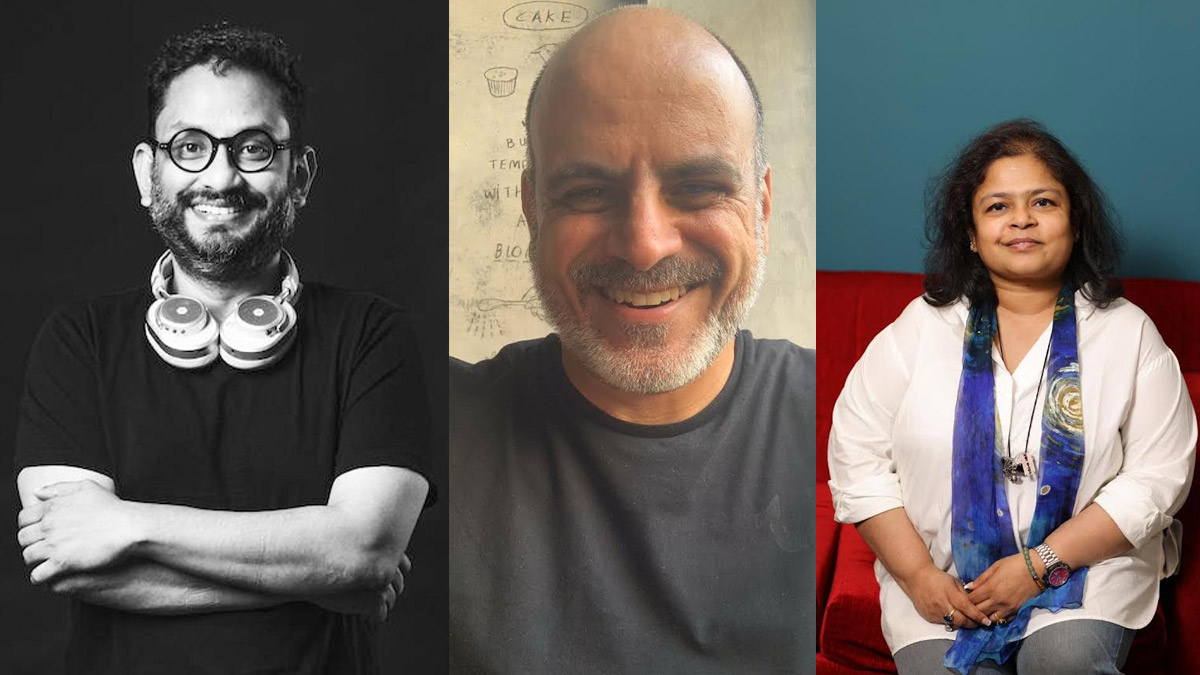
MUMBAI: The Ad Club has announced the appointment of three of India’s most prominent creative leaders as jury chairs for the ABBY Awards 2026, powered by The One Club.
Rajdeepak Das, chief creative officer, South Asia, Publicis Groupe and chairman, South Asia, Leo Burnett, will chair the AV Film (TV) category. Ashish Khazanchi, managing partner at Enormous, will lead the AV Film (Digital and OTT) jury, while Anupama Ramaswamy, managing director and chief creative officer at Havas Creative India, takes charge of the Direct category.
The trio brings a mix of creative firepower and industry experience to the judging table. Das is known for blending creativity with technology to solve real-world problems, with landmark campaigns such as Whisper’s “Touch the Pickle” and “Missing Chapter” helping reshape conversations around menstrual health. His work has earned top honours at global platforms including Cannes Lions and The One Show.
Khazanchi, meanwhile, has built Enormous into one of India’s leading independent agencies. Best known for creating Tata Sky’s “Jingalala” campaign, he has played a key role in shaping brand narratives for both legacy companies and startups, picking up hundreds of awards along the way.
Ramaswamy’s appointment rounds off the leadership trio with a strong focus on culturally resonant creativity. Her campaign “Ink of Democracy” became one of the most awarded works globally in 2025, earning multiple honours across Cannes Lions, Clio and Spikes Asia. Over the years, she has built a reputation for work that not only wins awards but also shapes public discourse.
The appointments come as the ABBY Awards continue to sharpen their global positioning, with backing from The One Club adding international heft to the platform.
The awards will be held during Goafest 2026 from May 20 to 22 at Taj Cidade de Goa Horizon, bringing together the industry’s top creative minds for what promises to be a closely watched showcase of ideas.
With heavyweight jury chairs in place, the stage is set for a high-stakes celebration of creativity where craft, culture and commerce collide.






