MAM
Measuring the Impact of DOOH Advertising: Metrics and Tools for Success

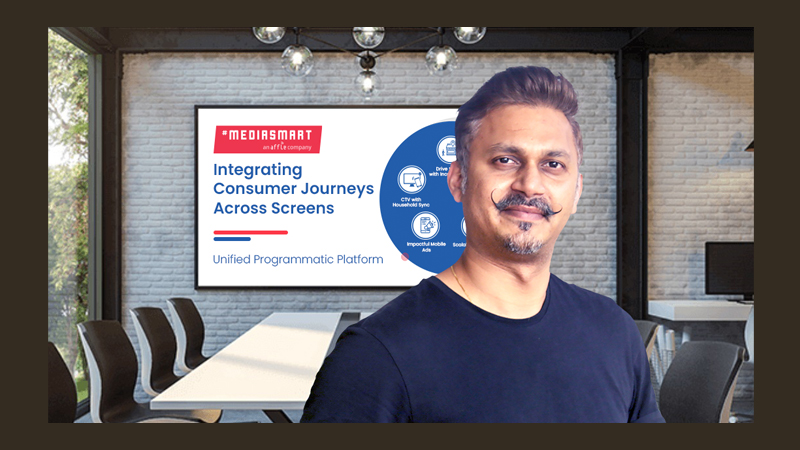
Mumbai: Out-of-Home (OOH) advertising, is a long-standing pillar of marketing, and has maintained its presence through attention-grabbing billboards and posters at various locations. Its versatility across formats and settings has allowed marketers to connect with audiences beyond conventional media. Recently, digitalization has transformed this landscape, infusing digital technology into physical spaces and creating a bridge between the offline and online worlds. Digital Out-of-Home (DOOH) advertising leverages digital displays, interactive interfaces, and data-driven insights for a new level of engagement and impact.
With its ability to deliver dynamic content, optimize creative messaging, provide real-time buying metrics, and accommodate various budget perspectives, DOOH has become an indispensable part of modern advertising strategies. The fusion of offline and online elements presents both opportunities and challenges in terms of measuring the impact and effectiveness of advertising efforts. According to industry projections by IMARC group released earlier this year, the DOOH market in India is expected to be about $3.2 billion by 2027 and that presents valuable opportunities to advertisers.
DOOH: Integrating Consumer Journeys for the New-Age Consumers

The pandemic has highlighted the importance of programmatic & omnichannel marketing and it has compelled marketers to be more creative in finding cost-effective ways to implement strategies that offer better ROI. One of the key benefits of programmatic DOOH for brands is the flexibility to deliver ads more efficiently and cost-effectively than traditional advertising methods.
Programmatic DOOH allows advertisers to automatically implement various targeting and creative options based on geography, weather, venue/screen types, or even time of day. This personalized approach helps to customize campaigns for the user and deliver the right messaging with higher accuracy. Not to mention that, with the right technology partner synchronization with other devices is possible, achieving true omnichannel strategies. By taking advantage of the impact of out-of-home screens and using dynamic content, programmatic DOOH is empowering advertisers to create engaging campaigns and connect deeper with their audiences, at the right stage of the customer journey.
This ensures that their ad spend is being used effectively and that they are getting the most value for their investment. In addition, with the integration of Mobile, CTV, and DOOH campaigns, marketers can provide a seamless and synchronized experience for consumers, enhancing brand engagement. DOOH campaigns have, thus, picked up as a missing piece of the puzzle to close the gap between online and offline worlds.
Making Outdoor Advertising More Measurable
In the past, brands have struggled to measure the effectiveness of OOH campaigns. Who saw the ad? Where has it been displayed? Is it a high traffic area? DOOH with its location data accuracy and tailored KPIs: ad plays, impression multipliers and actual impressions covers what was lacking in OOH.
However, in the realm of DOOH, measuring the impact goes beyond mere visibility. While reach remains a fundamental metric, programmatic DOOH is also able to make marketers understand high value impact such as interaction with the screens through QR code scanning, NFC tags or the most convenient option for the end user: synced campaigns on personal devices like the smartphone.
Let’s dive into a practical example: you are a retailer with a seasonal promotion across certain neighbourhoods that you are advertising with impactful DOOH ads. Imagine being able to serve a map to the mobile of the people that saw your DOOH ad and bring them to your store. Not just a map with directions, but one that is tailored to point the consumer to the closest store. And not only serve the ad, but measure the footfall to the store. It might sound like magic, but it is reality in 2023. How is that possible? The real-time data and geolocation sapience allows advertisers to synchronize campaigns across multiple channels to achieve holistic campaigns. Additionally, weather-based targeting and creative optimization allows to automatically adapt ads and campaigns to weather conditions, making the reach in real-time more effective.
Launching a DOOH strategy
DOOH is an interesting medium for both advertisers and consumers because of the nature of the screen – the screen is not owned and used by a person or group of people, unlike a mobile or CTV. The screen is in an outdoor setting like a street and what the advertisers can measure with DOOH advertising is dependent on other impression multipliers, ad plays, or bid offers.
By partnering with the right technology providers, DOOH can achieve so much more! To maximize the impact of DOOH campaigns, a smart retargeting strategy that syncs ad campaigns to take action on mobile can make a difference. Track conversions and attribute them to specific campaigns. For example, a campaign promoting an app that includes a DOOH ad that syncs with the mobile phones of the people around those screens and even the CTV within their household can track the number of app downloads or even purchases made by viewers who were exposed to the advertisement.
Embracing DOOH’s Impact
The rise of DOOH, deeper integration with other channels, smarter data utilization, increased digitization, and a continued focus on media for good will collectively result in a creative re-set as digitally-minded brands seek to capitalize on untapped opportunities. In an era where consumers crave authentic and meaningful interactions, DOOH advertising stands as a powerful tool, and the ability to measure its impact ensures that brands can continually evolve and connect with their audiences at the right moment. As DOOH continues to evolve and integrate with emerging technologies, like the synchronization with other screens, its potential to captivate audiences and deliver impactful advertising experiences will only grow.
The author of this article is mediasmart Affle VP Nikhil Kumar.



MAM
India’s financial sector spent less on TV ads in 2025 but flooded the internet
Banks, insurers and lenders cut tv ads as digital jumps, LIC and Muthoot lead tv and Axis Bank tops online
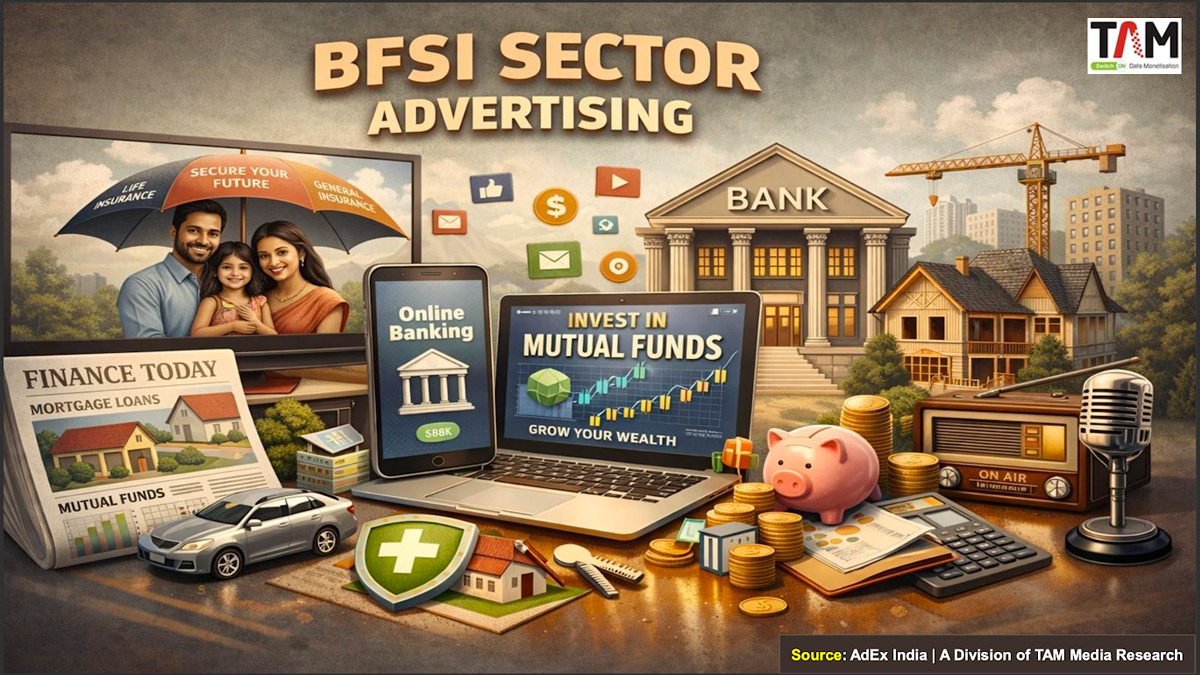
MUMBAI: India’s banking, financial services and insurance sector, one of the most prolific advertisers in the country, delivered a split verdict on media in 2025. It spent less on television, held its nerve in print, turned up the volume on radio and deluged the internet with a ferocity that left every other medium looking pedestrian. The picture that emerges from TAM AdEx’s cross-media report for the BFSI sector is of an industry in transition, still wedded to the news bulletin but increasingly seduced by the algorithm.
Television: a retreat with caveats
TV ad volumes for the BFSI sector fell 16 per cent in 2025 compared with 2024, a sharp reversal after two years of consistent growth that had pushed volumes 16 per cent above 2021 levels by 2023 and a further 7 per cent higher by 2024. Within 2025 itself, the drop was concentrated in the middle of the year: the second and third quarters saw ad volumes slide 35 per cent each against the first quarter, with a partial recovery of 13 per cent in the fourth.
The retreat did not reshuffle the deck. Life insurance retained first place among TV categories with 19 per cent of ad volumes, mortgage loans held second with 16 per cent, and the top ten categories together accounted for 82 per cent of all BFSI television advertising. The dominance of news channels was equally pronounced: news claimed 68 per cent of ad volumes, general entertainment channels a distant 14 per cent and movies 12 per cent. Together, news and GEC captured 82 per cent of the sector’s television spend. News bulletins alone took 48 per cent of programme-genre volumes, with feature films second at 12 per cent. Prime time, between 6pm and 11pm, drew 34 per cent of ad volumes, followed by afternoon at 22 per cent and morning at 20 per cent. A full 82 per cent of all ads ran between 20 and 40 seconds.
Life Insurance Corporation of India was the sector’s biggest TV spender with 11 per cent of ad volumes. Muthoot Financial Enterprises came second with 9 per cent, followed by National Payments Corporation of India at 6 per cent, Tata AIG General Insurance at 5 per cent and State Bank of India at 5 per cent. The top ten advertisers together accounted for 51 per cent of total TV volumes. Three names were new to the top ten in 2025: Tata AIG General Insurance, IIFL Finance and Tata Capital. At brand level, Muthoot Finance Loan Against Gold led with 9 per cent share, Tata AIG Health Insurance entered the top ten for the first time, and the top ten brands together contributed 35 per cent of ad volumes.
Print: the long climb continues
Print told a different story. Ad space for the BFSI sector has grown every year since 2021, rising 16 per cent in 2022, 30 per cent in 2023, 51 per cent in 2024 and 64 per cent in 2025, all measured against a 2021 baseline. Within 2025, ad space was flat in the second quarter but surged 46 per cent in the third and 33 per cent in the fourth compared with the first. Life insurance led print categories with 21 per cent of ad space, followed by mutual funds and banking services and products at 13 per cent each, and corporate financial institutes at 11 per cent. The top ten categories together took 82 per cent of print ad space. LIC led print advertisers with 6 per cent share, and the top ten together covered just 19 per cent of ad space, a reflection of how fragmented print spending remains. Three new entrants joined the top ten in 2025, with Billion Brains Garage Ventures the only exclusive presence not seen in 2024’s list. In the top ten brands, LIC dominated with a 2 per cent share, while Nippon India Mutual Fund rose to third position from fourth in 2024. English accounted for 62 per cent of print ad space, Hindi for 20 per cent. Business and finance publications took 59 per cent of the genre split. The south zone led regional spending with 33 per cent of print ad space, Bangalore topping that zone, while New Delhi and Mumbai were the leading cities nationally.
Radio: louder than ever
Radio ad volumes for the BFSI sector have climbed steadily, rising 12 per cent above 2021 levels in 2023, 36 per cent in 2024 and 45 per cent in 2025. The quarterly pattern within 2025 was volatile: a sharp drop of 43 per cent in the second quarter and 42 per cent in the third, followed by a near-full recovery in the fourth. Life insurance led radio categories with 22 per cent of volumes, banking services and products second at 14 per cent and corporate NBFCs third at 11 per cent. LIC of India held its position as the leading radio advertiser with 20 per cent of ad volumes; the top ten radio advertisers together covered 69 per cent. Muthoot Financial Enterprises led radio brands with 10 per cent share, five of the top ten brands belonged to LIC alone, and SBI Mutual Fund made a remarkable leap to fifth position from 272nd in 2024. Evening and morning time-bands together captured 84 per cent of radio ad volumes, with evenings at 44 per cent and mornings at 40 per cent. Maharashtra was the leading state for radio BFSI advertising with 18 per cent share; Maharashtra, Gujarat and Uttar Pradesh together accounted for 43 per cent.
Digital: the five-times surge
If one number defines the 2025 BFSI advertising story, it is five. Digital ad impressions for the sector multiplied fivefold between 2021 and 2025, having already doubled in 2023 and doubled again in 2024 before the 2025 leap. Within the year, impressions dipped 19 per cent in the second quarter and 12 per cent in the third before recovering 8 per cent above the first quarter by the fourth. Banking services and products led digital categories with 27 per cent of impressions, life insurance and credit cards tied at 19 per cent each, and securities and sharebroking organisations fell from first place in 2024 to fourth in 2025. Axis Bank was the runaway leader among digital advertisers with 12 per cent of impressions, followed by ICICI Bank at 9 per cent, IDFC First Bank at 7 per cent and Kotak Mahindra Bank at 6 per cent. The top ten digital advertisers covered 59 per cent of impressions, and seven of them were new entrants compared with 2024, signalling rapid churn in the digital spending hierarchy. At brand level, Axis Bank led with 9 per cent, ICICI HPCL Super Saver Credit Card vaulted to third place from 921st in 2024, and six of the top ten digital brands were new to the list. Programmatic buying accounted for 91 per cent of all digital BFSI transactions; combined with ad networks, it captured 96 per cent.
The data from TAM AdEx paints the portrait of a sector that still believes in the power of the television news bulletin to sell insurance to the masses, but increasingly knows that the next generation of borrowers, investors and cardholders is scrolling, not watching. The race is now on to reach them before the algorithm serves up someone else’s loan offer first.






