Brands
Maruti ropes in Sidharta Mahadevan for ‘Breathless’ type anthem

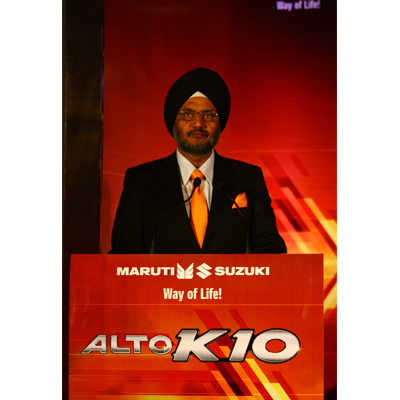
BENGALURU: Indian car major Maruti Suzuki India launched the new Alto K10 in Bengaluru on 4 November. The announcement was made by Maruti marketing and sales executive director RS Kalsi in the city while it has already been launched in the NCR region and Mumbai.
The company has planned a month long 360 degree media campaign created by Lowe Partners. Television, print, outdoor and digital are the mediums on which the campaign will play out on. The theme of the campaign is ‘Chase your dream’.

The new Alto K10 TVC has started playing out across major HSM, English and regional GEC’s and news channels since the car is targeted at the young among the masses. The TVC has been produced by Chrome Pitctures and directed by Manoj S Pillai.
The company is also toying with the idea of utilising a ‘Breathless’ type ‘New Alto K10 Anthem’ that has been rendered by Shankar Mahadevan’s son Sidharth.
The Alto brand has been one of the most successful of Maruti’s brands in terms of number of units of sold and has won a number of awards for the company. Since the launch of the first Alto K10 in 2010, the company has sold around 430,000 units. The new Alto K10 has CNG and auto gear shift models. The company expects these variants to increase volumes by around 10 to 15 per cent.
Having won millions of customers, Maruti decided to upgrade an already successful car with a full model change that makes the Alto K10 taller, wider and roomier and about 15 per cent more efficient says the company. The car comes in six colours with Tango Orange its signature colour.






Brands
Dunkin’ Donuts to exit India as Jubilant FoodWorks ends 15-year franchise deal
The quick service restaurant giant is ending a 15-year franchise partnership with the American doughnut chain, even as it renews its Domino’s agreement for another 15 years
NOIDA: Dunkin’ is done in India. Jubilant FoodWorks Ltd, the country’s leading quick service restaurant operator, has decided not to renew its franchise agreement with the American coffee and doughnut chain, and will wind down its Indian stores in a phased manner before December 31, 2026, bringing a 15-year partnership to a quiet, loss-laden close.
The decision, approved by JFL’s board on March 30, 2026, ends a relationship that began with a Multiple Unit Development Franchise Agreement signed on February 24, 2011. JFL will now evaluate and undertake what it described in a regulatory filing as the “rationalisation and/or cessation of certain operations and/or sale, transfer or disposal of assets and/or assignment or transfer of franchise rights,” all in consultation with Dunkin’s brand owners and strictly within the terms of the original agreement.
The numbers tell the story bluntly. In the financial year 2024-25, Dunkin’ India posted a revenue of Rs 37 crore against a loss of Rs 19 crore — a haemorrhage that was always going to test the patience of a parent company recording revenues of Rs 6,104 crore and a profit of Rs 194 crore in the same period. Doughnuts, it turns out, were never going to move the needle.
The contrast with JFL’s handling of its other marquee franchise could hardly be sharper. Even as it walks away from Dunkin’, the company has just doubled down on Domino’s, signing a fresh Master Franchise Agreement on March 31, 2026, granting it exclusive rights to develop and operate Domino’s Pizza stores in India for 15 years, with an option to renew for a further 10.
JFL, incorporated in 1995 and promoted by the Bharatia family, operates a network of more than 3,500 stores across six markets — India, Turkey, Bangladesh, Sri Lanka, Azerbaijan and Georgia. Its portfolio includes Domino’s and Popeyes on the global side, and two home-grown brands: Hong’s Kitchen and COFFY, a café brand in Turkey.
For Dunkin’, India was always a stretch. The brand never quite cracked the cultural code in a market where filter coffee and chai command fierce loyalty and where the doughnut remains, at best, an occasional indulgence rather than a daily habit. Fifteen years, mounting losses and a parent with better things to spend its capital on was always going to be a difficult equation to solve.
The doughnut has had its last day. The pizza, however, is staying.






