MAM
ASCI upholds 17 out of 31 complaints


MUMBAI: The Consumer Complaints Council (CCC) of the Advertising Standard Council of India (ASCI) upheld complaints made against 17 advertisements from various sectors like agricultural products, deodorants, personal hygiene and home shopping networks during the months of November and December.
For the same period, the CCC also did not uphold complaints against 14 advertisements.
The CCC upheld the complaint against Bollgard which made claims of boosting cotton farmers‘ income by Rs 315 billion, reducing usage of insecticides, containing in-built plant protection and increasing yields. The CCC concluded that the claims made in the advertisement and cited in the complaint were not substantiated and, thus, the advertisement contravened Chapter I.1 of the ASCI Code.

Another deodorant ad was pulled up by the CCC. The TVC of Pass Port Deodarant focuses on a woman‘s body and lewd expressions on the face of the male actor. The complaint was upheld as the CCC body concluded that the ad was obscene and that in the light of generally prevailing standards of decency and propriety, it was likely to cause grave or widespread offence.
The CCC also upheld Telemart Shopping Network‘s advertisement of Sandhi Sudha which was under the scanner. The TVC made claims of curing arthritis and spondylitis and of a ‘Money Back Guarantee‘ if the product was ineffective. The CCC concluded that in the absence of scientific substantiation , the claim that “Sandhi Sudha cures the disease of arthritis and spondylitis” was not substantiated and was misleading. The complaint regarding “money back guarantee” was misleading as the terms and conditions for the refund were not mentioned in the TVC.
Association of Mutual Funds in India‘s booklet states that “Every Mutual Fund is managed by a fund manager, who by using his investment management skills and necessary research work, ensures better returns than what an investor can manage on his own”. The council found an objection to the word “ensures” as it could be misleading and, hence, upheld the complaint.
Dr. Ayurveda Power Prash and Body Growth‘s advertisement for ‘enhancement of sexual power‘ was questioned for its claims stating “increasing sperm count, helping people suffering from infertility to have kids.” The CCC held that these claims were not substantiated and that the advertiser should provide clinical data in substantiation of these claims. The CCC concluded that the TVC contravened The Drugs & Magic Remedies Act and in this view upheld the complaint.
The advertisement of Glen Appliances states, “Do you know cooking in aluminum can be harmful?” and the website states, “Do you know aluminum cookware is not safe?”. The CCC held that these claims are not truthful and have not been substantiated by any reputed international organisation such as the World Health Organisation (WHO) or by any country noted for a high standard of vigilance in consumer protection. Thus, the claims are not based on facts, and incapable of reasonable substantiation and unfairly discredits all aluminum cookware directly. The CCC concluded that the Print Ad claim and the website claim stating that cooking in aluminum is harmful and is not safe were misleading, hence, the complaint was upheld.
Vanesa Inc‘s advertisement of Denver Deodorant contains the tagline “play it cool” which is being used by the brand John Player‘s since 2005. Since copying the slogan amounts to plagiarism, the advertisement contravened Chapter IV.3 of the ASCI Code and the complaint was upheld.
In the personal hygiene segment, the CCC received a complaint against Stayfree All Night. As per the complaint, the advertisement claims that “Stayfree all night has the unique guard five. This in comparison to your Ultra is longer, wider, with more body coverage, more absorbent and drier too.” This claim means that the Stayfree all night is better than all the pads in the market which use the word “Ultra”. But in reality this is not the case as has been admitted by the TVC itself in the form of a super which states, “When compared only with ultra napkins of 280 mm length and 105 mm back width.” The council ruled that making comparison against product in different segment certainly is unfair and misleading and upheld the complaint as the comparison was not made between products of a similar size.
Health drink Complan‘s advertisement also drew flak this time as it claims that, “Children who drink Complan grow 2 times faster than children who drink other health drinks.” This claim was substantiated through independent clinical research. This complaint was not upheld, but another complaint citing that the comparison in the chart between Complan and non Complan drinkers is likely to mislead consumers that Complan is superior on the basis of its main ingredient (milk solids) was upheld.
In the education sector, Noesis Education and Management Services was pulled up for its advertisement which claimed of being ‘Biggest in India, attended by 1200 students at a time‘, ‘Do not miss out on being trained by the best subject experts from all over the country,‘ ‘High quality contents from Bestselling authors, rank holders and subject matter experts.‘ In the absence of comments from the advertiser, the CCC concluded that the claims mentioned in the advertisement and cited in the complaint were not substantiated.
In the healthcare and pharma sector Pfizer‘s advertisement on Gelusil Antacid found itself under the scanner. As per the complaint, the TVC shows a boy running along a parked vehicle and using a sharp article scratching the vehicle possibly scraping the paint and even denting the body. The question asked is “Does this make your Heart burn?” followed by “Gelusil be used to avoid heart burn and acidity.” The CCC concluded that the depiction of the young boy vandalizing a car is likely to encourage minors to emulate such acts the careless use of which could lead to their suffering cuts or other injury.
Eureka Forbes‘ Aquasure water purifier‘s TVC claimed that the product provides world‘s safest water. Since the TVC does not provide any basis, facts or reference to any study or research work which substantiates this claim the CCC concluded that, whilst the water emanating from Aquasure water purifier is safe, the claim of the “World‘s safest water”, is misleading. The complaint was thus upheld..
The CCC also received a complaint against Eureka Forbes‘ Aquasure Xtra water purifier‘s leaflet which makes comparisons and propagates false statements about Pureit products, Classic and Compact. The tabular format compares the product features and puts a ‘?‘ against Pureit products. The CCC concluded that, while Eureka Forbes has gained trust of the consumers, to say that Pureit products have not, is disparaging. By marking a ‘?‘ against the Pureit brand is misleading and creates doubts in the minds of the consumer. It was thus concluded that the leaflet contravened the code.
The CCC also received complaints against Cadbury- Bournville, Piramal Healthcare Ltd‘s Supractiv Complete, Jockey, MetLife India Insurance, ad promos of television show C.I.D., Fast Track watches, Killer Deodorant, Wild Stone Deodorant, Tata Docomo, Colgate Palmolive, Dulux Paints and Santoor Soap amongst others, all of which were not upheld as they did not breach any of the codes set down by ASCI.




Digital
GUEST COLUMN: How AI is restructuring distributor and retailer motivation models
From incentives to intelligence, AI is redefining how brands engage channel partners
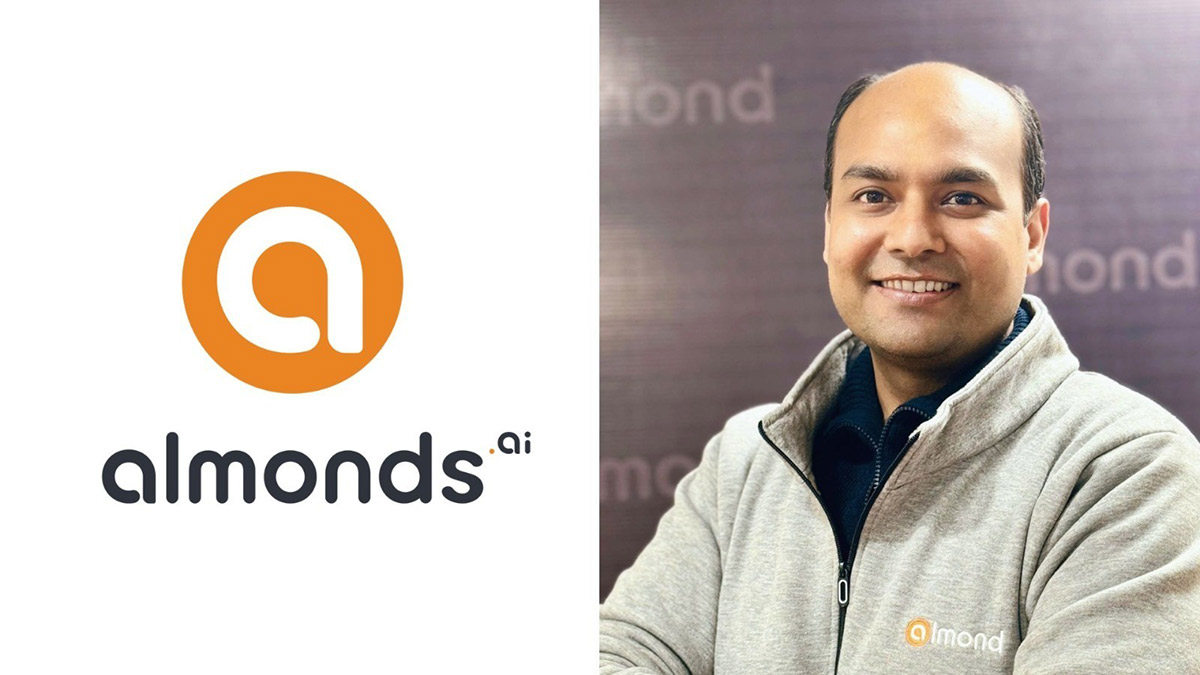
MUMBAI: Artificial intelligence is rapidly transforming how brands engage with their most critical yet often overlooked stakeholders: distributors, retailers, and last-mile influencers. For Abhinav Jain, co-founder and CEO of Almonds Ai, this shift marks a fundamental departure from traditional, transaction-led incentive models toward behaviour-driven, data-intelligent ecosystems. In this piece, Jain examines how AI is enabling brands to decode partner motivations, predict engagement patterns, and deliver personalised, scalable experiences—ultimately redefining channel relationships from transactional exchanges to long-term growth partnerships.
Across many sectors, there is increasing recognition that motivating those who bring products to market (distributors, retailers, last-mile influencers) poses a growing challenge.
Brands continue to invest significant marketing and digital resources to consumers, yet in many countries and the vast majority of emerging economies, these types of consumer-focused investment areas have had little impact on ultimate product delivery. Rather, it is still the case that traditional retail continues to make up most products sold.
So why is it that the systems built around motivating these channels have yet to evolve?
For decades, distributor and retailer engagement revolved around static schemes – quarterly targets, volume-based rewards, and occasional trade promotions. These programs were designed around transactions, not behaviour. The assumption was simple: if incentives increase, performance will follow.
Now, with the advent of artificial intelligence, the definition of performance is being challenged.
With the development of artificial intelligence, businesses can move beyond simply creating loyalty based on transactional-based models and toward models built on behaviours, the behaviours of channel partners that are intrinsic to their motivations in engaging with particular brands. As a result, the means by which businesses develop relationships within their distribution network are starting to evolve; thus, ultimately changing how brands interact with those within their distribution network.
Assessing engagement: Transitioning from transactional- to behavioural intelligence
Traditional loyalty systems refer to transactional activity (sales data). Although this data is valuable and important, it only provides a partial view of engagement across the channel partner.
For example, a retailer may have a high frequency of sales of a product, but their lack of engagement with the manufacturer would not reflect that they have true loyalty toward that brand. Conversely, a retailer who actively participates in training programmes, acts as brand advocates, and is engaged in learning with the supplier would exhibit more profound levels of loyalty but would have been invisible based on historical incentive programmes.
Artificial intelligence allows for the identification of behaviours that help to address this gap. Brands are able to use a variety of engagement data points, participate in learning programs, respond to communications, redeem behaviour and track platform use behaviour in order to identify motivation through behaviour.
McKinsey has stated that companies that leverage advanced analytics for their sales and distribution functions can achieve as much as a 15-20 per cent increase in productivity due to increased awareness of their behavioural trends throughout their networks.
This visibility of behavioural patterns within channel ecosystems can be transformational to brands as they can now view how partners engage on their path to purchasing products, instead of just measuring the sales revenue generated by those purchases.
Predicting motivations, not just measuring performance
Possibly, the largest contribution of Artificial Intelligence (AI) to helping brands engage with partners via channel ecosystems is its ability to predict future engagement versus simply measuring past performance.
Traditionally, brands only realised that a partner was disengaged (not likely to purchase products) once their sales performance had already declined. By then, the brand would have to use significant amounts of incentives or aggressive promotional activities to recovery their partner’s engagement level.
AI models can help organisations to detect early signs that a partner is becoming disengaged, such as declining participation in learning modules, declining interaction via the platform, or slower reward redemption rates. These indicators can help organisations to proactively engage with their partners before their sales performance begins to decline.
The practical application of AI and predictive analytics gives brands the ability to re-engage with their partners prior to their sales performance declines. For example, instead of developing and implementing broad-reaching incentive programs that provide a “one size fits all” incentive to all partners in an ecosystem, brands are able to develop targeted, engaging re-engagement programmes. This is how personalisation can be done on a large scale, such as across global distribution and retail networks.
The vast majority of distributor and retailer channels have thousands, if not millions, of individual channel partners. Historically, providing personalisation to such a large number of businesses has not been feasible.
However, with the advent of AI, personalisation at scale is becoming a reality.
Brands can now create tailored engagement journeys for all their partners, based on their partner profiles, through some combination of machine learning models and behavioural segmentation. For example, high-performing distributors might receive higher levels of leadership-based recognition and greater incentives to continue to grow. Emerging retailers, on the other hand, might be supported with training, onboarding rewards, and measurable performance milestones.
The shift towards personalisation of partner engagement echoes the direction that consumer marketing is already moving towards.
According to Salesforce’s report, over 70 per cent of customers expect personalisation in the way that brands engage with them. As such, there is a growing expectation for B2B ecosystems to have these same types of expectations from their channel partners.
Gamification and continuous engagement
AI is also radically changing how brands will engage with their channel partners through the use of gamification.
Many traditional incentive-based contests and leaderboards would spark temporary engagement among their participants, but they struggled to sustain engagement over time. With the use of AI, gamification mechanics are evolving dynamically based on historical and evolving participation patterns by their channel partners.
Challenges, rewards, and recognition structures can be modified continuously in order to sustain engagement with all of a brand’s partner segments. This will provide a greater opportunity to move away from episodic campaigns towards ongoing, continuous engagement experiences.
When channel partners receive motivation as part of their daily business activities through recognition, learning, and tracking their performance, long-term loyalty will be achieved.
Aligning motivation to broader impact
There is a growing trend within the channel ecosystem to integrate sustainability and socially responsible behaviours into the channel partner programmes of brands.
Increasingly, brands are motivating their partners to use sustainable practices in their operations, participate in sustainable practices like sustainability-related knowledge programmes, or promote products that are in line with their sustainability objectives.
Brands can use AI to monitor and measure these types of behaviours and incorporate them into their incentive frameworks so that brands can align their commercial objectives with broader social and environmental outcomes.
A shift in the way brands view their channel partners
AI is having the most significant impact on the way that brands are now viewing their channel partners, as it relates to the underlying philosophy of those fundamental relationships.
For the past several decades, many brands have viewed their channel partners as intermediaries in the supply chain. More and more brands are now beginning to view their channel partners as key ‘partners-in-growth,’ and their actions can have a direct impact on market performance.
In fact, all the channel ecosystems are using behavioural engagement platforms to design new models that reward not just transactional behaviour, but also create continuous engagement journeys for their partners, where their partners can receive recognition for their participation, learning, and continued engagement, thereby reinforcing long-term loyalty to the brand.
The future: Intelligent channel ecosystems
As we consider what the next phase of channel engagement may look like, many believe that it will be based on intelligent ecosystems, using AI to continuously monitor and adjust the engagement strategies used to engage their channel partners, in real time and based on the behaviours of those partners.
For brands operating in complex distribution networks, the ability to perform well will be determined both by whether products are available to their customers, as well as by the enthusiasm, expertise, and loyalty shown from each channel partner that represents the brand each and every day that they are working on behalf of the brand.
While AI clearly does not eliminate the human aspect of a brand’s relationship with its channel partners, it does allow brands to better understand and nurture that relationship.
In markets where the last mile will determine whether a sale is made, how one leverages the intelligence gained by using AI will ultimately be the difference between gaining a new, sustainable competitive advantage versus losing one.






