Brands
Manipal Cigna lights Up Diwali with health focus

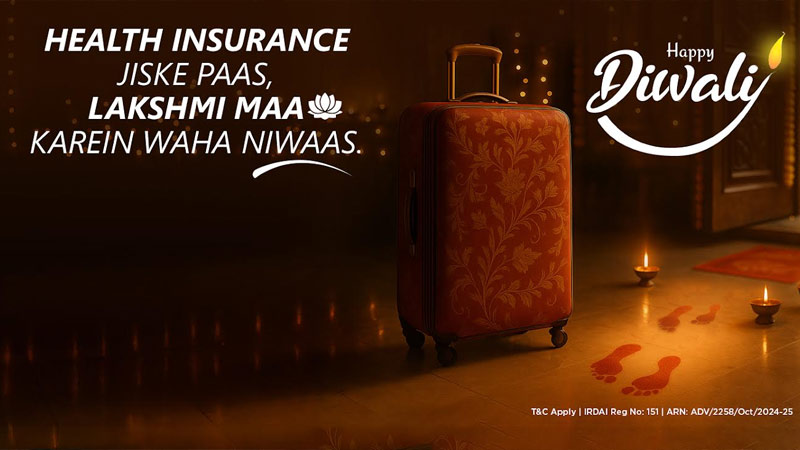
MUMBAI: As homes glitter with lamps and families celebrate prosperity, Manipal Cigna Health Insurance has unveiled its festive campaign, ‘Health Insurance Jiske Paas, Lakshmi Maa Karein Waha Niwaas’, redefining the meaning of true wealth. The film underscores a simple truth, prosperity arrives with abundance, but it endures only when health is protected.
Against the backdrop of Diwali’s lights and rituals, the campaign highlights how health insurance safeguards families from financial distress, turning protection into a form of enduring wealth. Employing generative AI-powered storytelling, the film offers a unique perspective from Goddess Lakshmi herself, blending India’s cultural symbols with contemporary visuals and an unconventional musical score.
Manipal Cigna Health Insurance chief marketing officer Sapna Desai said, “We often pray to Goddess Lakshmi for prosperity but forget that good health is the foundation of wealth. Millions in India still rely on out-of-pocket medical expenses, risking financial strain. By connecting this reality with Diwali, we hope to inspire families to protect their health as an investment in true prosperity.”

To extend the festive reach, Manipal Cigna has partnered with Zepto, delivering flyers carrying the campaign’s message to homes across seven major cities. This is complemented by outdoor billboards and digital activations, making it a fully integrated campaign that marries cultural emotion with modern technology.
Through this initiative, Manipal Cigna continues to champion the idea that health insurance is not just an expense, but a meaningful investment in the well-being and security of every family.







Brands
Jubilant Foodworks to end Dunkin’ franchise in India
Pizza chain operator will not renew agreement when it expires at end of 2026.
MUMBAI: When the doughnuts stop turning and the coffee goes cold, even a global giant like Dunkin’ can find the Indian market a tough brew to crack. Jubilant Foodworks has decided not to renew its franchise agreement with Dunkin’ when the pact expires on 31 December 2026, according to a Reuters report. The operator, best known for running Domino’s outlets in India, said it would evaluate options for its existing Dunkin’ stores, including a potential sale or transfer of franchise rights, in consultation with the US-based brand.
The decision follows years of underperformance in a market where local tastes and intense competition have made it difficult for international coffee-and-doughnut formats to gain traction. Jubilant, which has increasingly focused on its core pizza business and newer bets like Popeyes, indicated that the exit would not materially affect its financial or operational position.
Dunkin’ accounted for just 0.61 per cent of Jubilant’s revenue in the fiscal year ending 2025 and recorded a loss of approximately Rs 191 million, according to a regulatory filing. The company operated 27 outlets as of December 2025, having shuttered seven stores over the preceding year.
The retreat comes even as Jubilant’s broader business shows signs of momentum. The company reported a 65 per cent rise in quarterly profit for the October to December period, reaching Rs 70.9 crore, up from Rs 42.91 crore a year earlier.
For Jubilant, the exit reflects a sharpening strategic focus. For Dunkin’, it marks another setback in a market that has proven resistant to imported café concepts without significant localisation.
In the cut-throat world of Indian quick-service restaurants, sometimes the sweetest deals are the ones you quietly walk away from leaving more room for the brands that truly rise to the occasion.