MAM
Lord of the Engines…

Welcome to the newly discovered world of being found via search-engine…
Oh lord, have mercy, otherwise, our produce will not be discovered and plenty will rot in oblivion. The scene opens. It’s Google’s day. The festivities are full steam ahead, the skateboarding mathematicians are jumping in joy and have thrown away used hockey sticks while sipping champagne, they are now calculatingthe tractions and the centrifugal forces of the Ferraris.
Looking from a wider angle, it seems that the big revolution of “to be searched and to be found” has finally started. This evolution breaks most of the existing rules of marketing, branding and advertising, guaranteed.

Right now, you can either be found right away, or stay lost in the deep. You have no say in this matter; the mighty search engine with its mysterious and very complex software decides your exposure. You simply stay in a line, some algorithm will notice you and ask you to show yourself. This cyber name game is played like an inquisition from the medieval period. You are only summoned, otherwise you stay put. The kingdom is now in the hands of the lords of the search engines.
Let’s zoom in. The remarkable growth demonstrated by the two super-smart, youthful risk-takers form our earlier period’s exuberance is once again proof, a good idea with hard work will take you to the top. Well done, you really deserve it. Go Google, go Ferrari.
Now the flood gates of search engine techniques are opening, the fact that our products and services will mainly be exposed by our websites, the e-commerce gateway, these techniques and the gatekeepers will get all the attention. Help please. There are some dozens of other search engines in the waiting, and hundreds more will pop up when they see thousands of red Ferraris “Googling” on the highway.
You always need a leader like Yahoo to start the race. Their innovations paved the ways for Google. Without mentioning specific names most new search engines sounds like ” Bding, Bdong, Kling, Klong ” like pots and pans rattling in a restaurants in Bombay. The name confusion and corporate branding issues are about to kick in.
The search engine’s branding is based on getting instant popularity with an ultra-cool, hip personality. The more freely you use them, the more powerful and legit they become. The more the number of search engines, the more the complexity. The size and duplication of records, useless archives and blogs all becoming cyber-blobs, accidentally designed to bury everyone alive in e-commerce. Where’s Robin Hood when we need him?
The Dragon Slayers. New regiments of SEO experts are being trained all over the world as a covert operation to tackle this phenomenon, the new revolution is not going to allow any room to the old-fashioned name-branding schemes with fancy color themes and twisted slogans. There is going to be a very serious analysis of names of products and services and corporate naming.
AltaVista, Excite, Hotbot, DogPile, Inktomi, and MetaCrawlers. These name identities appear almost pre-historic. If we follow the rules and laws of business naming, once again, these new icons will land on the likes of Wall Street. Financial markets are somber and conservative, looking for sobriety and with no room for skateboarding attitudes of the dotcom or the Enron era. Proper business name trademarks, solid global domain names and thoughtful corporate name identities are all good prerequisites for such great pursuits.
This battle is all about visibility and how to be found. Search engines will control national and global marketing access. For those who fail to appear on the first page or two will be left behind, in the dark, in the woods, no would hear them.
We urgently need a quick crash course; otherwise connecting with potential customers will become a very tough challenge. Lucky are those with a unique name with a short and clear dotcom name. No extra luggage with additional words or numbers, dashes,and slashes. Customers simply go directly to the site. Like Sony.com or PlayStation.com the rest are lost when consumers enter consumer electronics or video games and get two-three million hits. No one has a month to through the results. This is why the produce will rot as sales are missed for being in total oblivion.
Studies have shown that more than 90 per cent of business names are seriously problematic. Some are too long, too confusing or totally disjointed to make any sense with the business itself. These problems are serious issues for achieving higher visibility. Figure out very fast what your names are doing to your corporate empire, both in print and on e-commerce, because when the time comes they better be presentable to the lords of the search engines.







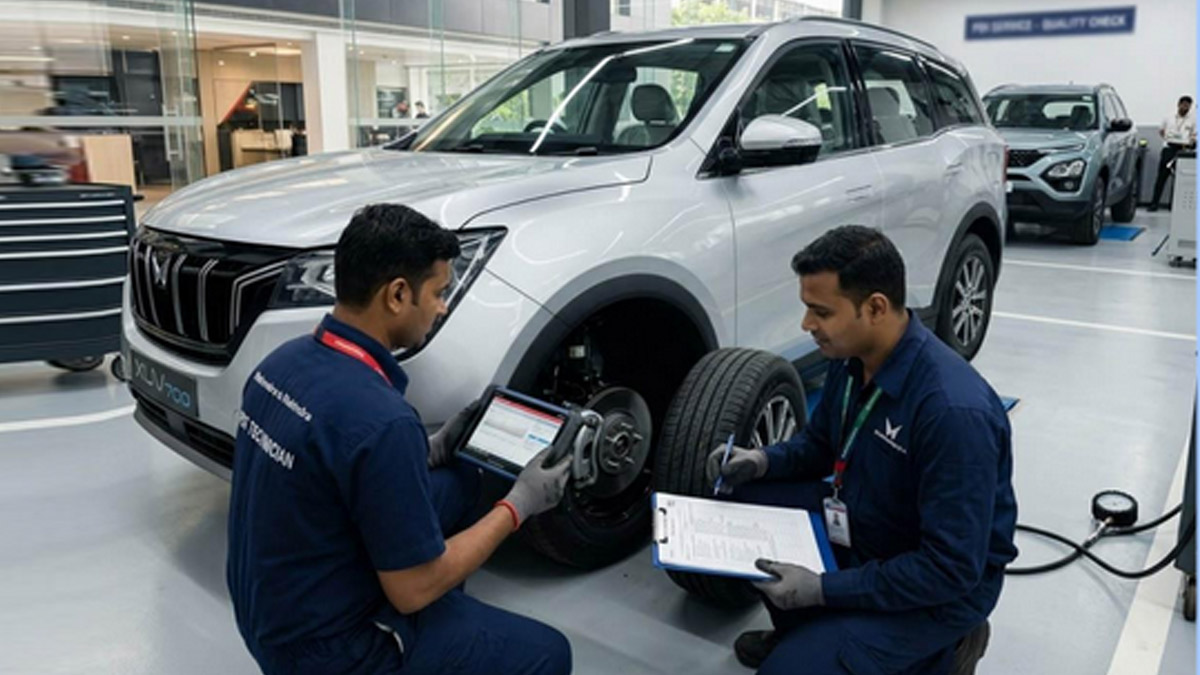
You have spent weeks researching, test driven a few options, finalised the colour and variant, and are now days away from taking delivery of your new car. It feels like the hard part is over. But there is one step that most buyers skip entirely, and it is the one that protects everything else. Understanding what PDI meaning covers and why it matters could save you from discovering a Rs 20,000 to Rs 80,000 problem after you have already signed the papers.
PDI stands for Pre-Delivery Inspection. It is a structured check that happens before your car is handed over to you. A proper PDI car service covers everything from paint quality and panel alignment to electrical systems, fluid levels and tyre pressure. Dealers are supposed to conduct this before delivery, but the depth of the check varies widely. And if the buyer does not know what to look for, problems slip through.
What Does a PDI Actually Cover?
A thorough PDI checks the car across four broad categories:
| Category | What Gets Checked | Common Issues Found |
| Exterior | Paint quality, panel gaps, glass, lights, tyres | Paint chips, uneven panel alignment, scratched glass |
| Interior | Seat upholstery, dashboard, AC, infotainment, switches | Loose trims, non-functional buttons, squeaks and rattles |
| Mechanical | Engine bay, fluids, battery, brakes, steering | Low fluid levels, minor leaks, battery not fully charged |
| Electrical | All lights, windows, central locking, sensors | Malfunctioning sensors, flickering displays, USB ports |
Each of these categories can hide issues that are minor at delivery but expensive if left unaddressed. A small paint chip near a door edge, for example, can lead to rust in a humid city like Mumbai or Chennai within 12 to 18 months.
What It Can Cost You to Skip the PDI
Here is a realistic look at what buyers have discovered after delivery that a proper PDI would have caught before:
• Paint defects requiring respraying: Rs 8,000 to Rs 25,000 depending on the panel
• Misaligned panels or doors that need workshop adjustment: Rs 3,000 to Rs 8,000
• Non-functional infotainment unit needing replacement: Rs 15,000 to Rs 40,000
• Scratched windshield that needs full replacement: Rs 6,000 to Rs 18,000
• AC not cooling properly due to low refrigerant: Rs 2,000 to Rs 5,000
• Tyre with a slow puncture from storage damage: Rs 3,000 to Rs 6,000
The total exposure from a single missed PDI can range from Rs 5,000 for minor issues to Rs 80,000 or more if multiple problems are found post-delivery. More importantly, proving that a defect existed before delivery becomes significantly harder once you have taken the keys.
Why Dealer PDIs Are Not Always Enough
Most dealerships do conduct a pre-delivery check on their own, but the process is not always as rigorous as it should be. There are a few reasons for this:
High Delivery Volumes
During festive season or at the end of a financial year, dealerships handle a surge in deliveries. When a service team is processing 15 to 20 cars a day, the depth of each check inevitably suffers.
Incentive Misalignment
Dealership staff are often incentivised on delivery speed and customer satisfaction scores. Finding a defect and sending a car back for rework delays delivery and affects scores. The incentive to look harder is not always present.
Buyer Unawareness
Most buyers arrive at delivery excited and in a hurry to leave. Without knowing what to look for, they miss things that a trained eye would catch immediately. Dealers know this, and the pressure to be thorough is lower when buyers are not asking questions.
What You Should Check Yourself at Delivery
Even if the dealer has completed their PDI, spend 20 to 30 minutes doing your own check at delivery. Here is a quick reference:
Check How to Do It Time Required Walk around in daylight Check all panels for scratches, chips and dents 5 minutes Open every door Check seals, check for rattles, test all windows 3 minutes Check interior thoroughly Test every button, switch and screen 5 minutes Start the car Look for warning lights, check AC, check all lights 5 minutes Check the boot Look for spare tyre, tools, jack and damage 2 minutes Inspect tyres Check pressure and look for sidewall damage 3 minutes
The Bottom Line
A PDI is not a formality. It is the last line of defence between you and a problem that the manufacturer or dealer should have fixed before you paid for the car.
Take the time to understand what the check involves, ask your dealer for confirmation that it has been completed, and do your own walkthrough at delivery. Twenty minutes of attention at this stage can save you weeks of workshop visits and tens of thousands of rupees down the line.