Brands
Long-term negative impact of Brexit on India negligible; short-term challenges remain

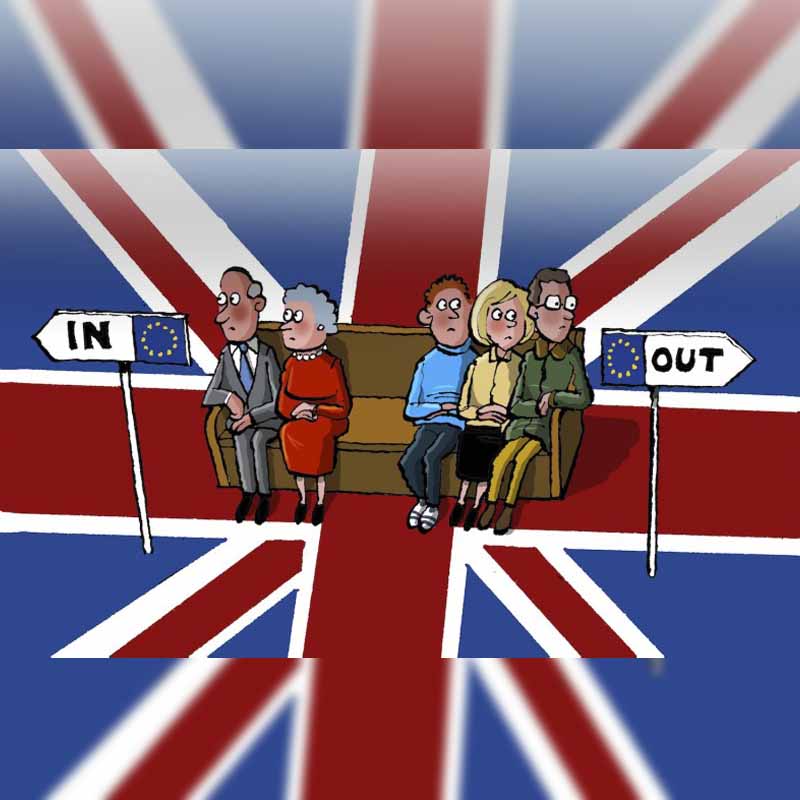
NEW DELHI/MUMBAI: Britain’s politically controversial referendum last week to exit from the European Union, a unique economic and political union between 28 European nations, has created ripples globally, but in India the general feeling is long term impact may be negligible.
While the British media and entertainment industry, having major exposure to European market(s), are wringing their head in dismay at possible long-term financial fallout and increased bureaucracy and paperwork, Indian media industry has been subdued in its reaction.
Sources in both BBC World and Star India said that they were still studying the fine prints of Brexit — as Britain’s EU exit has been popularly dubbed — but added they don’t see any short to medium-term impact (except, of course, the currency exchange valuations).

Some Indian media companies like Zee, Star, and Times TV Network do have fairly big exposure to the European markets in terms of their TV channels’ distribution and sale of Indian content and formats.
Similarly, Hindi and increasingly Indian language film industry are shooting more in various European countries in sharp contrast to yesteryears few fav foreign locales like Holland, London and Paris.
While organisations like The Film & Television Producers Guild of India had no statement put out on Brexit, European media & entertainment players have been very active.
Forbes magazine quoted a statement on Brexit from Britain Stronger in Europe campaign, signed by the likes of Patrick Stewart, Benedict Cumberbatch and Keira Knightley amongst hundreds of celebrity-signatories, as saying: “Our global creative success would be severely weakened by walking away.”
Such sentiments and falling markets and currencies, coupled with media conjectures on future of multi-billion dollar budget TV programmes like the popular Game of Thrones, made its producer HBO to issue clarifications.
“We do not anticipate that the result of the EU Referendum will have any material effect on producing Game of Thrones,” HBO said in an official statement late last week
Variety magazine reported that HBO had confirmed GoT received financial support from the EU’s European Regional Development Fund when it first began, but there has been no contribution to its massive $10 million per episode budget in recent years.
That everybody is scrambling to assess the political and economical fallout of Brexit, while remaining cautiously optimistic at present, is reflected in the opinions of some industry chambers too.
Pointing out that the “way forward, and timelines to achieve negotiated agreements with the EU and other trade partners is not yet known”, UK India Business Council said, “What is clear, though, is that the UK’s trade and economic engagement with the world’s leading countries, including India, will become more important to the nation’s future, not less.”
Motion Picture Association of America in a statement said, “While it will take time to understand the full implications of the referendum result, we urge the UK Government to prioritize a stable environment for the film and television sector.”
Closer home in India, some reactions did come forth on Brexit.
Ashish Bhasin, chairman and CEO, Dentsu Aegis Network, South Asia discounted any mid or long term impact of Brexit on India.
Pointing out short term uncertainty may lead to a “depressed business sentiment,” Bhasin said advertising gets directly influenced and often suffers when business sentiment weakens.
According to Frost & Sullivan’s senior partner and managing director for Europe Sarwant Singh, “It is important to note that during this interim period, Britain will still be subject to existing EU treaties and laws, but will be barred from decision-making processes. Therefore, existing regulations are likely to continue until negotiations are completed.”
The National Association of Software and Services Companies (NASSCOM), whose member-companies have billions of dollars of exposure in the European and UK market, termed the Brexit announcement as a phase of uncertainty in the near term but a mix of challenges and opportunities in the longer term.
Meanwhile, the Indian government has assured that the Indian economy is fundamentally strong enough to withstand any immediate impact of Brexit.






Brands
Hyundai Motor India rolls out nationwide AC check-up camp from April 10
Limited-period service drive offers discounts, free checks to beat summer heat
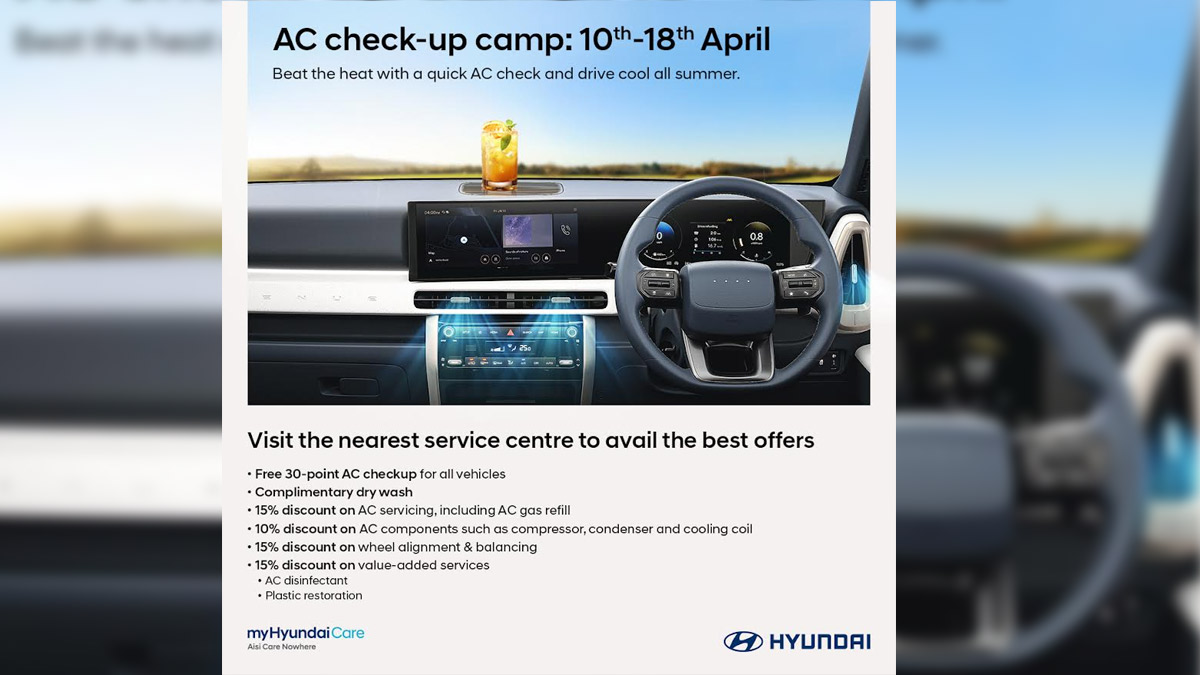
GURUGRAM: Hyundai Motor India Limited has announced a nationwide AC check-up camp, rolling out from April 10 to April 18, as temperatures climb and car cabins begin to feel the heat.
The initiative is designed to keep vehicles cool and customers comfortable, offering a mix of free inspections, discounted services and value-added benefits across Hyundai’s extensive service network in India.
As part of the limited-period campaign, customers can avail a complimentary 30-point vehicle check-up along with a free dry wash. The company is also offering a 15 per cent discount on AC servicing, including gas refills, and similar savings on wheel alignment and balancing. Key AC components such as compressors, condensers and cooling coils will be available at a 10 per cent discount, while value-added services like AC disinfectant treatments and plastic restoration also come with reduced pricing.
The camp will be hosted across authorised Hyundai workshops nationwide, allowing customers easy access to trained technicians, genuine parts and diagnostic support without the usual hassle.
Speaking on the initiative, Hyundai Motor India Limited national service head Nilesh Shah said, “At HMIL, customer satisfaction and convenience remain at the core of our service philosophy. With the onset of summer, we are pleased to introduce our nationwide AC check-up camp to ensure that our customers enjoy a comfortable and hassle-free driving experience. This initiative reflects our commitment to delivering proactive care and enhancing vehicle performance through our strong service network across India.”
With mercury levels on the rise, Hyundai’s timely service push aims to ensure drivers stay cool behind the wheel while also nudging them towards preventive maintenance, a small check today that could save a larger repair tomorrow.






