MAM
Livpure introduces smart RO water purifier to tackle water scarcity


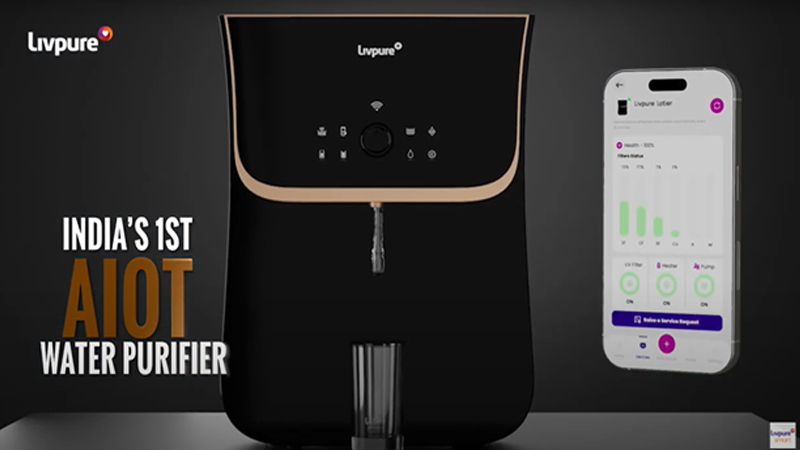
NEW DELHI: The World Wildlife Fund terms water scarcity as a threat to 1.1 billion lives around the globe, and the UN too has urged governments to undertake actionable change in this regardDoing its bit to tackle this pressing problem, Livpure has introduced the world's first smart RO purifier that saves up to 20,000 liters of water every year. Launched under the ‘Water Saviours’ digital campaign, the product aims at putting an end to water wastage caused by regular RO purifiers.
The ad campaign is aligned with the brand’s commitment to saving the environment and building a safer, sustainable world for future generations. In the past too, Livpure has undertaken initiatives to make people aware of the problem of water scarcity that affects millions of lives worldwide.
Livpure CEO Pritesh Talwar said, “Water scarcity is one of the biggest problems in today’s world and births other overarching issues. Many children miss out on education, as they have to walk miles to get potable water. On the other hand, there are water purifiers that waste litres of water daily. Our latest innovation, Zinger and Platino+ Copper RO is our endeavour to introduce sustainability in water purification systems. We are hopeful that more people will ‘join the movement,’ gradually contributing towards building a better planet with conscious choices.”

Livpure focuses on water treatment and water management solutions for households and corporates in India to help prevent water wastage and the spread of air and water-borne diseases. The brand’s latest ROs deliver 70 per cent water recovery against 25 to 30 per cent recovery available from the existing ROs.




MAM
BLR Airport Launches ‘Connections’ Service to Ease Transit Travel
New initiative targets smoother transfers as Bengaluru hub traffic rises 30 per cent.

MUMBAI: Missed connections may be a traveller’s nightmare but Bengaluru is trying to make them a thing of the past. Kempegowda International Airport Bengaluru (BLR Airport) has rolled out ‘Connections by BLR’, a new transfer programme designed to take the friction out of connecting journeys. Built around three pillars ease, efficiency and experience,the initiative aims to simplify what is often the most stressful leg of air travel.
The move comes as transfer traffic at BLR Airport climbs sharply, up more than 30 per cent year-on-year. Transfers currently account for around 15 per cent of total passenger traffic and are projected to touch 20 per cent by 2026, signalling a clear shift in how the airport is positioning itself within airline networks.
At its core, the programme focuses on making navigation intuitive and downtime more comfortable. Dedicated transfer desks have been set up across terminals, supported by colour-coded wayfinding blue and yellow signage designed for quick recognition. Inter-terminal movement is being streamlined through complimentary shuttle services with predictable wait times, while designated transfer zones aim to reduce passenger confusion.
Beyond logistics, the airport is leaning into experience. Travellers in transit now have access to a wider choice of lounges, curated retail and food and beverage options, as well as sleeping pods for short stays. For longer layovers, transit hotels in both Terminal 1 and Terminal 2 offer boutique in-terminal accommodation, an increasingly sought-after feature as global travel patterns evolve.
The timing is strategic. BLR Airport now connects to 114 passenger destinations 80 domestic and 34 international with key routes spanning Delhi, Mumbai, Kolkata, Hyderabad and Pune domestically, and Singapore, London Heathrow, Dubai, Abu Dhabi and Kuala Lumpur internationally. Recent additions such as Hindon, Bidar and Silchar within India, alongside Dammam, Hanoi and Riyadh overseas, are further expanding its reach.
Infrastructure is also catching up with ambition. Developments including the West Cross Taxiway, Terminal 1 refurbishment and Terminal 2 expansion are laying the groundwork for higher capacity and smoother operations critical for any airport aiming to become a serious transfer hub.
Bangalore International Airport Limited chief operating officer Girish Nair framed the initiative as both a response to demand and a forward-looking play. He pointed to the growing depth of the airport’s network and the opportunity to build a more reliable transfer ecosystem that benefits both passengers and airline partners.
In an era where travel is as much about transitions as destinations, BLR Airport is betting that a seamless connection might just be the journey’s most important upgrade.







