AD Agencies
Leo Burnett partners with Bajaj Auto to create ‘V’


MUMBAI: It was a leap of faith of sorts when Bajaj Auto took to Leo Burnett’s idea of carving a bike out INS Vikrant’s metal scraps, and from a mere prototype gave shape to Bajaj V, whose launch has set social media ablaze .
Amidst tweets, photos, Facebook status updates and insta-shares, the latest commuter segment bike offering from Bajaj Auto titled ‘V’ launched with much pomp and show in Delhi today.
The bike was already making headlines since a video with a preview of it went viral online almost a week ago. Conceptualised by Leo Burnett India, the video shows documented footage of the aircraft carrier in all its glory and its subsequent dismantling in 2012 which is sure to set pangs across several patriots in the country who grew up with the name Vikrant.

And the subsequent shot of the new bike born from the ashes of the war ship’s scrap sends across a sense of awe.
While it is of common knowledge that Leo Burnett India are behind the creative campaign for the new bike, very few are aware that the original idea for the bike actually came from the agency as well.
The idea for Bajaj V, came from a prototype that Leo Burnett had conceptualised for their long term client.
“We had to come up with a way to deliver on the idea if ‘Hamara Bajaj’. We didn’t want to go with the old song and dance formula and deliver something more participative. It was around the time Vikrant was going through its decommissioning and was being scrapped. Seeing the unanimous dismay over the scrapping, the team felt what if there was an iconic bike that carried the symbol of vikrant and every Indian could own it ? What better way to communicate hamara Bajaj?” asks Leo Burnett CEO Saurabh Verma.
“Even in its nascent stage we only had a limited edition launch in mind and built the entire prototype on the back of that. It elaborated on how people will connect to it and engagement and campaign ideas for it.” Verma adds. Little did he know that automobile brand will take the idea to the next level. Bajaj Auto bought away the Vikrant metal; enough to process it to be a part of gas tanks of a lac of V motorcycles.
This is not the first time the agency had lend their creative mettle in experimenting with new ways to engage with brands they cater to. Their consumer engagement activity they built around OLX Mad ads was well loved and appreciated by the industry. What does it say about the changing role of agencies and their significance to the clients?
“Bajaj V is not just a campaign mandate for us, it’s much much more. Bajaj team and Leo Burnett team are partners increating this iconic bike, therefore there is more accountability involved. With this unique partners we handle campaigns for Bajaj, we handle activation and shopper marketing for them as well. Not to mention their internal communication and Pr as well,. From conceptualising an from its very production to rolling it across every medium – there is definitely a lot more involvement and ownership that leads to accountability for the brand,” responds Verma, adding that they have several other projects in the pipeline where they have experimented with brands on different levels.
Expanding on the concept of building a bike’s gas tank from the scraps of a warship, the brains behind the idea Leo Burnett CCO Raj Deepak Das adds, “ Growing up, the biggest warship that comes to our mind is INS Vikrant. Therefore when they decided to scrap it, it didn’t sit well with many, me included. So when someone from the team suggested if we could use those scraps, we decided what better way than a bike through which we can own a bit of history?”
It’s been over a decade since India’s popular locomotor brand Bajaj has churned out a motorbike. Their last, Bajaj Pulsar was a huge hit, and now is almost a household name.
“The Bajaj V shall usher a new era in commuter motorcycling. We believe the Indian customer buying a commuter motorcycle deserves something that is substantial, solid, and which moves with a sense of purpose,”said Bajaj Auto president–motorcycle Business,Eric Vas
Expected to be priced between Rs 60000 to Rs 70,000, the bike will hit the roads by this March.
“We will start with a capacity of 20,000 units month and should demand exceed that, there is no problem in enhancing the capacity further,” adds a confident Bajaj Auto managing director Rajiv Bajaj while signing off.







AD Agencies
Publicis Brazil’s creative chief Mauro Ramalho lands the jury chair at Abby Awards 2026
Mauro Ramalho brings 25 years of global advertising firepower to the new creative commerce, use of data and B2B category at Goafest
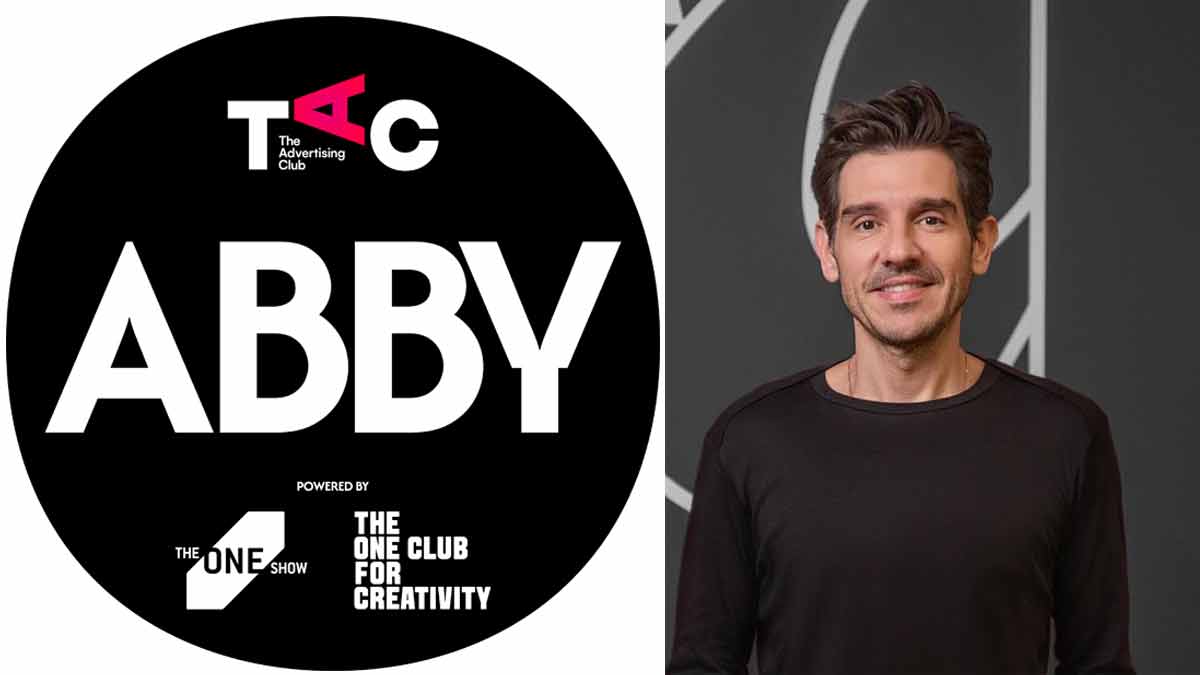
GOA: The Abby Awards 2026, powered by The One Club and The One Show, has appointed Mauro Ramalho, chief creative officer of Publicis Brazil, as jury chair for its newly launched creative commerce, use of data and B2B category. The announcement, made on 18 March, signals the awards’ intent to bring serious international muscle to a category that sits squarely at the intersection of creativity and commercial performance.
Ramalho is not a name that needs much introduction in global advertising circles. Over 25 years spanning three countries, he has worked at some of the industry’s most creatively restless addresses. At AKQA in San Francisco, he worked across McDonald’s, Nike, Fox, Target, Kraft Foods and GAP, and helped lead “The Lost Ring” for McDonald’s, one of the first alternate reality campaigns and among the most awarded projects of its era. He later moved to Organic in Toronto, bridging the Detroit and Toronto offices on Dodge, Jeep and Chrysler, before spending over a decade building CUBOCC into one of Brazil’s most iconic and innovative independent agencies, which subsequently joined the IPG network.
A stint at FCB followed, where Ramalho led integrated work bridging online and offline, before he joined R/GA São Paulo as vice-president and executive creative director, stitching together the São Paulo office with New York, London, Portland and California on global clients including Verizon, Google, Meta, Samsung, American Express and Heineken. He now heads Publicis Brazil as its chief creative officer.
His trophy cabinet includes Clios, Effies, TikTok awards and MMA Smarties, and he has served on juries at the Andys, TikTok and the Lisbon Awards.
The Abby Awards 2026 is scheduled to take place at Goafest 2026 on 20, 21 and 22 May in Goa.
For Indian advertising, landing a jury chair of Ramalho’s calibre for a category built around data-driven creativity and commerce is a statement of ambition. Goafest just raised its own bar.









