MAM
Kids’ candy segment: Communication sees a shift

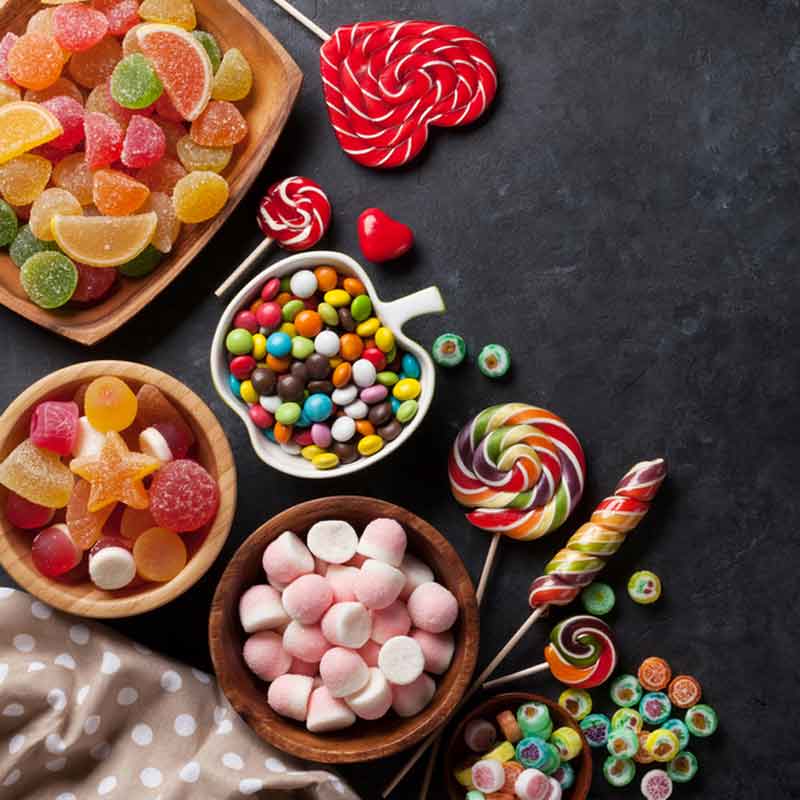
MUMBAI: The lure of candies and chocolates for kids has been a trait that confectionery makers never failed at. With the 1990s bringing jellies and fruit chews to Indian kids, technology has enabled for the acceptance of a wider range of sweetmeats today and would even coax their parents to spend a little more on premium items.

Sugar candies today include hard candies, soft candies, caramels, marshmallows, taffy, and other candies whose principal ingredient is sugar. The penetration of confectionery items in India is just 60 per cent, versus the 90-93 per cent of biscuits. This leaves a huge opportunity to grow. Parle Products category head Krishnarao Buddha believes that the Indian confectionery segment hasn’t evolved much in comparison to other counterparts of the world.
Advertisers have also changed the messaging to suit the shorter attention span of the kids of today using animals, fantasy or cartoon characters. Dentsu India senior vice president and head of planning Vishal Nicholas affirms that advertising today has also gotten rid of the precocious, over smart kid as the protagonist and is getting more real.

Perfetti Van Melle India director of marketing Rohit Kapoor opines that today the messaging has become simpler, direct, routed in product truth yet maintaining the entertainment quotient. The brand is the third largest confectionery manufacturer in the world that has products like Alpenliebe, Big Babol, Centre Fresh, Fruittella, Mentos among others in its kitty.
While TV is still the lead medium from both a storytelling and reach perspective, digital becomes a strong medium for kids over eight years of age. Kids today not only play games on mobiles but are increasingly using computers for school projects and assignments, resulting in a rise of engagement with screens and technology. Some reports estimate time spent on digital mediums at almost 50 minutes a day.
Hence, creating campaigns specifically targeted at kids can be a challenge as they are impressionable minds and tend to get influenced by whatever they see, so advertising has to be fun but responsible.
Kids are undoubtedly more fun than adults and putting them in adult-like situations gives a comic relief to viewers while also bringing relativity. Remember the ever-loved Flipkart campaigns that portray kids acting as adults? Stressing that it’s an immense creative challenge, The Glitch creative director Prashant Kohli suggests that brands and agencies need to be conscious and conscientious of what they advertise to kids around the world and although it seems like an obvious fact, it can get tricky to observe objectively in an adult world. “Campaigns crafted for them, need to be designed like stories they’d like to pick up from, craft their own versions, and tell their friends as their new story,” he adds.
For Parle Products, television is still the best medium to communicate with kids and get the message across followed by school, on-ground activations and advertising in kids movies. Perfetti Van Melle India vouches for television followed by digital platforms. “What we see clearly is that viewership in kids has become even more fragmented with a significant portion of kids viewership on GECs. OTT platforms, gaming on digital could get relevance in near future as these gain scale in the kids genre,” says Kapoor.
Having a well-distributed network and making sure the product reached the right audience at the right time is the core of any business strategy. Since kids are very fickle about their choices and prefer buying attractive-looking products, it is a constant battle among marketers to make sure their products are always available on the shelf for children to see them. Parle Products has access to over 6.2 million outlets in India where the company’s biscuits are available in across 60 million outlets and confectionery in 0.65 million outlets. The company has a stronger indirect distribution than direct.

Kapoor informs that Perfetti Van Melle continues to work on making sure that the products are available to consumers across the spectrum of outlets and have a good mix of direct and indirect distribution.
In 2017, Parle Products achieved a 15-18 per cent of growth and projects to cross 20 per cent growth in 2018-19 in the confectionery business. The company is the second largest confectionery and biscuits brand in India that produces Parle G, Poppins, Kismi, Melody, Mango Bite among others. On the other hand, Perfetti Van Melle India registered a net profit of Rs 40 crore during the financial year to March 2017 which was a rise of 24 per cent.
Brands still have a long way to go in rural penetration with premium products such as Kinder Joy, Choco pie, M&M and Ferrero Rocher being close to invisible in rural department stores.
ALSO READ:
FabIndia sets aside 40% on digital advertising
The attention grabbing gimmick of comparative advertising
Brands pick digital over TV and print for Diwali marketing
Want the Silk jingle to be popular culture: Mondelez’s Prashant Peres

MAM
Boost Milkshake launches ‘The New Secret of Mahi Energy’ campaign with MS Dhoni
VML India crafts energetic tribute linking cricketing icon’s legacy to Gen Z fans.
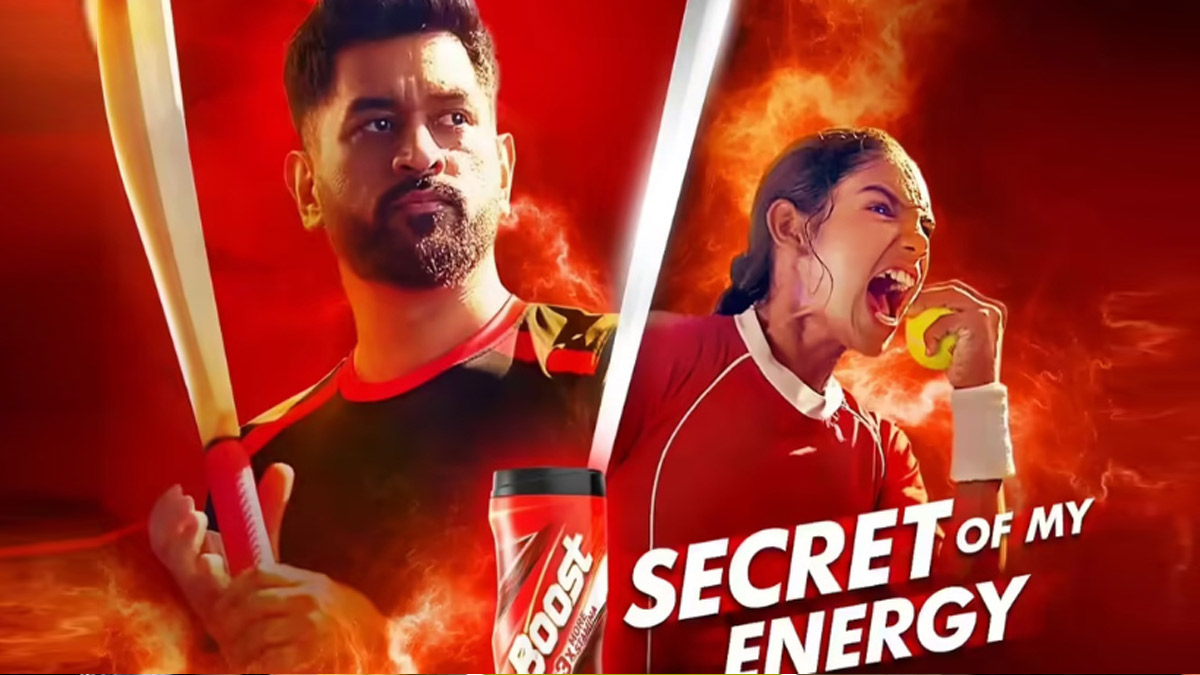
MUMBAI: Boost Milkshake has found a fresh way to charge up its brand by plugging straight into the unbeatable energy of Mahendra Singh Dhoni and his millions of passionate fans. VML India has created an electrifying new campaign for Boost Milkshake titled ‘The New Secret of Mahi Energy’. The multi-channel, social-first campaign celebrates Dhoni’s enduring legacy of excellence, resilience, and drive, while cleverly positioning the ready-to-drink milkshake as the secret fuel behind “Thala’s” iconic Number 7 energy.
Designed specifically for Gen Z’s digital habits and love for authentic, shareable experiences, the month-long campaign blends cultural insight with high-impact creative execution. It features captivating out-of-home activations in Mumbai, Chennai and Guwahati, along with strong social-first initiatives amplified by authentic Dhoni fan pages and influencers, including superfan Saravanan Hari.
VML India managing partner for North Jaibeer Ahmad said, “Boost has always stood for the energy that fuels belief. Today, energy is not just physical, it’s emotional, collective, and contagious. Boost Milkshake taps into this new-age energy, fuelling the passion of a billion fans who power every moment of greatness.”
VML India, senior VP and executive creative directors Nakul Sharma and Tirtha Ghosh added, “MS Dhoni isn’t just a player in India, he’s a phenomenon. We turned fandom from a passive emotion into an active source of energy. The same energy that powers Mahi also lives within his fans.”
Hindustan Unilever Limited (HUL) head of brand building for lifestyle nutrition Shailee Chatrath Tyagi noted, “Boost is the OG of cricket culture. With the national launch of Boost Milkshake in ready-to-drink format, ‘The New Secret of Mahi Energy’ is a befitting tribute to the eternal equation of Mahi and his million fans.”
Timed perfectly with the ongoing IPL season, the campaign reinforces Boost Milkshake’s connection with a new generation while celebrating Dhoni’s legendary status as he once again dons the iconic Number 7 jersey.
In a country where cricket runs on emotion as much as skill, Boost has smartly shifted the narrative, the real secret of Mahi’s energy isn’t just inside the champion, it’s also inside the millions of fans cheering him on. And now, there’s a tasty milkshake to power that collective belief.






