MAM
‘KBC2’ associate sponsors: 6 down, 2 to go

MUMBAI: As the clock ticks for the launch of KBC2, what Star India has billed as the biggest by far TV event of 2005, six associate sponsors have been finalised.
The six associate sponsors being Airtel, Nokia Gujarat Ambuja, LIC, LG and Hyundai.

According to industry estimates, Airtel, which is the exclusive mobile operator for KBC2, is paying between Rs 280 – 320 million (SMS revenue sharing inclusive). And excluding Airtel, the estimated rate for the remaining five sponsors has been pegged between Rs 130 – 150 million each.
Says Star India executive vice president ad sales Kevin Vaz, “Six associate sponsors have been frozen. We are going to be upping the rates for the last two sponsors as there is plenty of time before the programme starts. We are in discussions with a couple of FMCG advertisers and a two wheeler company for the same.”
As for the other branding opportunities that the show allows for – currently Airtel has bought the ‘Phone a Friend’ bug and LIC has bought the ‘Money Tree’ bug. Adds Vaz, “We will be selling the in-programme bugs after we sell all the sponsorships. We would like to give the sponsors the first right of refusal. A couple of clients are very interested in the cheque as well as the computer branding but we will close all the bugs only after we have sold the sponsorships.”
If one looks at the six sponsors and their spending appetite on mass media in the past, clearly Gujarat Ambuja and LIC are surprises. Gujarat Ambuja is typically a print-led advertiser with total advertising spends across TV and print being Rs 100 – 110 million. Why a cement company would park all of its monies at one place is definitely worth pondering. According to media analysts, the reasons attributed are competition. With Grasim on an overdrive mode consolidating their various cements as well as their buy out of L&T (rebranding itself as Ultratech), Gurat Ambuja is probably looking at a corporate brand enhancing exercise repositioning itself thorough a high profile property like KBC2. A point worth noting here is that this will be the biggest deal a cement company has entered into on television per se. Cement as a category is an extremely low involvement product. So, a property like KBC2 will ensure consumer’s mindspace and hence give a top of mind recall.
As for LIC (Life Insurance Cooperation of India), it usually freezes its advertising budgets in March. This will be LIC’s first ever annual deal. Also, with the onslaught on private players, LIC has probably realised that before it loses its monopoly position, the time has come to reiterate the brand and its values to its customers.
LG has predominantly been a major cricket spender apart from LG CDMA. LG seems to be a question in doubt as to their strategic intent to tie-up with a KBC2. With LG keeping a very low profile in the recent past; it is not very clear as to what its agenda is. Nokia on the other hand, is a brand that usually advertises on niche channels. After the last cricket World Cup, Nokia allocates 40 – 50 percent of their spends to impact baskets, the rest being weekly magazines, outdoor tie-ups and print. The exception was Indian Idol, although the monetary stakes for KBC2 are far bigger. In essence, Nokia will be entering the mass platform for the first time in such a big way.
Hyundai are moderate spenders and more skewed towards print and niche channels as well. This time round, Hyundai is probably ensuring itself a huge reach platform and property so to combat Maruti’s latest offering Swift.
Interestingly, most brands that have come onto KBC2 are male skewed brands This in all has enabled KBC2 to bring into its basket a wider range of advertisers who are not very active on Star Plus. KBC2 will also therefore help broadbase Star Plus’ advertiser base.
Validates Vaz, “All the sponsors confirmed so far are not the regular high spenders on Star Plus. We have signed up with advertisers across various categories like cement, telecom, insurance and consumer durables. Some of these categories have got onto television for the first time in such a big way.”
All female brands usually coming from the FMCG sector, targeting male audiences has always been a mammoth task; cricket being seen as the only impactful but heavy cost medium. Explains a media analyst, “The brands on KBC2 are all male skewed. This makes sense as male brands usually need to be constant for some time. So, considering KBC2 is a property where the lock in period is high, it makes for a sensible buy for these brands”
While a KBC2, forces one to pool in resources for a total of six months, “brands that stand to take a risk will actually gain in the long term. KBC2 will force a brand to be constant, to be constantly in advertising space, in the consumer’s mindspace on a big media window for a consistent period,” adds another media professional.
If one breaks down the estimated deal of the associate sponsors (130 -150 million) and across the entire 85 episodes (5100 seconds) then the approximate spot cost for a 10 seconder comes to Rs. 2,74500. Which is approximately the cost of a spot buy on Kyunki…
Considering a total of 600 seconds of advertising time, and 60 seconds blocked per sponsor (assuming 6 sponsors), 360 seconds are blocked for associate sponsors; thereby leaving only 240 seconds for spot buys.
Spot buys which will go at a heavy premium is estimated anywhere between Rs 3,50,000 – 4,00,000 for 10 seconds.
Is it worth the monies? Vaz retorts,”KBC2 cuts across audiences and hence appeals to every brand. Every advertiser we have spoken to has been very upbeat about the programme and are very convinced that KBC2 will be the biggest thing on television this year. The six sponsors already on board are not the regular high spenders on Star Plus and the believe in the power of KBC2.”
Says Madison media director Sudipto Roy,”Every brand that has made some headway in the last two years have been risk takers. If a brand has to risk, it would rather be a risk on KBC2 than a much talked about cricket series which delivers an average TVR of a seven or an eight.”


Brands
Kwality Wall’s reports standalone losses following strategic HUL demerger
Ice cream major faces Rs 64 crore Ebitda loss amid commodity inflation and muted Q3 sales
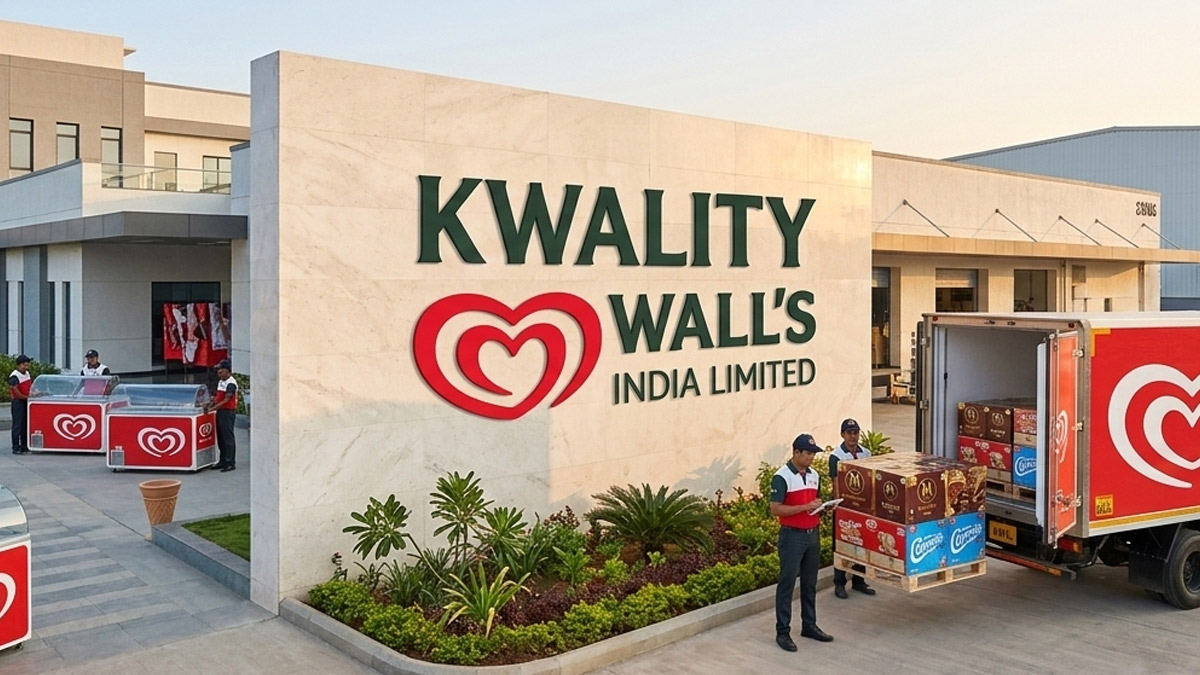
MUMBAI: Kwality Wall’s (India) Limited (KWIL) has released its first set of financial results as a standalone entity, revealing a challenging start to its independent journey. Following its successful demerger from Hindustan Unilever Limited (HUL) on 1st December 2025 and its subsequent listing on 16th February 2026, the company is navigating a transition period marked by structural changes and high input costs.
For the quarter ended 31st December 2025, the company reported revenue of Rs 222 crores. Despite the revenue base, the bottom line was impacted by several factors, resulting in an Ebitda loss of Rs 64.2 crores. When calculated on a Pre-IND AS 116 basis, the Ebitda loss stood at Rs 83.8 crores.
Organic Sales Growth (OSG) declined by 6.5 per cent year-on-year during the quarter. Volume growth, however, saw a marginal increase of 1.2 per cent. The company reported a gross margin of 41.5 per cent. Additionally, exceptional expenses amounting to Rs 94 crores were recorded, primarily linked to non-recurring costs during the transition phase.
Performance across portfolios and channels was mixed. Within the impulse portfolio, brands such as Magnum and Cornetto recorded mid-single digit volume growth, indicating steady demand in on-the-go consumption. However, the in-home portfolio, which includes take-home packs, experienced muted consumption. The company is planning a relaunch of this category with improved offerings ahead of the 2026 season.
Quick commerce (Q-Com) continued to emerge as a strong growth driver, delivering robust double-digit growth during the quarter. Meanwhile, the company also expanded its physical distribution network by increasing the number of company-owned cabinets across markets.
Margin pressure during the quarter was driven by a combination of one-off factors and broader cost inflation. Gross margins were impacted by around 600 basis points due to trade investments made for stock liquidation. Additionally, cocoa price inflation contributed to another 400 basis points of pressure on margins.
Deputy managing director Chitrank Goel attributed the muted performance partly to prolonged monsoons and transitional challenges linked to the GST framework. Operating expenses also increased as the company invested in establishing its standalone supply chain, operational systems and corporate infrastructure following the demerger.
Looking ahead, the management remains focused on a volume-driven growth strategy. To restore profitability, the company has initiated a cost productivity programme aimed at reducing non-consumer-facing costs. It is also working on building regional manufacturing networks to optimise logistics expenses and improve operational efficiency.
The commodity outlook for the near term remains mixed. Dairy prices are expected to remain firm due to tight supply conditions and rising fodder costs. Sugar prices may also move higher following increases in the Minimum Selling Price (MSP). While cocoa prices have moderated recently, currency depreciation has offset some of the potential cost relief for the company.