Brands
Kamat Hotels plants flags in Himalayan foothills and tech hub

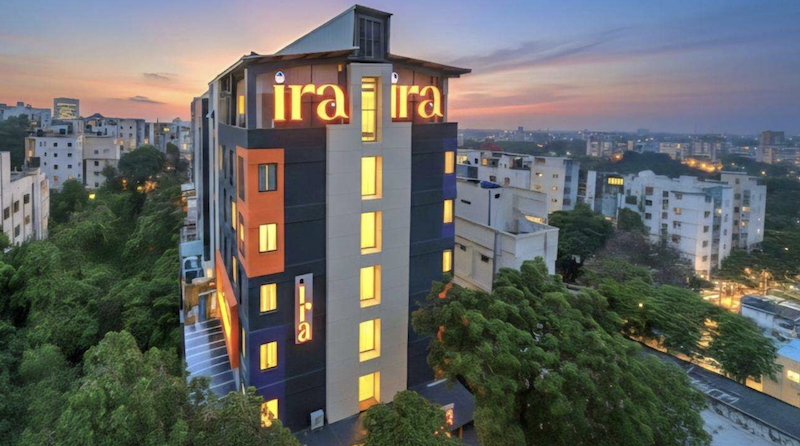
MUMBAI: Kamat Hotels (India) Limited has thrown open the doors to two contrasting properties that capture India’s dual identity: a wellness sanctuary beneath the snow-capped Himalayas and a sleek business hotel in the country’s tech capital.
The hospitality chain unveiled The Orchid Rishivan Hotel in Rishikesh and IRA by Orchid Hotel in Hyderabad on Sunday, adding 117 rooms to its expanding empire and planting its flag firmly in both India’s spiritual heartland and its commercial nerve centres.
In Rishikesh, where the Ganges rushes down from sacred peaks, the 54-room Orchid Rishivan Hotel promises to marry ancient mysticism with modern luxury. Guests can stretch into sunrise yoga sessions beside a centuries-old Shivling temple, then retreat to a state-of-the-art spa surrounded by whispering forests. The property operates under a revenue-sharing model and caters to the booming wellness tourism market, complete with conference facilities for corporate retreats and intimate wedding venues.


Some 1,500 kilometres south, the 63-room IRA by Orchid Hotel stakes its claim in Hyderabad’s bustling business district. The leased property targets the city’s army of technocrats and deal-makers with contemporary rooms and dining that blends authentic Hyderabadi spices with international flavours.
“We are tapping into the rising demand for wellness tourism and destination weddings, while Hyderabad positions us to serve a thriving corporate market,” said executive director Vishal Vithal Kamat. His father, executive chairman and managing director Vithal Venkatesh Kamat, described the openings as highlighting the group’s “dual focus” between eco-luxury and metropolitan hospitality.
The launches underscore Kamat Hotels’ strategy to capture both ends of India’s travel spectrum: spiritual seekers fleeing urban chaos and business travelers powering the country’s economic engine. With wellness tourism surging and corporate travel rebounding post-pandemic, the group is betting that India’s contradictions—ancient and modern, spiritual and commercial—can fuel profitable growth.







Brands
Dunkin’ Donuts to exit India as Jubilant FoodWorks ends 15-year franchise deal
The quick service restaurant giant is ending a 15-year franchise partnership with the American doughnut chain, even as it renews its Domino’s agreement for another 15 years

NOIDA: Dunkin’ is done in India. Jubilant FoodWorks Ltd, the country’s leading quick service restaurant operator, has decided not to renew its franchise agreement with the American coffee and doughnut chain, and will wind down its Indian stores in a phased manner before December 31, 2026, bringing a 15-year partnership to a quiet, loss-laden close.
The decision, approved by JFL’s board on March 30, 2026, ends a relationship that began with a Multiple Unit Development Franchise Agreement signed on February 24, 2011. JFL will now evaluate and undertake what it described in a regulatory filing as the “rationalisation and/or cessation of certain operations and/or sale, transfer or disposal of assets and/or assignment or transfer of franchise rights,” all in consultation with Dunkin’s brand owners and strictly within the terms of the original agreement.
The numbers tell the story bluntly. In the financial year 2024-25, Dunkin’ India posted a revenue of Rs 37 crore against a loss of Rs 19 crore — a haemorrhage that was always going to test the patience of a parent company recording revenues of Rs 6,104 crore and a profit of Rs 194 crore in the same period. Doughnuts, it turns out, were never going to move the needle.
The contrast with JFL’s handling of its other marquee franchise could hardly be sharper. Even as it walks away from Dunkin’, the company has just doubled down on Domino’s, signing a fresh Master Franchise Agreement on March 31, 2026, granting it exclusive rights to develop and operate Domino’s Pizza stores in India for 15 years, with an option to renew for a further 10.
JFL, incorporated in 1995 and promoted by the Bharatia family, operates a network of more than 3,500 stores across six markets — India, Turkey, Bangladesh, Sri Lanka, Azerbaijan and Georgia. Its portfolio includes Domino’s and Popeyes on the global side, and two home-grown brands: Hong’s Kitchen and COFFY, a café brand in Turkey.
For Dunkin’, India was always a stretch. The brand never quite cracked the cultural code in a market where filter coffee and chai command fierce loyalty and where the doughnut remains, at best, an occasional indulgence rather than a daily habit. Fifteen years, mounting losses and a parent with better things to spend its capital on was always going to be a difficult equation to solve.
The doughnut has had its last day. The pizza, however, is staying.






