Brands
Jolly Rancher Hotties launched in India

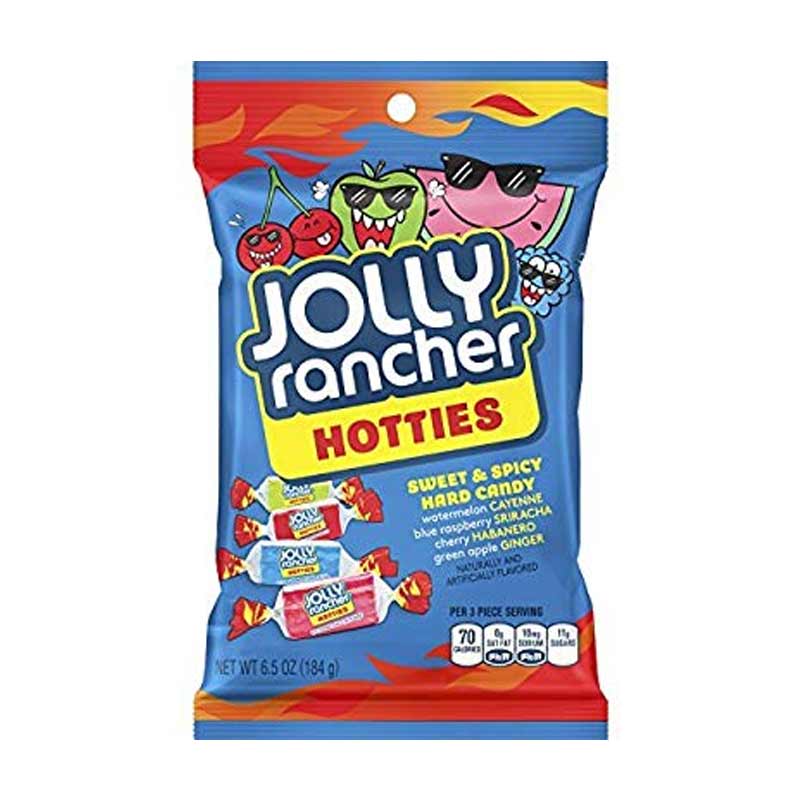
MUMBAI: Hershey India has launched Jolly Rancher Hotties, a hard candy especially developed to appeal to the ‘hot’ Indian palate.
The candy is a part of the Jolly Rancher confectionery range, which is known for its unmistakable bold, sweet and tart fruity flavours.
Jolly Rancher Hotties is uniquely crafted. Consumers first experience its tongue-tingling fruity flavours, which then give way to a sudden spicy burst at the centre, thereby leaving a lingering taste, that is a stimulating mix of both sweet and spice. The candy will be available in three exciting flavours – Raw Mango, Pineapple, and Lemon – and is priced at Re 1.

Hershey India managing director for Jolly Rancher Hotties Herjit Bhalla says, “Hershey India is continuously evolving its product portfolio, based on strong consumer understanding. When we researched the Indian taste preferences, we discovered that as a culture, we prefer hot and spicy flavours as much as the sweet ones. It has always been our vision to provide a differentiated product experience to our consumers. We are very excited about the launch of Jolly Rancher Hotties as it is set to strike a chord with both `meetha’ and `theekha’ being fused into a single offering. Jolly Rancher is a key brand in the Hershey India portfolio, and with the launch of Jolly Rancher Hotties, we aim to offer yet another unique innovation that is set to tingle the taste palate of Indians.”
The Jolly Rancher Hotties launch will be communicated across media, including television and digital, and will be endorsed by celebrity Tamannaah Bhatia.
In her comments on the new launch, Tamannaah Bhatia mentions, “Jolly Rancher has always been a favourite, and I would eagerly wait for friends or relatives travelling from the United States to get me a few packs of the candy. I look forward to the exciting launch of Jolly Rancher Hotties in India and to being a part of a brand that I have personally loved over the years.”






Brands
Dunkin’ Donuts to exit India as Jubilant FoodWorks ends 15-year franchise deal
The quick service restaurant giant is ending a 15-year franchise partnership with the American doughnut chain, even as it renews its Domino’s agreement for another 15 years
NOIDA: Dunkin’ is done in India. Jubilant FoodWorks Ltd, the country’s leading quick service restaurant operator, has decided not to renew its franchise agreement with the American coffee and doughnut chain, and will wind down its Indian stores in a phased manner before December 31, 2026, bringing a 15-year partnership to a quiet, loss-laden close.
The decision, approved by JFL’s board on March 30, 2026, ends a relationship that began with a Multiple Unit Development Franchise Agreement signed on February 24, 2011. JFL will now evaluate and undertake what it described in a regulatory filing as the “rationalisation and/or cessation of certain operations and/or sale, transfer or disposal of assets and/or assignment or transfer of franchise rights,” all in consultation with Dunkin’s brand owners and strictly within the terms of the original agreement.
The numbers tell the story bluntly. In the financial year 2024-25, Dunkin’ India posted a revenue of Rs 37 crore against a loss of Rs 19 crore — a haemorrhage that was always going to test the patience of a parent company recording revenues of Rs 6,104 crore and a profit of Rs 194 crore in the same period. Doughnuts, it turns out, were never going to move the needle.
The contrast with JFL’s handling of its other marquee franchise could hardly be sharper. Even as it walks away from Dunkin’, the company has just doubled down on Domino’s, signing a fresh Master Franchise Agreement on March 31, 2026, granting it exclusive rights to develop and operate Domino’s Pizza stores in India for 15 years, with an option to renew for a further 10.
JFL, incorporated in 1995 and promoted by the Bharatia family, operates a network of more than 3,500 stores across six markets — India, Turkey, Bangladesh, Sri Lanka, Azerbaijan and Georgia. Its portfolio includes Domino’s and Popeyes on the global side, and two home-grown brands: Hong’s Kitchen and COFFY, a café brand in Turkey.
For Dunkin’, India was always a stretch. The brand never quite cracked the cultural code in a market where filter coffee and chai command fierce loyalty and where the doughnut remains, at best, an occasional indulgence rather than a daily habit. Fifteen years, mounting losses and a parent with better things to spend its capital on was always going to be a difficult equation to solve.
The doughnut has had its last day. The pizza, however, is staying.






