MAM
J Walter Thompson globally rebranded as JWT

MUMBAI: J. Walter Thompson has ceased to exist. As of 28 February, 2005, after 140 years, the advertising agency, fourth largest in the world and No. 1 in India, has emerged with a fresh, contemporary face that is consistent around the globe. With its new identity, JWT, the agency has marked the beginning of a new period in its growth and in the history of advertising.
The rebranding of the agency is but one aspect of the paradigm shift in the way the agency proposes to conduct its business, evaluate its success, and reach out to customers on the client’s behalf, a company release states.
Says JWT India CEO Colvyn Harris, “This change goes far beyond a name or a logo change. It is about how we have chosen to respond to the communications challenge that our business is facing – if we fail to engage the customer, he has the option and the ability to altogether switch us off. Hence the shift in our focus from the past where the emphasis was on account management – our historical strength – to creative strategy and award-worthy work, producing ideas that stay with the customers beyond the duration of the message. The new mandate that will drive every aspect of JWT’s work will be the need to tell engaging stories in engaging ways, so that our messages cease to be interruptions to what people are interested in and instead become what people are interested in.”
With a focus on creating insights and ideas that claim a disproportionate share of the customer’s time, the new JWT will have a distinct orientation to continue its strong heritage of leading the market as a pioneer. A stringent set of creative standards will be implemented to assess work across the network. The 10 creative standards will range from “world beating” to “damaging”, and this will help the agency separate high quality from intolerable work and everything in between. JWT’s new ‘health check’ is a quarterly reporting system that will consider an office’s work, people, client relationships and reputation, in addition to the bottom-line. This new system of performance evaluation will help the agency identify its strongest and weakest links, so that it is able to adopt measures that are necessary to get the underperformers back on track and ensure that every office is worthy of doing business under the JWT brand name.

The release states, the new JWT will mean a new name, a new way of doing business, a new worldwide creative director, a new emphasis on time and a new real-time research style. This will translate into a historic shift from the era of imposition to an era of participation.
In India, across its offices in Mumbai, Delhi, Chennai, Chandigarh, Bangalore and Kolkata, the new identity was unveiled through a series of activities ranging from staffers aboard a yacht bidding a mid-sea farewell to Commodore J Walter Thompson – long time mascot of the agency – to holding a colourful carnival-style parade, to re-entering India through the Gateway of India. Many offices symbolically burnt or buried the old signage and even underwent a baptism ritual conducted by the oldest





MAM
Beacon Group appoints Dr Rajesh Patel as Group CEO
36-year healthcare veteran to lead Beacon Diagnostics, Vector Biotek, Biogeny.
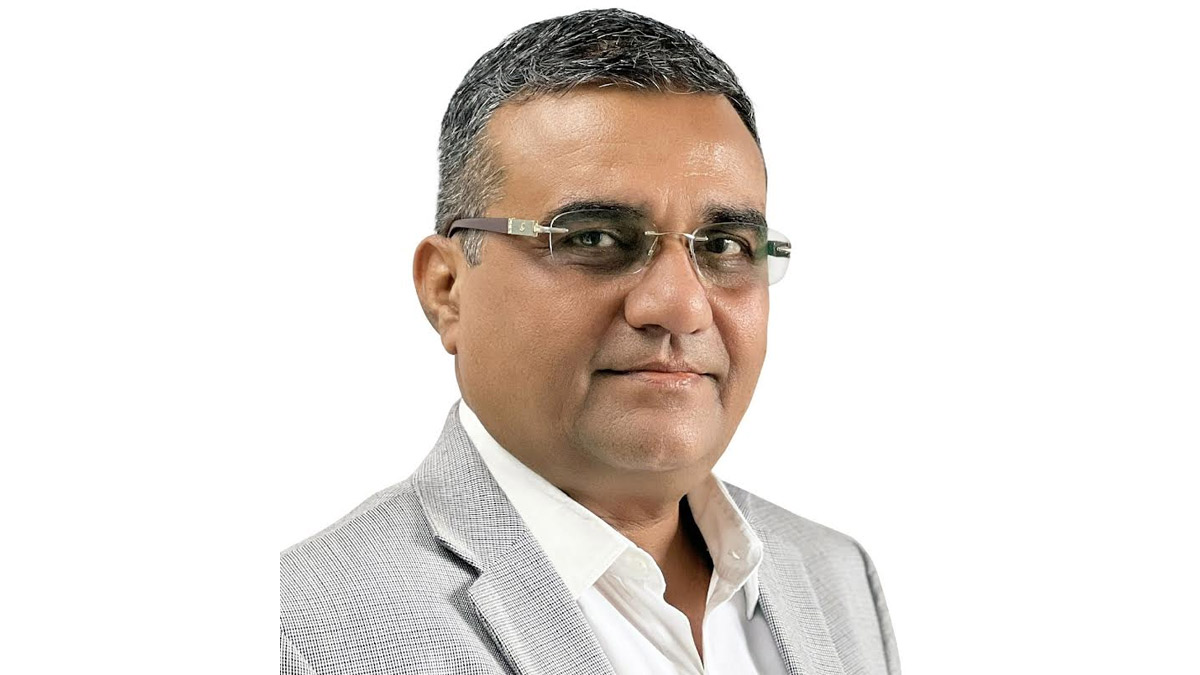
MUMBAI: A new chief, a fresh diagnosis and a sharper prescription for growth. Beacon Group has appointed Dr Rajesh Patel as its Group Chief Executive Officer, effective April 1, 2026, signalling a decisive push to scale its presence in the diagnostics and IVD space. Patel steps into the role with 36 years of experience across the healthcare and diagnostics industry, bringing a career shaped by leadership roles spanning sales, marketing, business development and operational strategy. His mandate is both expansive and precise: to steer the group’s overall strategic direction while tightening coordination across its three core entities Beacon Diagnostics, Vector Biotek and Biogeny Diagnostics.
In practical terms, that means driving cross-company synergies, accelerating market expansion and strengthening organisational capability areas increasingly critical as diagnostic players compete for scale in a fragmented yet rapidly evolving healthcare ecosystem. The group is positioning itself to capture unmet demand across chain laboratories, key accounts and standalone labs, segments that remain underserved despite growing diagnostic needs.
The appointment comes at a time when the In Vitro Diagnostics (IVD) sector in India is entering a more competitive and innovation-led phase, with companies focusing not just on product pipelines but also on service delivery, integration and customer-centric models. Beacon’s leadership appears to be betting that Patel’s execution-focused approach can help translate ambition into operational momentum.
Welcoming the appointment, Chairman Dr D K Joshi described Patel’s induction as a strategic move aligned with the group’s long-term vision, emphasising the role of leadership depth in navigating the next phase of growth.
For Beacon Group, the message is clear, in a sector where precision matters, leadership is the new differentiator—and this appointment is intended to set the tone for what comes next.






