MAM
It’s ‘age of the entrepreneur’: JWT study

MUMBAI: Ad agency J Walter Thompson (JWT) has revealed the findings of a study on the Indian family based on ethnography entitled The Great Indian Family: Juicing change.
Most conventional research focuses on consumer attitudes and behaviour in terms of product categories, brands, response to communication or a gender or class. The study, which attempts to break from “western templates” in its outlook, is the culmination of a rigorous process to delve into the multi-faceted psyche of the Indian consumer, focusing on the collective, a company release says.
JWT CEO Mike Khanna was quoted as saying,”The process of change happens at a collective level and, in the Indian context, the smallest unit of this collectivity is the family. Therefore, understanding this phenomenon required an in-depth study of the whole family and its complete dynamics. This led us to undertake the study on the Indian family. I am pleased to announce our efforts have borne fruit as we now hold the key to the eight core driving forces of the Indian consumer…”

The JWT study identifies eight core, underlying, truths about Indian consumers that significantly influence their attitudes and behaviour. The research was conducted by Research International, part of the London-based Research International Group, which is the largest custom research organisation in the world.
The eight most significant norms moulding attitudes and behaviour, according to the study, are the importance of being “entrepreneurial”; “speed and lightness in all aspects of life”; “enjoyment”; “religion and spirituality for physical and mental health”; “the family as a brand”; “the ‘nowness’ of life”; “manipulation and powerplay for family harmony”; and “getting more out of less”.
According to the findings, the value of being self-made holds more importance than ever before, with increasing emphasis being laid on this quality as an assertion of ability and, thus, worth. The age of the entrepreneur is emerging, with the belief growing among Indians that an enterprise, no matter how small, carries dignity and pride and denotes the realisation of a dream. There is also an increasing penchant for ‘lightness’ among families, be it in terms of being more casual than traditional, seeking lightness in the kitchen through convenience foods and ready-to-use masalas, and looking for lightness in terms of convenience – purchase through super markets and home delivery systems.
More than the need for a product or service, it was found Indian consumers today lay greater emphasis on the experience and enjoyment that come with it. Enjoying the simple pleasures of life; working to earn that enjoyment; and enjoying the small dreams that come true with the help of brands, new products and services, are the top priorities among Indians.
On the relationships front, conforming with the traditional Indian psyche of being respectful, non-controversial, and non-confrontational, Indians today are using positive manipulation to get what they need. The study also showed that with lifestyle increasingly getting stressful and demanding, the consumers of today are turning to spirituality and religion for serenity and balance in life. In addition, there is a growing trend among Indians to project a specific family image, with the family increasingly being treated as a brand. It was also found that Indians are taking life as it comes rather than trying to direct one’s life.
The study also revealed that although people are willing to spend money, their expectations of return from every rupee spent are much more than what they were earlier. Consumers today are seeking better deals and better bargains, and are looking to get more than they bargained for, not just from a product but also from the entire experience.
The study involved over 96 in-depth interviews across 24 families covering the north, south and west of India. The entire process of field work took over seven months to complete. The study on the Indian family was conducted to fill the gaps in knowledge left by the findings of researches in brands, categories and consumers conducted in the previous 12 months. With the objective of studying the complete dynamics of the Indian family in great detail, along with its origin and history, families were chosen as respondents instead of individuals. These families were scientifically selected to represent the emerging consumer types in India, the release says.
Researchers from Research International parked themselves in the homes of respondents for an entire week and interacted with them in every possible detail to get real insights into their lives. twenty-four families from Delhi, Mumbai, Nagpur, Bareilly, Bangalore and Warangal, representative of the metros and small towns in Northern and Southern India, were targeted for the research. To get a holistic view of the Indian family, the chosen families were from different socio-economic strata, at various life stages and belonged to different family types – nuclear as well as joint.




MAM
Sameer Nair steps down as CEO of Applause Entertainment
Veteran media executive exits after a decade at the Aditya Birla Group-backed studio.
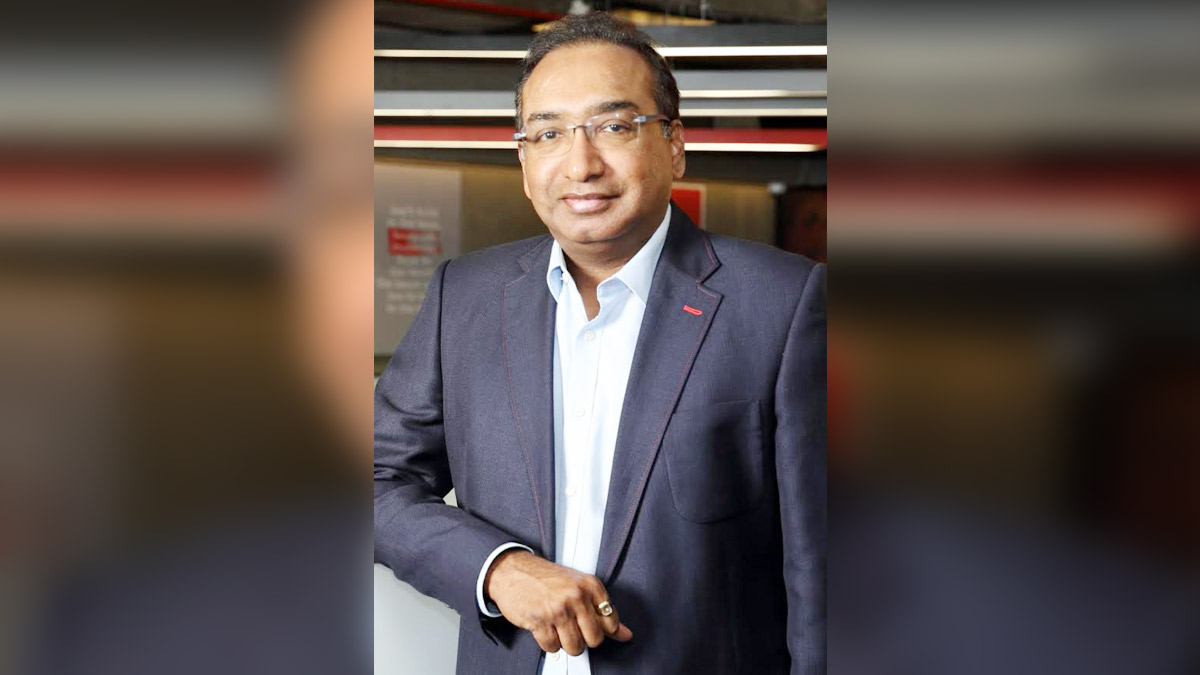
MUMBAI: After a decade of calling the shots, Sameer Nair is taking a bow from Applause Entertainment. The veteran industry leader and CEO of the prominent content studio is stepping down from his role, according to sources familiar with the development. This marks a significant leadership transition at one of India’s key players in the television and digital content space.
Applause Entertainment, part of the Aditya Birla Group, has built a strong reputation under Nair’s leadership for its high-quality adaptations of international formats and a slate of original series across OTT platforms. Nair, who joined the company a decade ago, was instrumental in shaping its growth and positioning it as a notable force in India’s evolving streaming landscape.
Prior to Applause, he held senior roles at major media organisations, including Star India, where he played a pivotal part in the launch of the iconic show Kaun Banega Crorepati in 2000. He also worked with Balaji Telefilms and NDTV Imagine.
It remains unclear who will succeed Nair or what his next professional move will be. Queries sent to Nair did not receive a response, and Applause Entertainment declined to comment on the matter.
His exit comes at a time when the Indian content ecosystem is undergoing rapid changes, with streaming platforms recalibrating investments, focusing on profitability, and adjusting content strategies amid shifting viewer preferences and increasing competition.
Industry insiders suggest the transition could signal a strategic reset for Applause as it navigates the next phase of growth.
In the fast-paced world of Indian entertainment, where hits can fade as quickly as they rise, Sameer Nair has enjoyed a remarkably steady and influential run. As he steps off the stage at Applause, the spotlight now turns to what comes next for both the executive and the studio he helped build.







