MAM
Internet advertising to overtake television in 2018: Zenithoptimedia


MUMBAI: Even as desktop internet advertising continues to grow, it is slated to lose market share for the first time this year, dropping from 19.8 per cent of global adspend in 2014 to 19.4 per cent according to ZenithOptimedia’s new Advertising Expenditure Forecasts.
By 2017, ZenithOptimedia forecasts desktop internet to account for 19.1 per cent of global adspend. Meanwhile, mobile internet advertising’s share of the global ad market will rise from 5.7 per cent in 2014 to 15 per cent in 2017. Overall, internet advertising will account for 34 per cent of global adspend in 2017, slightly behind television’s 35.9 per cent.
The market share gap between the two media will narrow from 13.3 percentage points in 2014 to 1.9 in 2017. At this rate of growth, internet advertising will overtake television in 2018.

On the other hand, print adspend continues to decline across most of the world, as it has done since 2008. The report predicts that newspaper adspend will shrink by an average of 4.9 per cent a year through to 2017, while magazine advertising will shrink by 3.2 per cent a year. Their combined share of global adspend has fallen from 39.4 per cent in 2007 to 19.6 per cent this year, and we expect it to fall further to 16.7 per cent by 2017.
Mobile advertising to overtake newspapers in 2016:
Mobile internet advertising will overtake newspaper advertising next year, accounting for 12.4 per cent of global adspend while newspapers account for 11.9 per cent, according to ZenithOptimedia.
Mobile internet will be the third-largest advertising medium, behind television and desktop internet. Mobile advertising will grow 38 per cent in 2016 to $71billion, while newspaper advertising will shrink four per cent to $68 billion.
Mobile advertising remains the driving force behind the growth of the entire advertising market, contributing 83 per cent of all new ad dollars between 2014 and 2017.
Global adspend to grow 4.0 per cent in 2015
ZenithOptimedia forecasts that global adspend will grow four per cent to reach $554 billion in 2015, and will accelerate to five per cent growth in 2016, boosted by the 2016 Summer Olympics in Rio and the US Presidential elections. Adspend will then slow down slightly in the absence of these events, growing 4.4 per cent in 2017.
Mature Markets to lead adspend growth for the first time in nine years
ZenithOptimedia has reduced its forecasts for adspend growth in 2015 since its June forecast by 0.2 percentage points. There has been broad-based deceleration across the world as marketers have moderated their expectations of global economic growth. With Brazil and Russia in recession, and China slowing down, the world can no longer rely on emerging markets to set the pace of growth. The agency expects ‘Mature Markets’ (defined as North America, Western Europe and Japan) to contribute more to global adspend growth this year than ‘Rising Markets’ (everywhere else), for the first time since 2006. The agency says that this is a temporary aberration, however – Rising Markets will become the leading contributors to ad market growth again in 2016, and will increase their market share from 37.4 per cent in 2015 to 38.8 per cent in 2017.
China slows but is still growing twice as fast as the world as a whole
China’s ad market has not been substantially affected by the turmoil in its stock market, but the slowing economy and concerns about the potential for future growth have caused advertisers to moderate their spending slightly. The report forecasts adspend growth in China to fall from 10.5 per cent in 2014 to 7.8 per cent in 2015 – a rate of growth that’s still twice as fast as the global ad market’s, and which places China as the 13th – fastest growing ad market of the 81 that the agency covers.
Low oil prices weigh on big producers
While beneficial for the global economy – and the ad market – as a whole, low oil prices are depressing activity in the big oil producers. The report forecasts double-digit declines in adspend this year in Azerbaijan, Nigeria and the United Arab Emirates, and declines of seven – eight per cent in Kuwait and Saudi Arabia. In Russia, the problem of low oil prices has been exacerbated by international sanctions, leading to an estimated 14.1 per cent drop in adspend this year.
“Mobile technology is rapidly transforming the way consumers across the world live their lives, and is disrupting business models across all industries. We are now witnessing the fastest transition of ad budgets in history as marketers and agencies scramble to catch up with consumers’ embrace of the mobile way of life,” said ZenithOptimedia worldwide CEO Steve King.






Brands
CEAT signs Yashasvi Jaiswal as brand ambassador in multi-year deal
The tyre giant is backing one of Indian cricket’s brightest young stars, deepening a sporting association that goes to the heart of its brand strategy
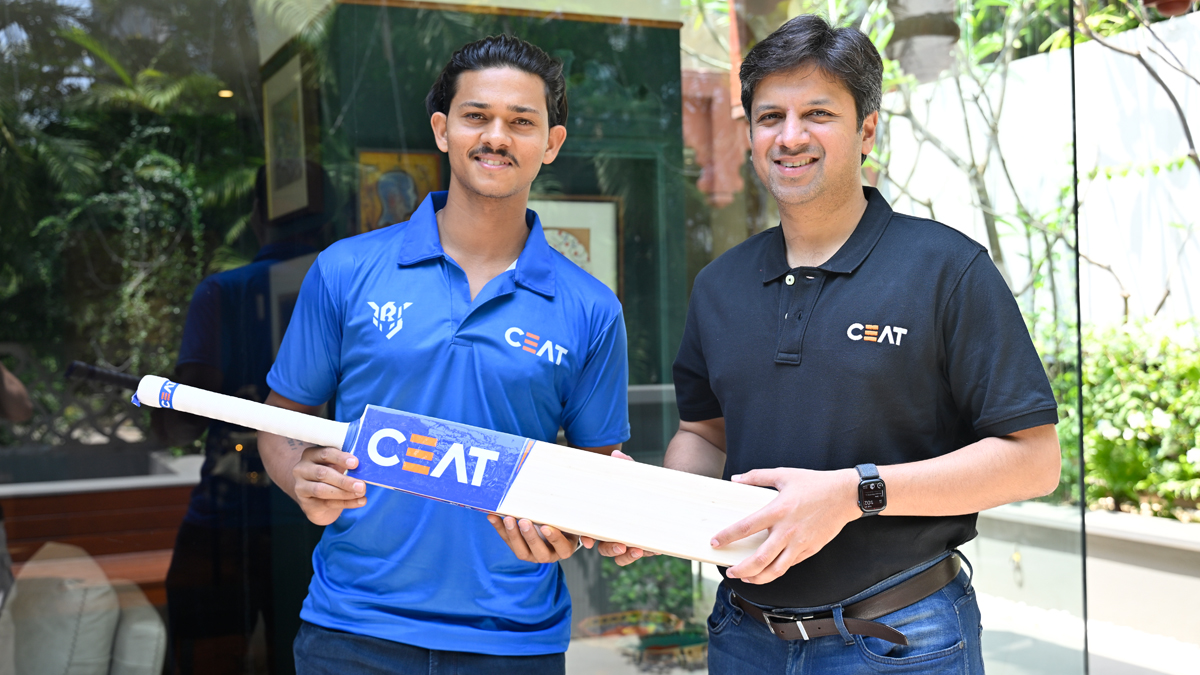
MUMBAI: CEAT Limited has signed a multi-year partnership with Yashasvi Jaiswal, one of Indian cricket’s most electrifying young batters, effective 1st April 2026. The deal adds fresh muscle to the Mumbai-based tyre maker’s long-running bet on cricket as its primary marketing canvas.
Jaiswal’s rapid rise in international cricket made him a coveted name in the sponsorship market. His composure under pressure, consistency across formats and an almost unnerving adaptability at the crease are precisely the qualities CEAT wants consumers to associate with its tyres. The brand has historically aligned itself with cricketers who embody control and dependability, and Jaiswal fits that template with little coaxing.
Anant Goenka, vice-chairman of RPG Group, framed the signing in the language of shared values. “Cricket has always been an integral part of CEAT’s brand journey, and we are delighted to welcome Yashasvi Jaiswal to the CEAT family,” he said. “He is one of the most exciting young talents in Indian cricket today, and the qualities he brings to the game — control, dependability and adaptability — align strongly with the values we stand for as a brand. We believe Yashasvi has the potential to lead across tournaments and formats in the years ahead.”
Jaiswal, for his part, was equally enthusiastic. “I am excited to begin this association with CEAT, a brand that has such a strong legacy in cricket and has been associated with several respected names in the game over the years,” he said. “It is always special to partner with a brand that shares your passion for cricket.”
CEAT, founded in Italy in 1924 and now the flagship company of the US$5.2 billion RPG Group, produces more than 41 million tyres a year and sells across 110 countries. It is the first tyre brand to receive both the Deming Grand Prize from the Union of Japanese Scientists and Engineers and the World Economic Forum’s Lighthouse Designation for its use of fourth industrial revolution technologies — credentials that suggest a company comfortable playing the long game.
And that, perhaps, is why Jaiswal makes such sense. He is 23, already a Test opener for India, and almost certainly just getting started. For CEAT, signing him now is less a sponsorship and more an investment — in a career, and in a cricket-obsessed market, that has plenty of overs left to play.






