Connect with us

AD Agencies

Indigo Consulting undertakes leadership reshuffle

Published

on

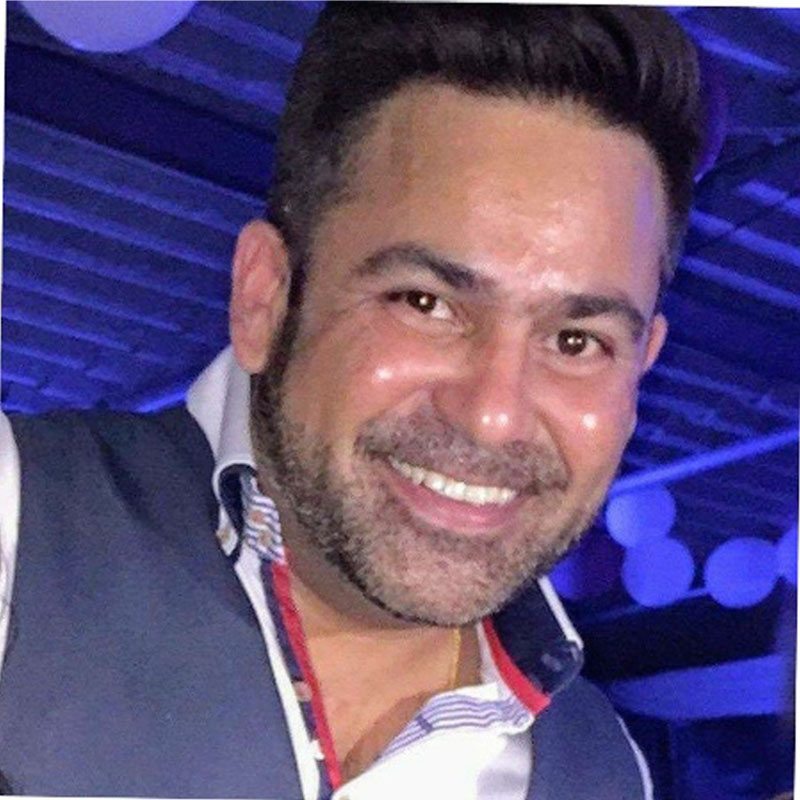
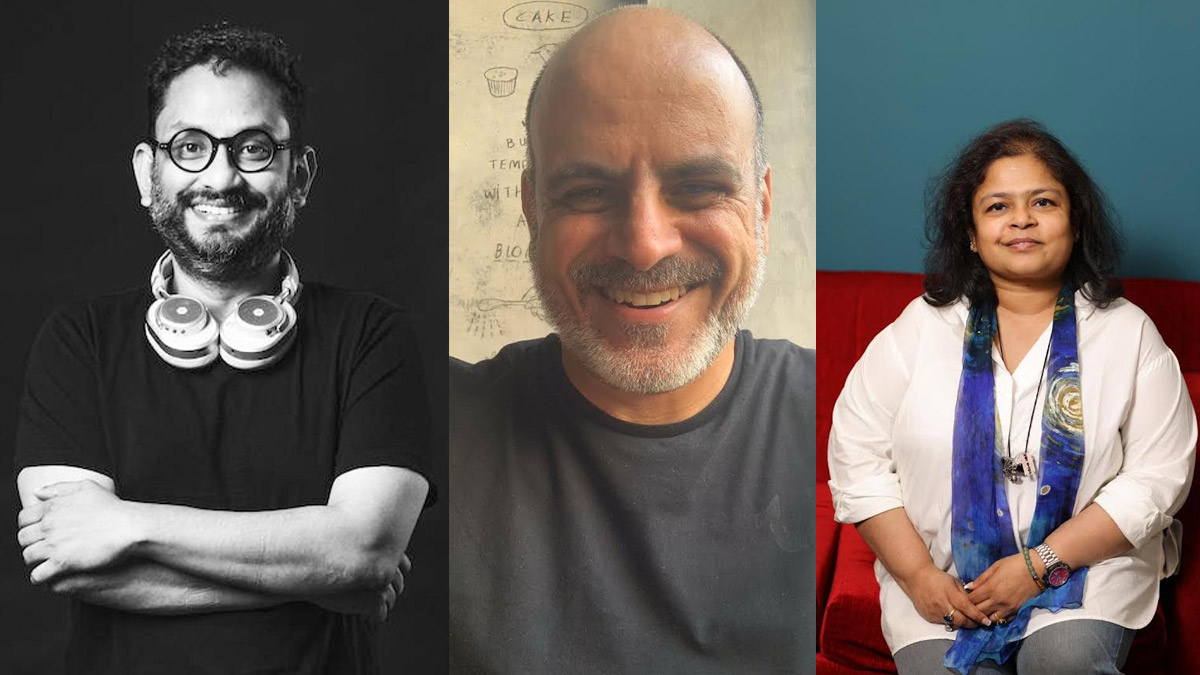
MUMBAI: Publicis Communications’ digital agency Indigo Consulting has rejigged its key leadership team. The agency has hired Paul Dueman as senior vice president – strategy & business, Chetan Thaker as head – customer success and Alifiya Naik as lead – UX consultant.

The executives will be based in Mumbai and will report to Indigo Consulting president Jose Leon.

“At Indigo Consulting, we are constantly trying to better the great momentum we have built up across the last three quarters. As the fourth industrial revolution spurs our customers along to evolve and meet expectations of their digital customers, bringing in key talent across our BSFI, hi-tech, FMCG, retail, Fashion & Lifestyle projects was par for the course. Paul, Chetan and Alifiya are highly established leaders who deliver our promise to customers. I am confident that they will lead by example and set higher quality benchmarks every day,” Leon said.

Advertisement

Paul’s new mandate is to lead business development, account management, sales and strategy functions for Indigo Consulting’s digital transformation business, nationally. All business and account management teams for Indigo’s digital transformation business, across the Mumbai and Gurugram offices, report to him. He joins from Lowe Lintas’ digital services division Linteractive, where he was the executive vice president and national planning head for brand and solutions. 

Chetan has over a decade of experience in technology-led solutions across BFSI, Corporate Communication, eCommerce, online music streaming and a variety of other niche sectors. His last stint was with VML where he has heading the Project Delivery team, prior to which he has also worked at companies such as Network18 and V2 Solutions. Chetan’s appointment closes the loop for Indigo Consulting’s extremely vital Customer Success Team – the team that ensures clients are set-up for success and derive value of their partnership with Indigo Consulting. 

Alifiya has 12 years of experience across global giants like Tata Consultancy Services (TCS) and Mphasis, in addition to Manulife.


Advertisement
Click to comment

Leave a Reply

Your email address will not be published. Required fields are marked *

AD Agencies

WPP decodes the new ad economy as AI and commerce steer budgets

At its annual This Year Next Year event, WPP Media forecast 9.7 per cent growth for Indian advertising

Published

on

MUMBAI: India’s advertising market is on course to breach the Rs 2 lakh crore threshold for the first time in 2026, according to WPP Media’s annual This Year Next Year 2026 (TYNY) forecast, presented on Wednesday. The group is projecting growth of 9.7 per cent, adding roughly Rs 17,800 crore in incremental spend, to take the total to approximately Rs 2,01,891 crore, cementing India’s place among the world’s top 10 advertising markets and one of the fastest growing within that elite cohort.

The outlook was outlined by Parveen Sheik, head of business intelligence at WPP, during the briefing, where she detailed how advertising money is shifting from pure content to commerce, search and AI-led intelligence. “Marketing spends are actually categorised into four clear segments,” Sheik told attendees, laying out a taxonomy of content, location, intelligence and commerce as the four buckets into which all advertising money now flows.

The numbers land against a global backdrop that WPP also set out at the event. Global advertising closed 2025 at $1.14 trillion, growing 8.8 per cent, and is forecast to expand a further 7.1 per cent in 2026, reaching $1.22 trillion. Of that $81 billion in additional spend worldwide, $35 billion is heading towards digital content platforms, $25 billion to search, $17 billion to commerce and $9 billion to digital extensions of offline channels. North America commands 40 per cent of global advertising, followed by Asia-Pacific at 31.5 per cent and Europe at 22.2 per cent, and together the three regions account for 94 per cent of all spend.

India’s standout growth rate
Within the global top 10, WPP singled out Brazil, Canada and India as the markets growing fastest. India’s 9.7 per cent clip sits well above the combined 8.1 per cent growth rate of the top 10 and reflects a structural shift rather than a one-off bounce. Advertising as a share of GDP currently stands at 0.5 per cent, still well behind the UK’s 1.5 per cent, the US’s 1.4 per cent and China’s 1.1 per cent, pointing to significant headroom. Ashwin Padmanabhan, chief operating officer of WPP Media, who presented the India-specific numbers, framed the opportunity plainly. “We are at $2,800 right now [in per capita GDP]. When we get to about $4,000, I think we will see a jump up from this 0.5 per cent that we’re seeing today,” he said.

Advertisement

Sheik noted that the inflection driven by digitalisation post-Covid had already moved India from 0.3 per cent to 0.5 per cent of GDP in advertising terms, and that another step-change is simply a matter of when.

Commerce is the rocket
The single most striking number in the India forecast is commerce-led advertising, which WPP expects to surge 24 per cent in 2026. This segment, spanning retail media, quick commerce and social commerce, is the fastest growing in the Indian market by some distance. Padmanabhan pointed to the festive season of 2025 as a telling signal. “When you look at the festive of 2025, across all commerce platforms, the maximum volumes actually came from tier 2 and tier 3,” he said.

Sairam Ranganathan, head of commerce India at WPP Media, put the shift in sharper relief. He said a nonlinear consumer journey means every impression can be a shopping moment, citing the projected 24.2 per cent growth in commerce as an ad channel. Brands that treat each touchpoint as a commerce opportunity will be the winners.

Advertisement

The digital surge
Overall, 68.1 per cent of Indian advertising spend in 2026 will flow through digital formats. Content-driven channels retain the largest share at 70 per cent but continue to erode. It was 91 per cent in 2010, 83 per cent in 2019 and 72 per cent in 2025. Commerce, just 3 per cent of Indian advertising in 2019, is expected to reach 16 per cent in 2026. Intelligence formats are forecast to grow 8 per cent and now account for 12 per cent of spend, up from 9 per cent in 2019.

Upali Nag Kumar, president of strategy at WPP Media South Asia, said brands must move from fragmented campaigns to connected, trust-building systems where each interaction is purposeful and consumer-first.

Location-based media is projected to expand 8.9 per cent.

Advertisement

Traditional media
Television is forecast to grow 3.1 per cent in India. Print is expected to rise 4.4 per cent. Audio is pegged at 1.5 per cent growth. Globally, TV growth is 2.1 per cent and print is declining 5.7 per cent.

Which categories will drive it
SMEs, technology and telecoms, real estate, education and automotive together account for about 51 per cent of Indian advertising spend and are forecast to grow 14 per cent in 2026. Foundational categories contribute around 46 per cent and are expected to grow 6 per cent.

Padmanabhan called SMEs the biggest structural driver, with AI-powered platforms making advertising easier and more efficient for smaller brands.

Advertisement

On the macro picture, GDP is forecast to grow 6 to 7 per cent in 2026, with inflation below 4 per cent. Rural consumption has been outpacing urban growth since early 2025. Gen Z and GenAlpha together represent roughly 700 million people.

AI: adoption and risk
India has at least 50 million users each on Gemini and ChatGPT, and is the second-largest user base for Claude. Voice AI across 22 languages is the next frontier.

Sheik warned that if AI productivity gains fail, financial markets could face turmoil. Trade tensions and commodity shocks add to the risk list.

Advertisement

India’s data protection law is due by May 2027, pushing privacy-compliant advertising higher up the agenda, while possible rules on AI content and minors on social media loom.

Vinit Karnik, managing director of content, entertainment and sports South Asia at WPP Media, said marketing is moving from passive reach to micro-trust and cultural ownership, with live events doubling as data and IP engines and AI scaling execution.

Micro-dramas are expected to see mainstream adoption in 2026, while the 700-million-strong Gen Z and Gen Alpha base promises a long runway for growth.

Advertisement

The takeaway is clear. India’s ad market is expanding fast and rewiring itself around outcomes, data and commerce. Brands that keep pace will capture the upside. The rest risk paying more for less in a market that now rewards results.

Continue Reading

Advertisement News18
Advertisement All three Media
Advertisement Whtasapp
Advertisement Year Enders

Copyright © 2026 Indian Television Dot Com PVT LTD