Brands
India’s World Cup heroines set for brand bonanza

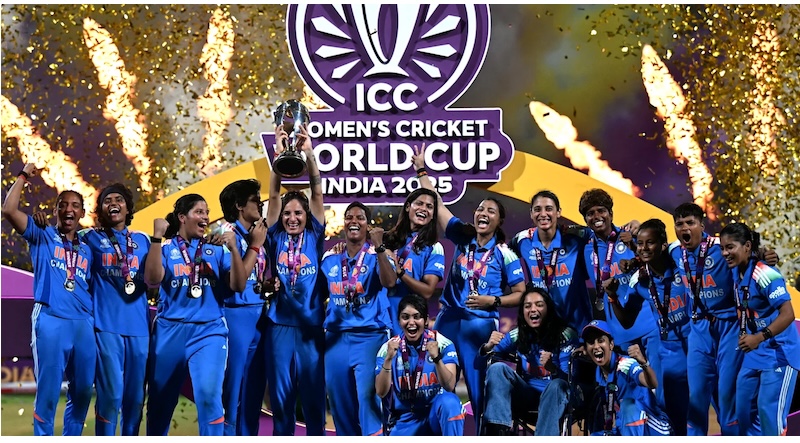
MUMBAI: The tears, the tricolour, the trophy. When Harmanpreet Kaur’s side defeated South Africa by 52 runs on Sunday night to claim India’s first-ever women’s World Cup , they didn’t just etch their names in cricket history—they opened the door to a commercial windfall that could redefine women’s sport in the country.
With a packed stadium erupting as the final wicket fell, and millions more watching across the nation, the brand equity of several players is set to soar. Marketers and advertising agencies are already sharpening their pencils. Amongst the players who look to be front-runners in this dash for sign ups figure:
Smriti Mandhana: There’s no denying her talent or her appeal. Good looks, certainly, but above all, world-class batting skills have made her a hero for millions. Mandhana is second in the tournament’s run charts. The World Cup triumph will only cement her cult status. Her endorsement portfolio includes giants like Hero MotoCorp, Hyundai, Red Bull, Garnier, Wrangler, and PNB MetLife, but expect it to expand dramatically.
Harmanpreet Kaur: She showed tenacity as captain, leading from the front and taking a fantastic catch to end the South African innings. More importantly, she steered her team through three losses during the tournament—defeats that could have derailed any side. But not Harmanpreet. She kept the team’s belief intact, insisting they weren’t looking left or right, only at their end goal. That grit under pressure is precisely what brand managers look for. She has done endorsement for brands like HDFC Life, ITC, Boost, Ceat, Puma, Tata Safari, Asian Paints, Jaipur Rugs, The Omaxe State, Big Flex, and Hapipola. That surely is set to balloon exponentially now.

Jemimah Rodrigues: This bundle of talent is energy personified on the field, whether fielding or batting. Her unbeaten 127 in the semifinal showed she’s a match-winner, forming a crucial 167-run partnership with Harmanpreet that swung the tie against Australia Her transparency about emotional upheavals after being dropped earlier brought out her determination. She plays the guitar and has an excellent sense of theatre—the perfect combination for brand campaigns seeking authenticity. Her endorsement portfolion includes Red Bull, Hyundai, Gillette, Dream11, HMD (Human Mobile Devices), boAT and Platinum Evara.
Pratika Rawal: The 25-year-old became the joint-fastest cricketer to score 1,000 runs in ODIs (23 innings) and was the tournament’s second-highest run-scorer with 308 runs before injury ruled her out ahead of the knockouts. The image of her in a wheelchair, draped in the tricolour, celebrating with teammates became one of the most powerful moments in Indian sporting history. That resilience and passion will resonate deeply with brands seeking emotional connect.
Shafali Verma: She scored a blistering 87 in the final and picked two crucial wickets, becoming the first player to score 50-plus runs and take two wickets in a World Cup final Recalled after Rawal’s injury, she had been out of the ODI side for nearly a year Her extraordinary display capped an extraordinary week. The 21-year-old’s redemption arc makes her a natural choice for brands focused on perseverance and comeback stories. She has featured as a brand ambassador for the likes of Bank of Baroda and Ceat. In a few months this will surely swell.
Radha Yadav: The left-arm spinner grabbed her opportunity in the final league match against Bangladesh after warming the bench for six games, ending with a three-wicket spell. She was part of the playing eleven in the final. Her steady bowling alongside Shree Charani helped contain South Africa’s dangerous middle order. Her journey from twelfth player to World Cup winner embodies the team ethic that brands increasingly value.
The World Cup win isn’t just a trophy. It’s a watershed moment for women’s cricket and for Indian cricket as whole.
And for these players, the real game—the endorsement game—is only just beginning.





Brands
Dunkin’ Donuts to exit India as Jubilant FoodWorks ends 15-year franchise deal
The quick service restaurant giant is ending a 15-year franchise partnership with the American doughnut chain, even as it renews its Domino’s agreement for another 15 years
NOIDA: Dunkin’ is done in India. Jubilant FoodWorks Ltd, the country’s leading quick service restaurant operator, has decided not to renew its franchise agreement with the American coffee and doughnut chain, and will wind down its Indian stores in a phased manner before December 31, 2026, bringing a 15-year partnership to a quiet, loss-laden close.
The decision, approved by JFL’s board on March 30, 2026, ends a relationship that began with a Multiple Unit Development Franchise Agreement signed on February 24, 2011. JFL will now evaluate and undertake what it described in a regulatory filing as the “rationalisation and/or cessation of certain operations and/or sale, transfer or disposal of assets and/or assignment or transfer of franchise rights,” all in consultation with Dunkin’s brand owners and strictly within the terms of the original agreement.
The numbers tell the story bluntly. In the financial year 2024-25, Dunkin’ India posted a revenue of Rs 37 crore against a loss of Rs 19 crore — a haemorrhage that was always going to test the patience of a parent company recording revenues of Rs 6,104 crore and a profit of Rs 194 crore in the same period. Doughnuts, it turns out, were never going to move the needle.
The contrast with JFL’s handling of its other marquee franchise could hardly be sharper. Even as it walks away from Dunkin’, the company has just doubled down on Domino’s, signing a fresh Master Franchise Agreement on March 31, 2026, granting it exclusive rights to develop and operate Domino’s Pizza stores in India for 15 years, with an option to renew for a further 10.
JFL, incorporated in 1995 and promoted by the Bharatia family, operates a network of more than 3,500 stores across six markets — India, Turkey, Bangladesh, Sri Lanka, Azerbaijan and Georgia. Its portfolio includes Domino’s and Popeyes on the global side, and two home-grown brands: Hong’s Kitchen and COFFY, a café brand in Turkey.
For Dunkin’, India was always a stretch. The brand never quite cracked the cultural code in a market where filter coffee and chai command fierce loyalty and where the doughnut remains, at best, an occasional indulgence rather than a daily habit. Fifteen years, mounting losses and a parent with better things to spend its capital on was always going to be a difficult equation to solve.
The doughnut has had its last day. The pizza, however, is staying.






