AD Agencies
India’s advertising market is anticipated to reach a projected value of 15.84 billion

Mumbai: The Indian advertising market has experienced an impressive upswing, surpassing expectations and establishing itself as one of the world’s fastest-growing industries. It secured the 8 spot in the global ad spend, emerging as the fastest-growing market among the top 10 in 2023. Initially projected to grow at a moderate rate of 8–10 per cent in the fiscal year 2022-23, the digital advertising sector defied expectations. Fueled by Economic Tailwinds in 2023-24, digital ad expenditure is forecasted to more than double, reaching Rs 21 billion by 2027-28.
Currently, India’s advertising sector has shifted digitally with the rise in smartphone and internet users. According to IBEF, this has fueled a thriving digital ad market, projected to reach $ 7.9 billion dollars by 2027 with a 12.3 per cent of CAGR. While TV and traditional marketing holds their ground, the internet and digital platforms dominate. Social media leads with 30 per cent of ad expenditure (Rs 8,757 crore or $ 1.05 billion), followed by online video at 28 per cent (Rs 8,319 crore or $ 1 billion). Paid search constitutes 23 per cent (Rs 6,895 crore or $ 892.23 million) and display banners make up 16 per cent (Rs 4,816 crore or $ 579.2 million).
What to expect in 2024?

The dynamic landscape of digital marketing in India demands constant awareness of evolving trends for sustained business growth. Projections indicate that advertising revenue in India is set to hit Rs 394 billion ($ 5.42 billion) by 2024.
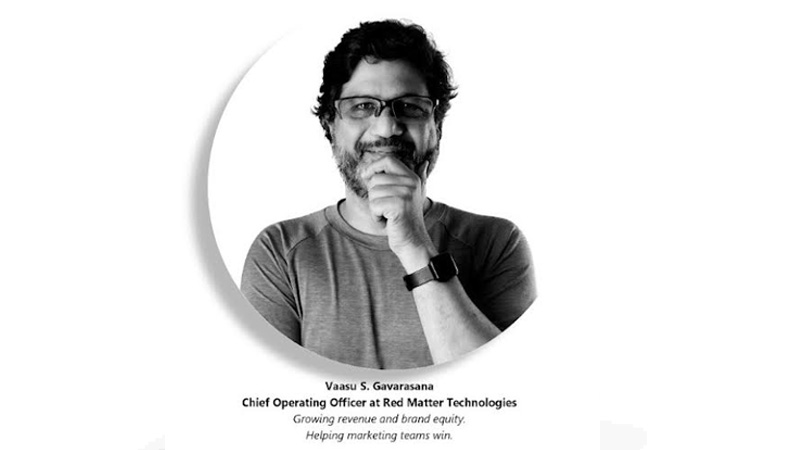
RMT (Red Matter Technologies), COO, mentor & marketing coach at T-Hub and IIT Madras Vaasu Gavarasana said, “Anticipate significant shifts in marketing approaches, notably a surge in TV advertising expected to reach Rs 394 billion ($ 4.89 billion) in 2024. Outperforming global counterparts, Out-of-Home (OOH) advertising is poised for growth at a remarkable CAGR of 9.9 per cent . The digital industry is gearing up to contribute 38 per cent to India’s overall advertising sector, matching television’s impact. Expect a substantial uptick in spending on social media marketing, fueled by the ascent of short videos and internet advertising”.
Red Matter Technologies CEO and co-founder of RMT, Srikant Rajasekharuni said, Moreover, in anticipation of the upcoming 2024 interim budget announcement highlights, ‘A potential game-changer lies in the proposed tax reduction for digital platform advertising from 18 per cent to a lower rate. Currently, digital ads bear an 18 per cent tax, in stark contrast to the 5 per cent tax imposed on print media ads. Recognising the explosive growth of the digital market in India, it becomes crucial for the Indian budget to reevaluate and alleviate the tax burden on digital media, fostering advertising and future revenue expansion.’
Factors contributing to digital marketing and advertising
In 2024, various factors will shape the landscape of digital marketing and advertising. Television is poised to dominate the Indian media market, capturing 40 per cent closely trailed by print media at 13 per cent, and the burgeoning OTT and gaming industries at 8 per cent. This landscape creates a ripe environment for digital advertisements on these platforms including the advertising-based video on demand (AVoD) segment which is projected to experience significant growth, with a compound annual growth rate (CAGR) of 24 per cent reaching a substantial $ 2.6 billion by 2025.
As we look ahead, an estimated 600-650 million Indians will actively engage with short-form videos, dedicating 55 to 60 minutes of their day to this content, as reported by IBEF. By 2027, India is poised to become the fourth-largest TV advertising market globally, trailing only behind the United States, Japan, and China. Additionally, mobile internet advertising is set to claim a significant share, constituting 73 per cent of internet advertising income in India by the same year, shaping the ever-changing digital advertising terrain.
These developments signal a transformative period for digital advertising, impacting businesses across all levels and ushering in a new era of interactive marketing and innovation. The future promises a dynamic landscape, where strategic adaptation to emerging trends will be pivotal for businesses seeking to thrive in this evolving digital marketing environment.


AD Agencies
Tribes and Omnicom Media win Gold for HSBC Living Hexagon at ET Awards
Kinetic OOH installation turns HSBC’s iconic logo into a living landmark
MUMBAI: Tribes Communication and Omnicom Media have secured a Gold win at the ET Design & Creativity Awards for their innovative out-of-home installation, The Living Hexagon, created for HSBC.
Awarded in the Most Creative Traditional OOH category, the project reimagines one of the world’s most recognisable banking symbols into a dynamic, ever-evolving structure. Designed for HSBC’s International Financial Services Centre presence, the installation was conceived to do more than simply grab attention. It aimed to seamlessly blend into the fast-growing ecosystem of GIFT City.
At the heart of the idea is HSBC’s iconic hexagon, typically associated with precision and consistency. Tribes transformed this static identity into a kinetic structure that responds to natural elements such as wind and light, creating a sense of continuous motion. The result is a visual experience that shifts throughout the day, echoing themes of adaptability and momentum.
Constructed using modular triangular units arranged along a precise geometric axis, the installation moves in synchrony, giving the illusion of a fluid, living form. While the structure evolves with its surroundings, it retains the unmistakable identity of the HSBC brand, striking a balance between innovation and familiarity.
Strategically placed at a key entry point into GIFT City, the installation functions as both a landmark and a statement. It reflects the pace and dynamism of global finance while embedding the brand into the city’s architectural narrative.
With this win, Tribes Communication and Omnicom Media underline the growing role of experiential and design-led thinking in traditional media, proving that even the most established brand assets can find new life when reimagined with creativity and context.






