MAM
Indians watch 100 minutes of TV daily, reveals BBC study

MUMBAI: Indians are turning couch potatoes, says a research study Horizon 2003 conducted by BBC World. According to the report, Indians watch on an average five channels and 100 minutes of television every day.
Horizon 2003, conducted by research agency NFO-MBL on behalf of BBC World in the top six metros, profiled a universe of 3,80,000 people from a sample base of more than 5,500 respondents. The research aimed at providing compelling insights into the attitudes and activities of India’s leading consumers and decision-makers – right from their media consumption, to choice of automobiles, to clothing habits, to the use of Internet and mobile phones primarily caters to media planners, agencies and advertisers.
The research findings’ enables them to understand the particular horizon professional better , who is a catalyst and has the economic and corporate power to speed up change, states a BBC press release.

“We look forward to Horizon 2003 being a tool for advertisers and planners to get a better understanding of this upscale, influential audience. The first study of its kind to be launched in 2000 helped in profiling this Horizon professional. It was heartening to know that the findings of the previous Horizon helped a lot of our advertisers sharpen and redefine their target audience and understand the profile of the consumer they were talking to, resulting in a better focussed media usage, ” BBC World,Head of Ad Sales Seema Mohapatra is quoted as saying in an official release.
Horizon20003 revealed that Indian viewers watch half an hour of news everyday. News and sports are the most preferred programme genres followed by general entertainment with Delhiites scoring highest for news at 29 per cent and Bangalore being the lowest for news at 14 per cent. The study showed that Bangaloreans constitute the largest sports viewing segment (34 per cent) with Delhi being at the bottom with 16 per cent preferring sports.
Horizons 2003′s study of investment and saving habits revealed life insurance to be the biggest financial investment with 38 per cent, followed by the stock market at 18 per cent. Among loans taken, housing loans were the highest at 41 per cent and the next highest being car loans at 37 per cent. Most individuals (25 per cent) had accounts in the State Bank of India followed by ICICI at 22 per cent.
Moving onto consumer durables, the study revealed that washing machines have emerged as the most desirable product followed by cars and desktop computers. 42 per cent of the sample own a mobile phone of which 52 per cent own a Nokia and 42 per cent use Air Tel’s services.
Alchohol consumption habits indicated that 25 per cent consumed spirits of which 72 per cent are beer guzzlers, followed by 48 per cent whiskey drinkers and 25 per cent who drink rum. The study revealed that most executives drink at bars and pubs, while self-employed professionals drink at friends’ homes and businessmen at parties.
Horizons 2003’s study of attitudes revealed that 95 per cent of the Horizon professionals are proud to be Indians and 75 per cent believe risks are worth taking. India’s rising generation agree that they are risk taking but there is a split vote on ethics and optimism with 40 per cent agreeing with using under-hand means to earn money and 56 per cent supporting paying of bribes. Some 47 per cent of the younger audiences (25-34 years) believes that India is getting worse rather than better while older audiences (45-54 years) are more optimistic and feel otherwise and agree that India is a better place to live and work than other countries.
The highlight of Horizon2003 is a section that focuses on travellers as a separate target audience, which is claimed as a ‘first time’ inclusion for any research undertaken on consumer behaviour. The study goes into great details to understand the travelling habits such as the mode of transport, kind of holidays, choice of place and media consumption while travelling which will be different from household viewer ship.
This section came up with the following findings:
* 60 per cent take a holiday in India while five per cent take a holiday abroad, 18 per cent travel on business within India, and eight per cent travel on business abroad at least once a year.
* For International holidays taken in the past one-year people from Mumbai (30 per cent), Bangalore (35 per cent) and Hyderabad (26 per cent) preferred travelling to the US, while 35 per cent from Kolkata and 41 per cent from Chennai travelled to Singapore. 25 per cent of the respondents from Delhi went to Nepal for holiday.
* Among domestic business travellers, Jet Airways (60 per cent) is the preferred airline followed by India Airlines (53 per cent) and Sahara Airlines (20 per cent). For domestic leisure travel, Jet Airways and Indian Airlines enjoy an equal share.
*Among International leisure destinations, Singapore is the favourite with 23 per cent respondents, followed by 22 per cent opting to visit the US. International business travellers prefer the US (24 per cent) followed by Singapore (23 per cent) and the UK (13 per cent).
“The objective of Horizon 2003 is three-fold. Firstly, it provides advertisers and agencies with a better understanding of a crucially important group of influential adults – which is the profile of BBC World viewers – the professionals who will be shaping India’s destiny. These are very difficult to survey using traditional methods. Secondly, to provide a balance to those national studies which rightly focus on the mass markets. And thirdly to reflect the changing situation in India first identified in the pioneering 2000 study,” BBC World, Head of Research Jeremy Nye is quoted as having said in the release.



MAM
Tata Communications CEO A S Lakshminarayanan retires
Seasoned leader hands over reins after guiding the company through key growth years.
MUMBAI: Tata Communications is turning a new page and this time, the chapter is being written by a fresh voice from the same trusted book. The company has announced the retirement of its managing director and chief executive officer, A S Lakshminarayanan, effective at the close of business on 13 April 2026. Lakshminarayanan’s departure marks the end of a significant chapter in the company’s leadership journey.
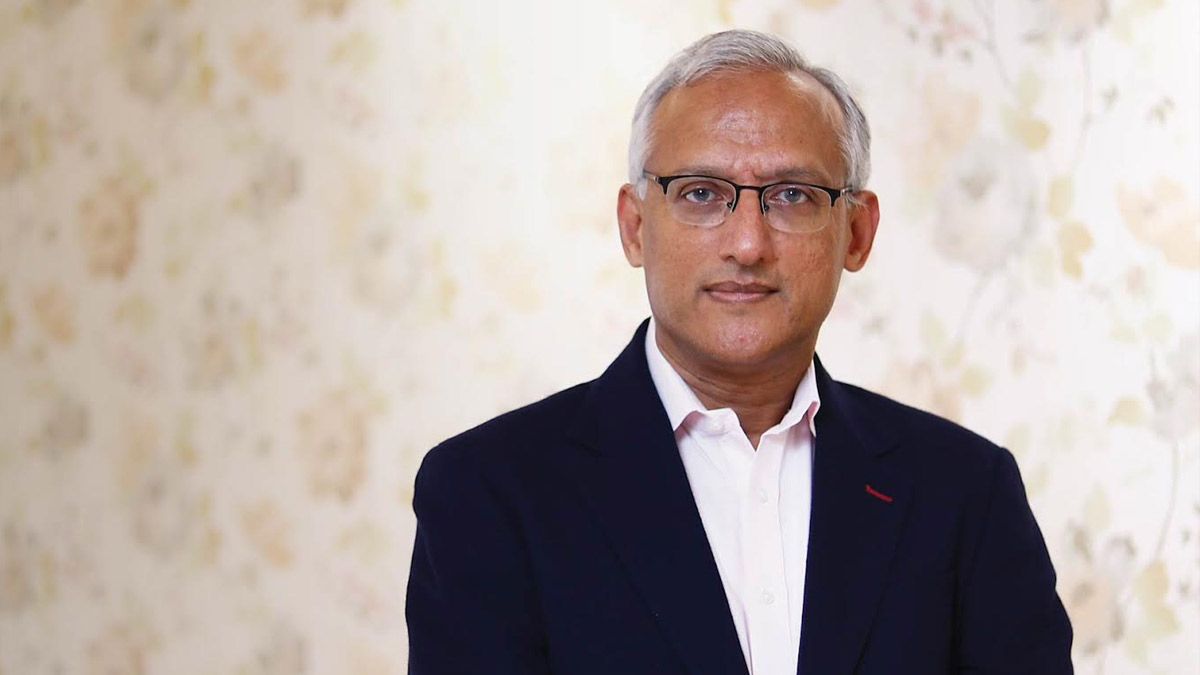
The board expressed appreciation for his contributions during his tenure, acknowledging the role he played in shaping the organisation. In January 2026, the board had already appointed Ganesh Lakshminarayanan as managing director and CEO (Designate), ensuring a smooth leadership transition.
Ganesh Lakshminarayanan brings over three decades of experience across domestic and global enterprises. He currently serves as Managing Director and Group Vice President at ServiceNow India, where he has focused on driving enterprise adoption of AI-led digital transformation and strengthening go-to-market capabilities. Prior to this, he led Bharti Airtel’s enterprise business as CEO of Airtel Business and earlier headed its Enterprise division. His career also includes roles as Chief Operating Officer at Capillary Technologies, along with advisory positions at Ernst & Young and Sequoia Capital.
The transition reflects Tata Communications’ focus on continuity while bringing in fresh perspectives to navigate the rapidly evolving digital infrastructure landscape.
In the fast-moving world of global communications, leadership changes are like well-timed signal switches necessary to keep the network strong and the journey smooth. As A S Lakshminarayanan steps down, Ganesh Lakshminarayanan steps up, ready to carry forward the legacy while steering the company into its next phase of growth.







