MAM
Indians want free education, healthcare and basic income: Ipsos global Socialism Survey


New Delhi, May 18, 2018:According to a global survey by Ipsos on Socialism, majority of the Indians polled want access to free education, free healthcare and a basic income.
72% Indians believe socialist ideals are of considerable value for societal progress.
Ergo, there are various aspects of socialism that are truly endorsed by Indians: 85% Indians believe that Education should be free of charge; at the same time, 9 in 10 Indians (91%) believe that free healthcare is a human right; and further, 8 in 10 Indians (83%) espouse provision of unconditional basic income for all residents.
On the flip side, there are various aspects of Socialism that do not appeal to the sensibilities of Indians – 72% Indians choose personal freedom over social justice which truly boils down to being responsible for one’s own economic wellbeing; 66% Indians find Socialism a system for political oppression, mass surveillance and state terror; and 84% Indians prefer free market competition over protectionism – another key aspect of Socialism.
“Cost of education and healthcare is very high and due to lack of social security the middle class does not have it easy. Most of the government schemes are for the poor and the marginalized.” says Parijat Chakraborty, executive director, Public Affairs, Ipsos India.
To mark Karl Marx’s bicentenary this year (he is regarded as the father of Socialism), Ipsos Global Advisor carried out a survey in 28 countries around the world and explored the perceptions of socialist ideas in the 21st Century. The poll was carried out online among adults aged under 65 in April this year. The findings highlight interesting differences across markets – we see shades of skepticism, approval and disapproval.
Duality of Indian society is further underscored in the survey. On the one hand, 77% Indians believe that the talented should be better compensated than those who are less gifted; at the same time, they believe that the rich should be taxed higher to compensate the poor with that money.
No wonder that three out of four Indians believe that they are different and their wavelength does not match with their counterparts in other countrieswith respect to Outlook-on-life and Opinions-on-important-issues.
Global Findings

Half of the people globally (50%) agree that at present, socialist ideals are of great value for societal progress. Chinese people are most likely to agree (84%) followed by people from India (72%) and Malaysia (68%). This contrasts with the USA (39%), France (31%), and Hungary (28%). Respondents in Japan are least likely to agree, only two in ten of the Japanese (21%) believe that socialist ideals are of great value for societal progress. In Germany, almost every second respondent believes that socialist ideas continue to have value (45%).
Nearly half of the people (48%) worldwide agree that socialism is a system of political oppression, mass surveillance and state terror. In India (66%), United States (61%) and South Korea (60%) almost two thirds agree with this negative evaluation. In contrast, only about one out of three agree in Sweden (34%), China (31%), Spain (30%) and Russia (29%). Nearly half of the German respondents (49%) perceive socialism as oppressive.
Almost seven in ten people globally agree (66%) that free market competition brings out the best in people. People in India (86%) were most likely to agree followed by people from Malaysia (84%), Peru and South Africa (both 83%). In contrast, only about half of respondents in Sweden (52%), Belgium (51%), Germany (49%) and France (43%) agree.
Overall, half of the people who responded to the survey (52%) think that individual freedom is more important than social justice. People in India (72%), the US (66%) and South Africa (64%) are most likely to believe that individual freedom caries greater importance than social justice. Whereas people in Germany (38%), China (37%) and France (36%) are least likely to agree.
Nearly seven in ten agree (69%) that it is right for people who are talented to earn more than those who are less gifted. Romanians, Russians (82% each), South Koreans and the Chinese (both 81%) are most likely to agree while only about half of the respondents in Belgium (56%), France (51%) and Germany (47%) think the same.
Across all 28 countries nearly eight in ten people (78%) think that the rich should be taxed more to support the poor. Agreement is highest in Spain (87%), Serbia, China (both 86%) and Russia (85%), whereas it is lowest in the USA (67%), Brazil (66%) and South Africa (58%). In Germany, 81% believe rich people should be taxed more to support the poor.
89 percent of all respondents think that education should be free of charge. Russians are most likely to agree (98%) followed by Serbs and Romanians (97% each). Respondents in Japan are least likely to believe that education should be free of charge (64%). The idea has considerable less (but still substantial) support in the USA and the South Africa (77% each).
Most respondents believe that healthcare is a human right (87% each). Russians, Serbs and Mexicans are with 96% most likely to think this way. South Koreans (74%), people in the USA (72%) and respondents in Japan (47%) are least likely to agree. In Germany, well above eighty percent of agree that healthcare is a human right.
Asked whether every resident should have the right to unconditional basic income, 69% of all respondents agree. In Russia 95%, in Turkey 87% and in India 83% agree. Swedes (56%), Argentinians (53%) and people from Japan (38%) are least likely to agree. In Germany, 70 percent of respondents believe that every resident should have the right to unconditional basic income.
Only one third (33%) of all respondents think that the working class is well represented in the political system in their country. The statement finds most support in Saudi Arabia (64%), India (63%) and China (60%). The French (19%), Mexicans (19%) and people from Serbia (14%) are the least likely to agree. In Germany, only 35 percent agree that the working classes are well represented.
More than half of the people worldwide (62%) believe that their opinions are different from the opinions of others. In Russia (81%), Romania (77%) and Turkey (74%) most people think that their opinions are different from others. In Chile (51%), Great Britain (50%) and Australia (47%) around of half of the respondents regard their opinions as distinct. In Germany, 63 percent of respondents think that their opinions are different from others.
Methodology
In total 20,793were interviewed between 23.03 – 06.04, 2018. The survey was conducted in 28 countries around the world via the Ipsos Online Panel system (Argentina, Australia, Belgium, Brazil, Canada, Chile, China, France, Great Britain, Germany, Hungary, India, Italy, Japan, Malaysia, Mexico, Peru, Poland, Romania, Russia, Saudi Arabia, Serbia, South Africa, South Korea, Spain, Sweden, Turkey and the USA).
Approximately 1000 individuals aged 18-65 were surveyed in Australia, Brazil, Canada, China, France, Italy, Japan, Malaysia, Romania, Spain, Great Britain, and the USA. Approximately 500 individuals aged 16-64 were surveyed in Argentina, Belgium, Chile, Hungary, India, Mexico, Peru, Poland, Russia, Saudi Arabia, Serbia, South Africa, South Korea, Sweden, Turkey.
The precision of Ipsos online polls are calculated using a credibility interval with a poll of 1,000 accurate to +/- 3.5 percentage points and of 500 accurate to +/- 5.0 percentage points. For more information on the Ipsos use of credibility intervals, please visit the Ipsos website.
Data are weighted to match the profile of the population. 17 of the 28 countries surveyed generate nationally representative samples in their countries (Argentina, Australia, Belgium, Canada, France, Germany, Great Britain, Hungary, Italy, Japan, Poland, Rumania, Serbia, South Korea, Spain, Sweden, and United States). Brazil, Chile, China, India, Malaysia, Mexico, Peru, Russia, Saudi Arabia, South Africa and Turkey produce a national sample that is considered to represent a more affluent, connected population. These are still a vital social group to understand in these countries, representing an important and emerging middle class.






MAM
Ameya Velankar steps down as Uber’s head of marketing for India & South Asia
Veteran marketer exits after more than seven years with the ride-hailing giant.
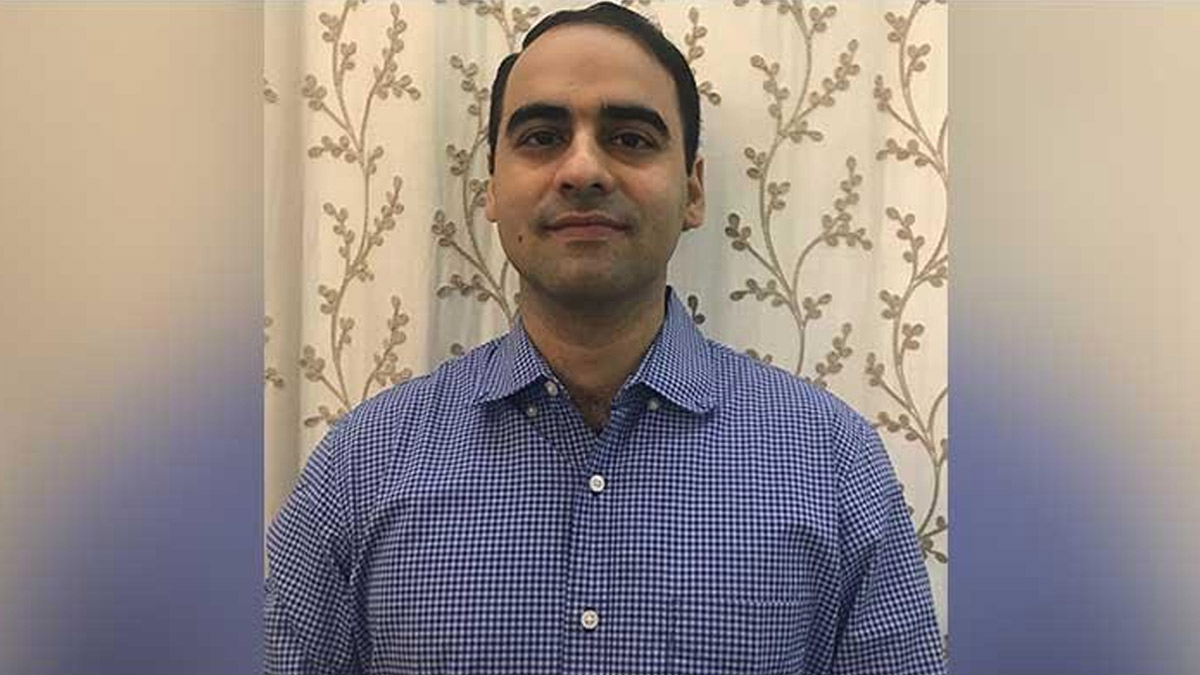
MUMBAI: After more than seven years of steering Uber through the bumpy roads of India’s mobility market, Ameya Velankar has decided to change lanes. Ameya Velankar has stepped down as Head of Marketing for India and South Asia, marking the end of a significant chapter at the ride-hailing company. He had been with Uber since 2019, taking on multiple roles in product and category marketing before rising to lead the marketing function for the region in 2021.
During his tenure, Velankar played a key role in strengthening Uber’s positioning in one of its most competitive and dynamic markets. He helped drive localised marketing strategies and scale adoption across key offerings such as Auto, Moto, Rentals and Intercity, tailoring global platforms to Indian consumer needs.
Prior to joining Uber, Velankar built his marketing expertise at leading consumer companies including SC Johnson and Marico, where he handled category and product leadership roles. His career began at RPG Enterprises.
Details of his next professional move have not been disclosed.
In a fast-evolving mobility landscape where brands constantly battle for attention, Ameya Velankar helped Uber stay relevant and resonant with millions of Indian users. As he moves on from the driver’s seat of marketing, the company will now look for fresh ideas to keep its wheels turning smoothly.






