MAM
Indian cricketers join hands with Unicef for AIDS orphans

MUMBAI: Joining hands in a unique partnership with Unicef, Indian cricketers participating in the Afro – Asia Cup matches in South Africa found a new cause to bat for – children orphaned and affected by HIV/AIDS.
At a function before the match at Kingsmead, Durban, Anil Kumble and Virender Sehwag met with a group of orphaned and vulnerable children. Former Indian cricketer and goodwill ambassador for Unicef India Ravi Shastri was also present at the occasion.
South Africa and India are two countries with the largest number of HIV cases. India currently has 5.1 million HIV positive people and South Africa 5.3 million.
“Every one needs a caring home and a loving family, more so the child orphaned or affected by HIV/AIDS. It is not in rigid institutions, but in compassionate homes that children will survive and thrive. The best gift to child whose parents have tested positive is to ensure that his or her parents continue to live,” said Kumble.
Expressing concern over the spread of AIDS, he added, “Everyone has the power to prevent HIV. We can also prevent stigma and let orphaned and affected children live a normal life by batting, bowling and fielding like any other child.”

Referring to the situation of orphaned and vulnerable children both in India and South Africa, Sehwag said, “Our compassion must be real. Compassion becomes real when we can ensure each of the affected children, their basic rights, food, health, education and above all medicines at a price that they can afford. He urged all people to unite in this endeavour. If nations and continents can come together as they did in this tournament, we individuals can come together for the love and protection all affected children.”
The children tied the red friendship bands on the wrists of the players who reciprocated the gesture to pledge their support together for the cause of HIV/AIDS.
This latest Unicef initiative with cricketers comes in the wake of earlier programmes about Polio eradication and ‘Fair Play for Girls’ to promote girls’ education.


Brands
KKR sixes to power EV charger rollout under VIDA campaign
Cricket meets clean mobility as big hits spark India’s charging growth
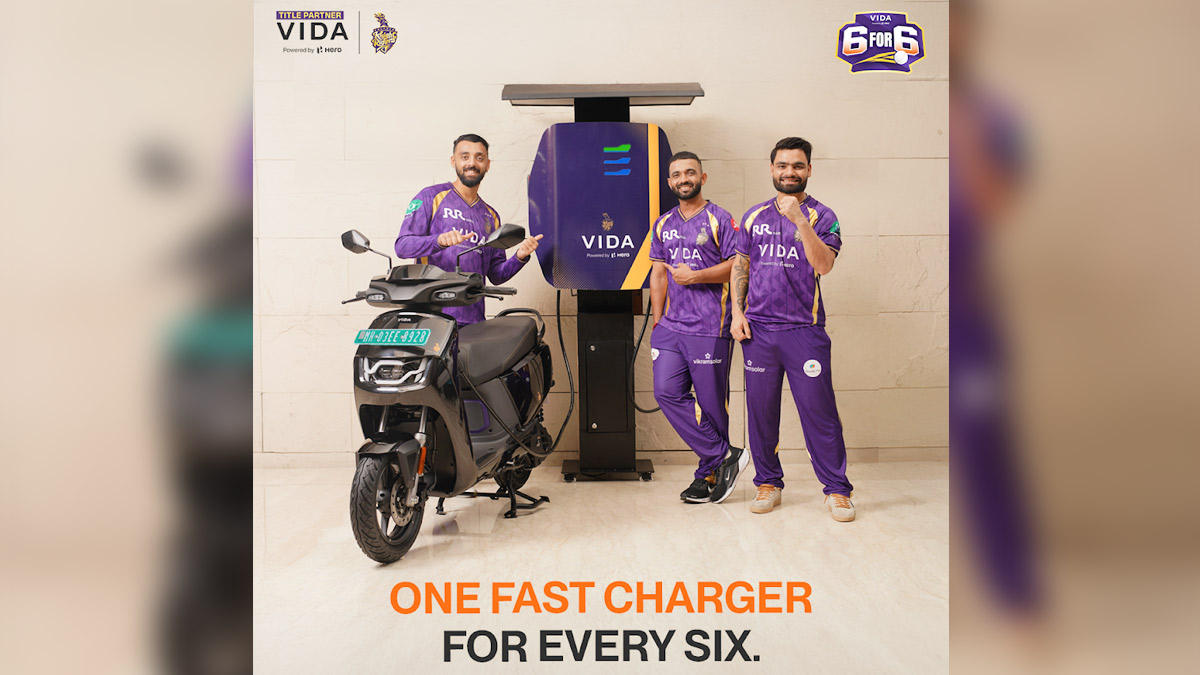
NEW DELHI: VIDA, the electric mobility arm of Hero MotoCorp, has teamed up with Kolkata Knight Riders to launch a campaign that turns cricketing flair into real-world impact.
Titled ‘6 for 6’, the initiative promises to install a 6kW fast EV charger for every six hit by KKR during the ongoing Indian Premier League season. The idea is simple but powerful, as each big hit on the field contributes directly to expanding India’s fast-charging infrastructure.
The campaign builds on VIDA’s growing network, which already spans over 5,300 fast-charging points across more than 430 cities. With EV adoption gaining pace, the brand is using cricket’s mass appeal to accelerate both awareness and infrastructure growth.
Explaining the thinking behind the move, Hero MotoCorp emerging mobility business unit chief business officer Kausalya Nandakumar said, “Cricket has an incredible ability to unite and inspire millions across the country. With the ‘6 for 6’ campaign, we are turning every big hit on the field into a step towards a cleaner and a more accessible mobility future.”
She added that VIDA’s expanding fast-charging network and removable battery technology are designed to make EV ownership more convenient and practical for everyday users.
From the franchise’s side, the campaign is also about giving on-field moments a larger purpose. Kolkata Knight Riders chief executive officer Venky Mysore said, “The ‘6 for 6’ campaign exemplifies the potential of sport as a platform for meaningful, real-world impact. By linking every six to the expansion of EV charging infrastructure, this partnership transforms fan excitement into tangible progress.”
As part of the rollout, VIDA has introduced co-branded charging stations in KKR’s signature colours, with a flagship installation unveiled alongside team players. The chargers are designed for quick top-ups, powering VIDA scooters from zero to 80 percent in about an hour, while also being positioned along key highways to support longer journeys.
The initiative also taps into VIDA’s removable battery system, which allows users to charge using standard household plug points, adding flexibility to the charging ecosystem.
By blending the thrill of cricket with the urgency of clean mobility, VIDA and KKR have found a neat way to make every six count twice, once on the scoreboard and again on India’s road to an electric future.








