MAM
India preferred destination for retailers & apparel firms: Study

MUMBAI: A recent study done by the Confederation of Indian Industry (CII) and KSA Technopak on Indian textiles throws light on South Asia’s tremendous potential to grow as a perfect sourcing destination for retailers and apparel companies with the termination of quota system.
In the region, India has become the second most preferred alternative to China and one-stop shop solution for retailers and apparel companies seeking a reliable destination for their sourcing solutions as they would no longer be constrained by quotas.
The scenario:
The report states that post January 2005, South Asia is fast emerging as a major trade block. The region presently holds 14 per cent share in the US market and 9 per cent share in the European Union (EU) market, and exports have been growing in both these main markets at a steady pace. With abundant availability of raw material, spinning, weaving and knitting capacity, low garment cost and an entire bouquet of knits, woven and home textiles on offer, South Asia is expected to be the major gainer of safeguards on China, and India has the potential to lead the race and growth of South Asia.

According to the report, the future trade would result in more drastic changes as compared to the first phase of the post quota regime and buyers and suppliers would need to adapt to various changes that would happen at the consumer level in order to be successful.
The Indian advantage over China:
Incidentally, the US has imposed safeguards, while the EU has specified quotas on China for three years in certain clothing categories. China is dependent on imported raw material for its textile industry. Besides, its manufacturing facilities require major upgradation and its domestic market dominates by consuming 70 per cent of the total textile production. Buyers too are not keen on making China a one stop-sourcing destination for textiles due to the uncertainties arising out of the safeguards, quotas and the revaluation of the Yuan, the study points out.
In these conditions, India has the potential to emerge as a reliable and high quality textile-sourcing alternative to China. India has been the second largest gainer in both the US and EU market after China. India has some inherent advantages like availability of raw material, spinning, weaving and garmenting capabilities, low cost advantage and complete bouquet of textile and apparel on offer.
Buyers mainly focus upon the strategic factors of political, social, economic and infrastructure stability in selecting sourcing destinations. Apart from these, the operational factors of labour cost advantage, raw material availability, flexibility and product mix, an established textile base as well as transportation and IT infrastructure are considered while making the final decision, states the report. Also, India is seen as stable in both the political and social areas. The country’s IT has an edge in terms of cost, availability of raw materials, flexibility and product mix.
Areas India needs to work on:
India needs to do a lot of groundwork on the economic and infrastructure fronts. The transportation and IT infrastructure as well as its established textile base have to be taken care of. According to the report, India also needs to work towards shaping up its labour laws and building international scale of operations. It needs to provide value to buyers, reduce cycle time of production, and understand the changing requirements of the market, in order to reach the top, the study says.
Report courtesy: Confederation of Indian Industry (CII) and KSA Technopak






Brands
Faber-Castell India appoints Sunaina Haldar as director – marketing
With stints at Tata, SleepyCat and ADF Foods under her belt, Haldar is primed to redraw Faber-Castell’s brand story
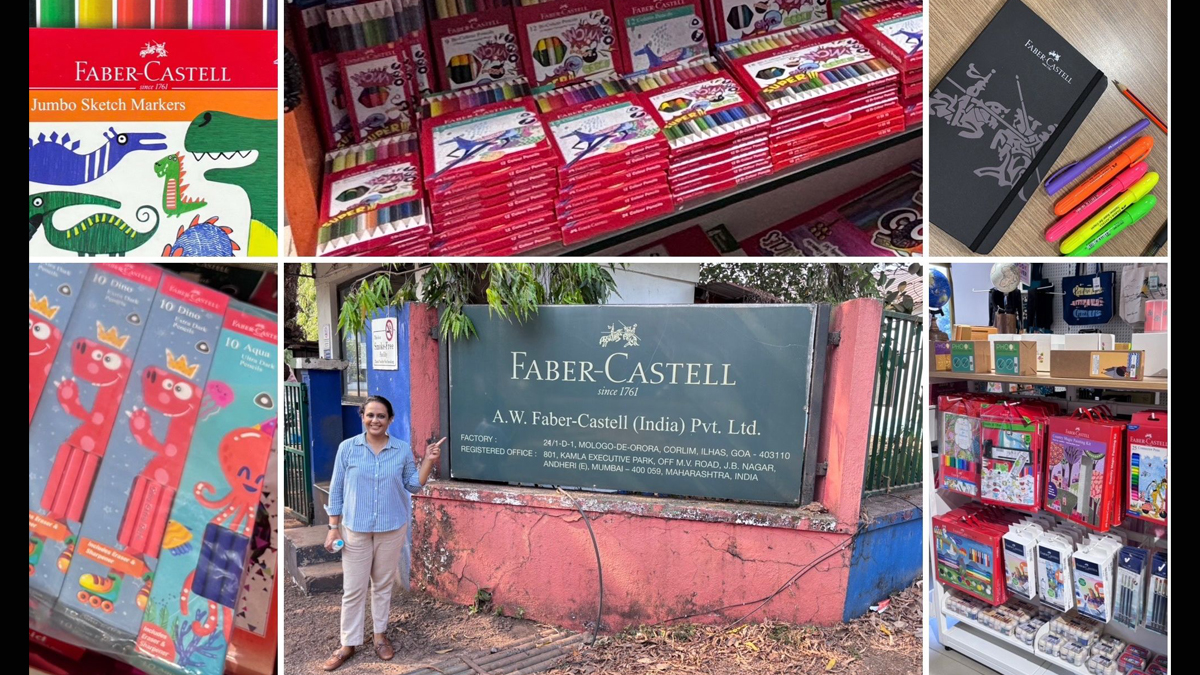
MUMBAI: Faber-Castell India has poached Sunaina Haldar from ADF Foods, appointing her director – marketing as the German stationery brand looks to muscle up in a category that is rapidly reinventing itself around creativity and self-expression.
Haldar hit the ground running. “My first couple of weeks have been incredibly energising, understanding consumers, visiting markets, engaging with retailers and immersing myself into the world of Faber-Castell Group,” she said.
She arrives with considerable firepower. At ADF Foods, Haldar ran marketing across India and international markets for a portfolio spanning Ashoka, Aeroplane, Camel and ADF Soul. Before that, she was vice-president – marketing at direct-to-consumer mattress brand SleepyCat, where she helmed brand, content and performance marketing. Her résumé also includes a stint leading marketing, new product development and CRM for Tata SmartFoodz at Tata Consumer Products, no small proving ground.
Between corporate roles, Haldar also operated as a fractional CMO for early-stage startups, building marketing strategy and operational structures from scratch, a signal that she knows how to move fast with limited resources.
With 18 years straddling FMCG, D2C and the startup world, Haldar now takes the reins at a brand that has long owned the classroom but is clearly hungry for the living room. In a stationery market where the pencil has become a lifestyle statement, Faber-Castell has picked someone who knows exactly how to sell that story.







