MAM
In the vein of Coronavirus threat, people in India massively search for face masks and hand sanitizers — searches are up 1024% and 82%” reveals SEMrush study

MUMBAI: Unless you’ve been living under a rock for the past two months, news about the latest coronavirus epidemic has undoubtedly reached you. A SEMrush study has captured the extent of the Indian public’s awareness about coronavirus and what steps the public is taking to prevent infection.
Awareness about coronavirus has reached millions across India. SEMrush found that the number of times the word “coronavirus” was searched online grew an astounding 2.54 lakh per cent from December 2019 to January 2020. In December 2019, the term "coronavirus" was searched a mere 2,400 times, and this number spiked to a massive 61 lakh in January 2020. In February, the keyword “coronavirus" was searched 162.5 per cent more than it had been searched for in January. In India, it was searched over 1.6 crore times in February.
The words “coronavirus symptoms” were searched a massive 12.2 lakh times in January 2020 from a mere 40 in December 2019. The SEMrush study highlights that news about the coronavirus is being disseminated far and wide by the Indian media. The public is aware of the origins of the coronavirus. The third most searched for keyword related to the virus was "china virus" showing that many who don’t know the name coronavirus, know its origins lies in China.

The keywords "coronavirus disease", "coronavirus treatment", "coronavirus cause", "coronavirus infection”, “coronavirus vaccine”, “coronavirus diagnosis”, and “novel coronavirus" were the other top searched for keywords related to coronavirus. Each keyword was searched between 1 lakh and 30k times in January.
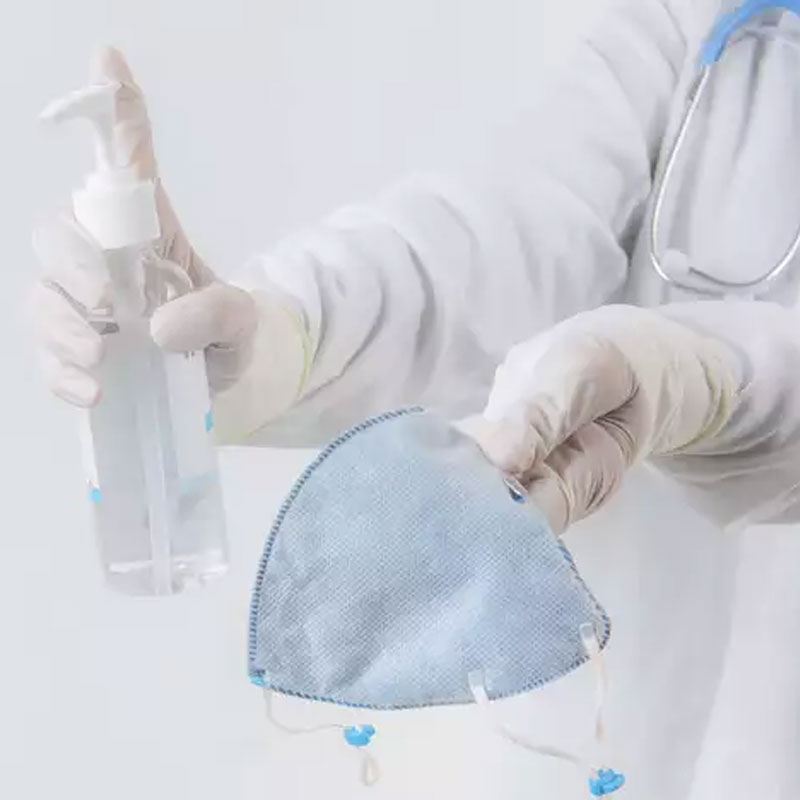
The public also searched for ways to prevent infection. Online searches with keyword “n95 mask”, “n95 mask price”, and “3m n95 mask” rose an astonishing 1017%, 3002%, and 1962% respectively in January compared to December. From January to February, the per cent increase in online searches for the respective masks was 122.1%, 123.9%, and 83.11%. The SEMrush study shows there was reasonable awareness about the n95 face mask before the coronavirus epidemic. The per cent increase in the keyword “n95 mask” was relatively low compared to the per cent increase for other keywords because it was searched for a considerable number of times in December.
Other mask related keywords included “n95 respirator mask”, “n95 pollution mask”, “n95 face mask”, “medical mask”, “n95 mask uses”, “n95 mask price in India”, and “n95 mask reusable”. Each keyword was searched between 7,500 and 700 times. Notably searches with the keywords “n95 respirator mask” increased a whopping 10400% times since December 2019.
The SEMrush study shows that in addition to buying face masks, Indians are taking other measures as well to protect themselves from coronavirus. The study found that from January to February, searches for the keywords "hand sanitizer” grew by a substantial 82.43%.
Speaking about the study Mr. Fernando Angulo, Head of Communications SEMrush said, “Our study demonstrates that Indians actively try to protect themselves from epidemics, even when their epicentre is distant and the possibility of infection relatively low. The SEMrush study also captured data showing the kind of protective equipment Indians turn to protect themselves from airborne viruses. The n95 face mask was a relatively unknown product before the coronavirus epidemic; today, it is less so. The reason behind the massive increase in the number of times the n95 mask is being searched for is apparent; Indians concerned about the danger posed by coronavirus are scouting for the best preventative tool.
For marketers, our study has captured the media’s role in creating demand. While the coronavirus certainly needs to be safeguarded against and the media’s is playing an essential role in keeping people safe; news created by the media is more likely than ever to present marketing opportunities in India”.



Digital
Content India 2026 opens with a copro pitch, a spice evangelist and a £10,000 prize for Indian storytelling
Dish TV and C21Media’s three-day summit puts seven ambitious projects before an international jury, and two walk away with serious development money
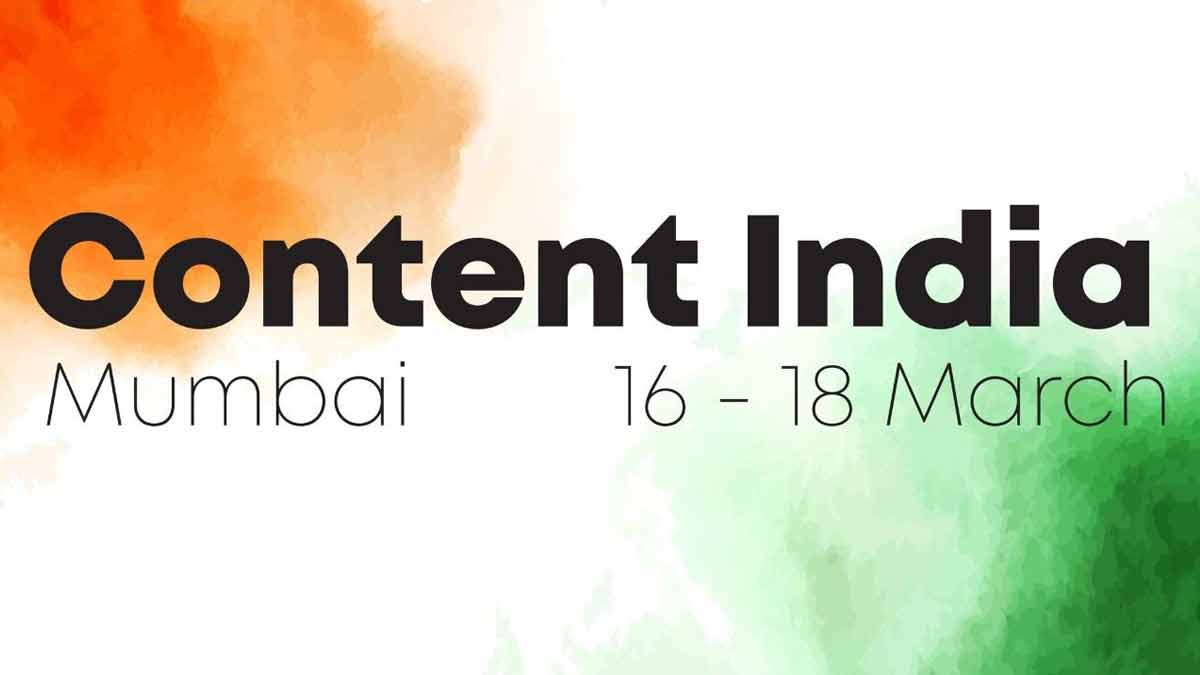
MUMBAI: India’s content industry gathered in Mumbai this March for Content India 2026, a three-day summit organised by Dish TV in partnership with C21Media, and it wasted no time making a statement. The event opened with a Copro Pitch that put seven scripted and unscripted television concepts before an international panel of judges, and by the end of it, two projects had walked away with £10,000 each in marketing prize money from C21Media to support development and international promotion.
The jury, comprising Frank Spotnitz, Fiona Campbell, Rashmi Bajpai, Bal Samra and Rachel Glaister, evaluated a shortlist that ranged from a dark Mumbai comedy-drama about mental health (Dirty Minds, created by Sundar Aaron) to a Delhi coming-of-age mystery (Djinn Patrol, by Neha Sharma and Kilian Irwin), a techno-thriller about a teenage gaming prodigy (Kanpur X Satori, by Suchita Bhatia), an investigative crime drama blending mythology and modern thriller (The Age of Kali, by Shivani Bhatija), a documentary on India’s spice heritage (The Masala Quest, hosted by Sarina Kamini), a documentary on competitive gaming (Respawn: India’s Esports Revolution, by George Mangala Thomas and Sangram Mawari), and a reality-horror competition merging gaming and immersive fear (Scary Goose, by Samar Iqbal).
The session was hosted by Mayank Shekhar.
The two winners were Djinn Patrol, backed by Miura Kite, formerly of Participant Media and known for Chinatown and Keep Sweet: Pray & Obey, with Jaya Entertainment, producers of Real Kashmir Football Club, also attached; and The Masala Quest, created and hosted by Sarina Kamini, an Indian-Australian cook, author and self-described “spice evangelist.”
The summit also unveiled the Content India Trends Report, whose findings made for bracing reading. Daoud Jackson, senior analyst at OMDIA, set the tone: “By 2030, online video in India will nearly double the revenue of traditional TV, becoming the main driver of growth.” He noted that in 2025, India produced a quarter of all YouTube videos globally, overtaking the United States, while Indians collectively spend 117 years daily on YouTube and 72 years on Instagram. Traditional subscription TV is declining as free TV and connected TV gain ground, forcing broadcasters to innovate. “AI-generated content is just 2 per cent of engagement,” Jackson added, “highlighting the dominance of high-quality human content. The key for Indian media companies is scaling while monetising effectively from day one.”
Hannah Walsh, principal analyst at Ampere Analysis, added hard numbers to the picture. India produced over 24,000 titles in January 2026 alone, with 19,000 available internationally. The country now accounts for 12 per cent of Asia-Pacific content spend, up from 8 per cent in 2021, outpacing both Japan and China. Key exporters include JioStar, Zee Entertainment, Sony India, Amazon and Netflix, delivering over 7,500 Indian-produced titles abroad each year. The top importing markets are Saudi Arabia, the UAE, Egypt, the United States and the Philippines. Scripted content dominates globally at 88 per cent, with crime dramas and children’s and family titles performing particularly strongly.
Manoj Dobhal, chief executive and executive director of Dish TV India, framed the summit’s ambition squarely. “Stories don’t need translation. They need a platform, discovery, and reach, local or global,” he said. “India produces more movies than any country, our streaming platforms compete globally, and our tech and creators win international awards. Yet fragmentation slows growth. Producers, platforms, and tech move in different lanes. We need shared spaces, collaboration, and an ecosystem where ideas, technology, and people meet. That is why we built Content India.”
The data, the pitches and the prize money all pointed to the same conclusion: India is not waiting for the world to discover its stories. It is building the infrastructure to sell them.







