MAM
IDfy banks on Malcolm Gomes to drive trust at scale in digital economy

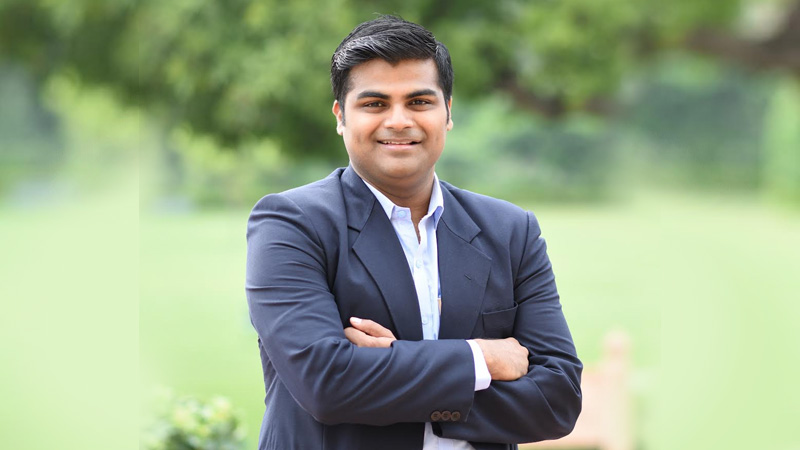
MUMBAI: Trust issues? Not on Malcolm Gomes’ watch. Idfy, Asia’s leading identity verification platform, has brought on board Malcolm Gomes as its new chief operating officer, betting big on his two-decade-long expertise in strategy and transformation to power its next phase of growth. In his new role, Gomes will lead Idfy’s Trust and Privacy Platform ‘Privy’, oversee global operations, and spearhead industry-specific propositions as part of the company’s mission to eliminate fraud and scale trust in a fast-growing digital economy.
A former Partner at McKinsey & Co., Gomes has spent the last 17 years advising financial services clients across India, Southeast Asia, and the Middle East. His expertise spans digital transformation, AI-led service operations, customer experience, and business-building all of which align seamlessly with Idfy’s ambition to cement itself as the go-to platform for trust-based digital interactions.
IDfy CEO Ashok Hariharan said, “We are thrilled to welcome Malcolm to the Idfy leadership team. His deep experience in strategy and driving transformation across markets is a perfect match for IDfy’s mission of enabling trust atscale. Malcolm’s strategic vision and operational expertise will be instrumental as we expand our product suite, strengthen our propositions, and scale globally. I look forward to partnering with him as we continue to raise the bar for innovation and impact in this space.”

Malcolm sharing his excitement about joining Idfy said, “Trust is the fundamental currency of the ever-increasing, transacting world around us as increasingly more people and businesses get formalized; frequency of interactions and transactions increase driven by rising consumption; and interaction touchpoints multiply e.g., AI bots, Home delivery; the need to ensure trust grows manifold. Having worked with multiple institutions on their Board and CEO agendas over several years, I am hugely excited about how IDfy’s current and future ‘Trust’ offerings – can make a significant difference for customers and organisations.”
With Gomes stepping into this crucial role, Idfy is doubling down on its commitment to helping businesses confidently engage with customers, verify identities, and mitigate risk all without compromising user experience.
As trust becomes the bedrock of the digital economy, Idfy’s bet on Gomes could be the game-changer that takes the company from a powerful enabler to a category-defining force.

AD Agencies
JioStar study with BARC and Nielsen finds TV and digital ads reach different audiences during T20 World Cup
JioStar’s T20 World Cup data shows cross-screen duplication below 10 per cent, setting the stage for a blockbuster IPL
MUMBAI: The numbers are in, and they are striking. During the ICC Men’s T20 World Cup 2026, television and digital advertising campaigns barely stepped on each other’s toes. Cross-screen audience duplication stayed below 10 per cent across every participating campaign, a finding that upends the assumption that brands paying for both screens are largely paying twice to reach the same eyeballs.
JioStar, the media giant that broadcast the tournament across television and digital platforms, on Tuesday unveiled the findings from BARC | Nielsen One Ads, a cross-screen measurement solution deployed for the first time at scale during the World Cup. The verdict: TV and digital are not cannibalising each other. They are reaching fundamentally different people.
The study found that digital platforms are delivering genuinely incremental audiences, viewers who would not have been reached on television alone, while enabling more precise targeting across devices. The combined effect gives advertisers what the industry has long craved: a unified, deduplicated four-screen audience that marries the blunt-instrument scale of television with the surgical precision of digital.
“The ICC Men’s T20 World Cup 2026 has once again demonstrated the power of scale in live sports, and these findings take it a step further by quantifying how that scale translates across screens,” said Anup Govindan, head of sales, sports, JioStar. “With less than 10 per cent duplication, we now have clear, measurable evidence of how integrated planning delivers both efficiency and impact for advertisers. As we look ahead to IPL 2026, this sets a strong foundation for brands to plan with greater confidence, leveraging cross-screen strategies to maximise reach and effectiveness at scale.”
The methodology behind the findings stitches together two measurement giants. BARC India supplies linear television data; Nielsen brings its digital measurement capabilities across connected TV, mobile and desktop. The result is a single, deduplicated view of campaign reach and frequency, the kind of unified currency that advertisers have been demanding as audiences scatter across screens.
The timing is deliberate. As consumption habits splinter, viewers flicking between the living-room set, the smartphone on the sofa and the laptop at the kitchen table, the case for unified measurement has grown urgent. A brand buying a 30-second slot on Star Sports and a pre-roll on JioCinema can now know, with some rigour, whether those two buys are actually compounding their reach or merely doubling their spend.
JioStar, BARC India and Nielsen say the learnings will directly inform cross-screen strategies for upcoming tentpole events. IPL 2026 is next. If the World Cup data holds, and there is little reason to think it will not, brands that treat television and digital as a single, coordinated buy rather than two separate line items will arrive at the auction with a sharper pencil and a cleaner brief. In India’s ferociously competitive advertising market, that edge is everything.