MAM
Ideation to execution is shorter today: Forsman & Bodenfors’ Akesson

MUMBAI: Coming up with creative work once in a while is good advertising but doing creative work consistently is great advertising!
It takes hours of labour, thinking and several approvals back and forth within the agency before a creative is given the thumbs up to be shown to the client and this hierarchy may often lead to employees feeling a little demotivated and unsure about their ideas and creativity. But there is one agency that will turn around the entire concept of advertising on its head for you – Forsman & Bodenfors (F&B). The Swedish agency has its head office in Sweden’s second-largest city, Gothenburg. Even if you’ve never heard of the company, you might still be among the 88 million people who have seen the Volvo Trucks – The Epic Split ad featuring Van Damme.

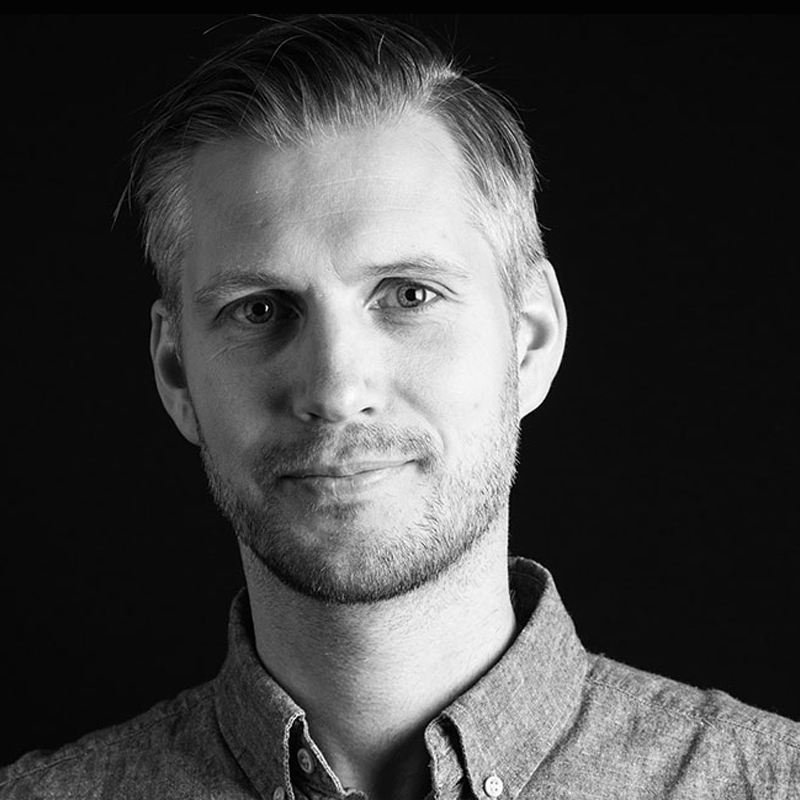
F&B is a place where there are no directors and heads. Far from getting sunk in the chaos, the agency has proven to be one of the most awarded independent creative hubs around the world. The agency is famous for its world-renowned and highly acclaimed campaigns such as Volvo Trucks – The Epic Split and Nike #Breaking2. The key to its success and high level of creative quality is responsibility with zero prestige. Talking about the agency’s unique functioning, F&B art director Samuel Akesson simply says, “What we do is ‘human’ mostly. Perhaps, there’s a lack of humanity in advertising, which is why sometimes advertising is bad at making people feel anything.”
Fed up with the hierarchy and old-fashioned system in organisations, Akesson wanted to spin a revolution. He did just that by moving to Sweden and has stuck to F&B for nine years. With experience of more than 20 years in the advertising industry, Akesson is considered among the best creative heads in the advertising world today.
Indiantelevision.com spoke to him on the sidelines of Goafest 2018 where he opened up about the company and the industry in general. He believes that the three pillars that make F&B an award-winning and successful agency are: responsibility, trust and courage. As there is no hierarchy, everyone is responsible for the work they do which gives a strong sense of freedom as well as ownership. He adds, “Very often we have experienced failure and mishaps. But, in this structure of work, you feel like a part of a strong community. We face such situations together which makes us feel stronger.”
The best ads are made when clients give companies a free rein. Not a single client has said this to him yet and most look for a joint collaborative vision which is also the ideal choice of a company.
Since the company follows a non-hierarchy model, talent acquisition and retention is a herculean task. He says, “I think there is allure from different parts of business nowadays. 10 years ago, a career in advertising seemed like a very relevant route whereas it has changed a lot today. A lot of people that have moved away from advertising go into different technology industries like Facebook, Google and so on.”
With the rise in agencies, client retention is another challenge. Akesson mentions that the scenario has worsened in the last few years with specialised agencies opening shops and working on project basis rather than having a retainer model. It can be frustrating as there is a trade-off between clients with a long relationship or many clients and a one hit wonder.
An age-old conversation in the advertising industry has been whether business is killing creativity but Akesson seems to think otherwise and is rather optimistic because the journey from having an idea to people seeing the idea is much shorter now and it is easy to publish these ideas on digital platforms.
While everyone seems to be talking about big data, augmented reality, virtual reality and other technologies and how they will become indispensable for advertising in future, Akesson makes an interesting point that these technical tools help us but sometimes, they lead us to disorientation and take the focus away from what agencies should be doing – engaging people. He says, “I’m not super enthusiastic and interested in these technologies as they are just tools that are used for specific purposes. What agencies need is to be secure in the story they want to tell, and how they think people will react when they do something.”
Influencer marketing is likely to be the trendy 2018 topic. With the industry backing it, Akesson says that the idea has even become silly at times. Brands can use it to some extent but the unnecessary hype is a little ridiculous.
F&B’s agenda for 2019 is expanding beyond traditional advertising to include how the CEO speaks in an interview to the look of a poster in the street. “We as communication consultants can figure out a journey and story for that brand to tell and do that in loads of different ways. The future of advertising is to dissolve advertising and talk about different ways of interacting with people instead,” he concludes.
Here’s a list of some iconic work by Forsman & Bodenfors:
Also Read:
The influence of influencer marketing
Has advertising finally begun to embrace AI?




Digital
Content India 2026 opens with a copro pitch, a spice evangelist and a £10,000 prize for Indian storytelling
Dish TV and C21Media’s three-day summit puts seven ambitious projects before an international jury, and two walk away with serious development money
MUMBAI: India’s content industry gathered in Mumbai this March for Content India 2026, a three-day summit organised by Dish TV in partnership with C21Media, and it wasted no time making a statement. The event opened with a Copro Pitch that put seven scripted and unscripted television concepts before an international panel of judges, and by the end of it, two projects had walked away with £10,000 each in marketing prize money from C21Media to support development and international promotion.
The jury, comprising Frank Spotnitz, Fiona Campbell, Rashmi Bajpai, Bal Samra and Rachel Glaister, evaluated a shortlist that ranged from a dark Mumbai comedy-drama about mental health (Dirty Minds, created by Sundar Aaron) to a Delhi coming-of-age mystery (Djinn Patrol, by Neha Sharma and Kilian Irwin), a techno-thriller about a teenage gaming prodigy (Kanpur X Satori, by Suchita Bhatia), an investigative crime drama blending mythology and modern thriller (The Age of Kali, by Shivani Bhatija), a documentary on India’s spice heritage (The Masala Quest, hosted by Sarina Kamini), a documentary on competitive gaming (Respawn: India’s Esports Revolution, by George Mangala Thomas and Sangram Mawari), and a reality-horror competition merging gaming and immersive fear (Scary Goose, by Samar Iqbal).
The session was hosted by Mayank Shekhar.
The two winners were Djinn Patrol, backed by Miura Kite, formerly of Participant Media and known for Chinatown and Keep Sweet: Pray & Obey, with Jaya Entertainment, producers of Real Kashmir Football Club, also attached; and The Masala Quest, created and hosted by Sarina Kamini, an Indian-Australian cook, author and self-described “spice evangelist.”
The summit also unveiled the Content India Trends Report, whose findings made for bracing reading. Daoud Jackson, senior analyst at OMDIA, set the tone: “By 2030, online video in India will nearly double the revenue of traditional TV, becoming the main driver of growth.” He noted that in 2025, India produced a quarter of all YouTube videos globally, overtaking the United States, while Indians collectively spend 117 years daily on YouTube and 72 years on Instagram. Traditional subscription TV is declining as free TV and connected TV gain ground, forcing broadcasters to innovate. “AI-generated content is just 2 per cent of engagement,” Jackson added, “highlighting the dominance of high-quality human content. The key for Indian media companies is scaling while monetising effectively from day one.”
Hannah Walsh, principal analyst at Ampere Analysis, added hard numbers to the picture. India produced over 24,000 titles in January 2026 alone, with 19,000 available internationally. The country now accounts for 12 per cent of Asia-Pacific content spend, up from 8 per cent in 2021, outpacing both Japan and China. Key exporters include JioStar, Zee Entertainment, Sony India, Amazon and Netflix, delivering over 7,500 Indian-produced titles abroad each year. The top importing markets are Saudi Arabia, the UAE, Egypt, the United States and the Philippines. Scripted content dominates globally at 88 per cent, with crime dramas and children’s and family titles performing particularly strongly.
Manoj Dobhal, chief executive and executive director of Dish TV India, framed the summit’s ambition squarely. “Stories don’t need translation. They need a platform, discovery, and reach, local or global,” he said. “India produces more movies than any country, our streaming platforms compete globally, and our tech and creators win international awards. Yet fragmentation slows growth. Producers, platforms, and tech move in different lanes. We need shared spaces, collaboration, and an ecosystem where ideas, technology, and people meet. That is why we built Content India.”
The data, the pitches and the prize money all pointed to the same conclusion: India is not waiting for the world to discover its stories. It is building the infrastructure to sell them.







